Table of Contents
Why Your Product Is Not Selling?
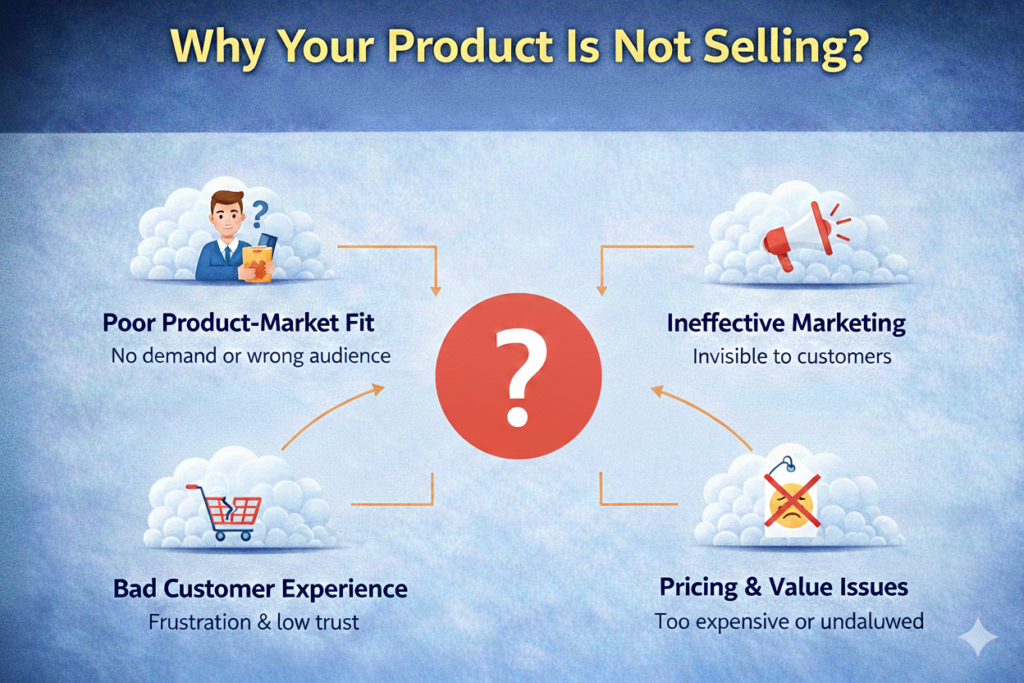
You’ve spent months creating the perfect product, listing it online, maybe even running ads — yet the sales aren’t coming in. Sounds familiar? You’re not alone.
Thousands of entrepreneurs and ecommerce sellers face the same frustration: “Why is my product not selling?”
The truth is, a great product alone doesn’t guarantee success. If your marketing, audience targeting, pricing, or website presentation are off, sales will suffer — no matter how good your product is.
In this article, we’ll break down the most common reasons why your product isn’t selling, share real-world examples, and provide actionable fixes you can apply right now to turn things around.
By the end, you’ll have a clear roadmap to identify bottlenecks and boost your conversions.
Understanding the Real Problem Behind “Why Your Product Is Not Selling”
Before jumping into the fixes, you need to diagnose the root cause.
Ask yourself these key questions:
- Do people know my product exists?
- Am I targeting the right audience?
- Is my offer clear and compelling?
- Does my website or sales page convert visitors into buyers?
If the answer to any of these is “I’m not sure,” that’s exactly where we’ll start.
According to Shopify’s ecommerce data, more than 70% of online stores fail within their first year — and most of them cite poor marketing, weak product-market fit, and unclear messaging as the main culprits.
Let’s break those down one by one.
Mistake #1 — You Don’t Understand Your Target Audience
If you’re trying to sell to everyone, you’re selling to no one.
Why it happens
Many beginners skip proper market research because they assume their product will appeal to everyone. But customers buy based on needs, emotions, and trust — not on logic alone.
Example:
You launch a premium skincare product but target a broad “women 18–50” audience. That’s too wide. Each age group has different pain points, budgets, and routines.
Fix
- Create a detailed buyer persona: age, gender, job, location, pain points, income, lifestyle, and goals.
- Use tools like Google Trends and AnswerThePublic to research what people are searching for.
- Analyze competitors’ audiences on platforms like SimilarWeb.
- Speak directly to one segment — e.g., “anti-aging serum for women 35–45 with sensitive skin.”
Once you know who you’re serving, everything — from your ad copy to your packaging — becomes clearer and more effective.
Mistake #2 — Weak Product-Market Fit
Sometimes, your product simply doesn’t solve a pressing problem or deliver enough value.
Why it happens
Entrepreneurs often build products they like, not what customers need.
You might have a great idea, but if the audience doesn’t feel the pain or urgency to buy, sales will lag.
Fix
- Talk to real customers: conduct surveys and interviews.
- Test demand before production using landing pages or pre-orders.
- Analyze competitors’ reviews — see what customers complain about and fill that gap.
- If your niche is saturated, add a unique value proposition (UVP) that differentiates you.
Example:
If everyone sells phone cases, maybe yours could feature anti-shock protection or eco-friendly materials that appeal to a specific eco-conscious market.
💡 Pro Tip: A good product-market fit always begins with a real problem and an emotional motivator.
Mistake #3 — Your Pricing Strategy Is Off
Pricing can make or break your conversions. Many sellers either overprice and scare buyers away or underprice and lose trust.
Why it happens
You might set prices emotionally (“I think this looks fair”) instead of using data.
Fix
- Research competitor pricing — check what similar products sell for on Amazon or Etsy.
- Consider perceived value. Customers often associate higher price with higher quality.
- Use psychological pricing (e.g., $49 instead of $50).
- Offer limited-time discounts, bundles, or loyalty rewards.
- Calculate your profit margins carefully — include shipping, transaction fees, and ad costs.
Example:
If your $25 product costs $15 to produce, you’re only earning $10 gross. After ads, you might even lose money. Adjust pricing or add upsells to make it profitable.
Mistake #4 — Your Product Photos or Descriptions Don’t Convince
Online shoppers can’t touch or feel your product — so visuals and words sell for you.
Why it happens
Many store owners use low-quality, poorly lit images or generic manufacturer descriptions.
Fix
- Invest in professional product photography — clean backgrounds, good lighting, lifestyle context shots.
- Write SEO-optimized descriptions highlighting benefits, not just features.
- Bad: “Made from stainless steel.”
- Good: “Durable stainless-steel design that keeps your drink hot for 12 hours.”
- Add social proof (reviews, testimonials, ratings).
- Include a short video or 360-degree view if possible.
Example:
According to Shopify’s consumer report, stores with high-quality visuals convert up to 30% better than those with generic images.
Mistake #5 — You’re Not Generating Enough Traffic
Even if your store is perfect, no one can buy what they can’t find.
Why it happens
You rely only on friends, a few social posts, or waiting for Google to “just rank” your site.
Fix
- Start with basic SEO: optimize product titles, descriptions, alt tags, and URLs.
- Create blog content targeting keywords like “best [product type] in 2025” or “how to use [product].”
- Run small ad campaigns on Facebook, Instagram, or Google Ads.
- Partner with micro-influencers who share your niche.
- Use Pinterest and TikTok to drive organic reach — short videos work wonders.
Example:
A small jewelry store increased traffic 5× by posting short “behind-the-scenes” videos on TikTok and linking their Shopify store in bio.
External link: Learn how to drive ecommerce traffic effectively.
Mistake #6 — Your Website Isn’t Optimized for Conversions
Traffic without conversions is wasted effort.
Why it happens
Your website might be too slow, confusing, or untrustworthy.
Fix
- Improve page speed using tools like Google PageSpeed Insights.
- Add a clear Call to Action (CTA) — “Buy Now,” “Add to Cart.”
- Use trust signals: SSL certificate, secure payment icons, refund policy, real reviews.
- Keep navigation simple — 3 clicks maximum to buy.
- Optimize for mobile shoppers (over 65% of sales come from mobile in 2025).
Example:
A store improved conversion by 40% after simplifying checkout and reducing steps from 5 to 2.
Mistake #7 — Lack of Customer Trust and Credibility
People buy from brands they trust.
Why it happens
If your site looks generic or anonymous, buyers hesitate.
Fix
- Display “About Us” and contact details.
- Use professional design, consistent branding, and secure payment gateways.
- Show customer reviews, testimonials, and before-after photos.
- Offer guarantees — “30-Day Money-Back Guarantee.”
- Respond quickly to inquiries through live chat or WhatsApp.
Example:
Adding live chat on a Shopify store can boost conversions up to 20%, according to Tidio’s ecommerce report.
Mistake #8 — Your Marketing Message Is Unclear
Your customers shouldn’t have to guess what you sell or why it matters.
Why it happens
Confusing copy, vague taglines, or over-complicated messaging lose buyers fast.
Fix
- Use the “problem → solution → benefit” framework.
- Keep your homepage headline simple and emotional:
- Example: “Tired of bad sleep? Try our 100% organic memory foam pillow.”
- Focus on benefits and outcomes, not features.
- Use storytelling in ads and emails.
- Ensure every marketing channel delivers a consistent message.
External link: HubSpot guide on crafting marketing messages.
Mistake #9 — Poor Product Reviews or Low Social Proof
Even one negative review can ruin confidence.
Why it happens
You ignore or hide negative feedback instead of addressing it constructively.
Fix
- Encourage happy customers to leave reviews via follow-up emails.
- Display reviews prominently on product pages.
- Address negative reviews politely and offer solutions.
- Use user-generated content (UGC) on social media to build trust.
Example:
According to PowerReviews research, 98% of customers check reviews before purchasing, and 45% won’t buy if no reviews are available.
Mistake #10 — You’re Ignoring Data and Analytics
What you don’t measure, you can’t improve.
Why it happens
Many sellers skip analyzing their data because it seems “too technical.”
Fix
- Install Google Analytics 4 or your platform’s native analytics.
- Track key metrics: conversion rate, bounce rate, average order value, top-performing pages.
- Use tools like Hotjar to watch how visitors behave on your site.
- A/B-test headlines, product images, and pricing.
- Make data-driven decisions instead of guesses.
Mistake #11 — No Post-Purchase Strategy
Selling once isn’t enough — repeat customers drive profit.
Why it happens
You focus only on acquiring new customers and ignore existing ones.
Fix
- Send thank-you and follow-up emails.
- Offer discounts for repeat purchases.
- Start a loyalty or referral program.
- Use email automation tools like Klaviyo or Mailchimp to re-engage old buyers.
Example:
A small fashion brand increased revenue 35% using post-purchase emails reminding customers to share their look on Instagram with a discount code.
Mistake #12 — You’re Not Adapting to Market Changes
Ecommerce moves fast. What worked last year might not work today.
Why it happens
Sellers rely on outdated tactics or ignore emerging trends like AI-driven personalization, social commerce, or video marketing.
Fix
- Stay updated with ecommerce news on BigCommerce Blog.
- Test new platforms (TikTok Shop, Instagram Checkout).
- Use AI tools for product recommendations and chatbots.
- Regularly analyze competitors to see what’s trending.
Mistake #13 — Neglecting SEO and Content Marketing
If you rely only on paid ads, you’re burning money without building long-term visibility.
Why it happens
You underestimate the power of SEO or think it’s too slow.
Fix
- Write blog posts targeting questions your customers search for.
- Optimize meta titles, descriptions, and internal links.
- Add schema markup for products and reviews.
- Use keyword tools like Ubersuggest or Ahrefs.
- Build backlinks from niche blogs and directories.
Example:
A home-decor store boosted organic traffic by 220% in 6 months by publishing weekly SEO-friendly blog posts about interior design trends.
External link: Neil Patel’s SEO guide.
Mistake #14 — Ignoring the Power of Branding
Branding is more than a logo — it’s your story, tone, and experience.
Why it happens
You focus on selling instead of building trust and recognition.
Fix
- Choose consistent colors, fonts, and messaging across all channels.
- Share your brand story — why you started, what you stand for.
- Use emotional triggers (hope, comfort, aspiration).
- Collaborate with influencers who align with your brand identity.
Example:
Apple’s sales rely on brand emotion and user experience, not just specifications. People buy feelings, not features.
Mistake #15 — Your Product Launch Wasn’t Planned Strategically
Sometimes, you fail before you even start because of a weak launch.
Why it happens
You launch quietly without building hype or collecting leads.
Fix
- Tease your audience before launch.
- Use email waitlists and pre-launch landing pages.
- Send free samples to influencers or early testers.
- Offer a “launch discount” to your first 100 buyers.
- Announce your launch across all social platforms and ad channels.
Example:
When a skincare brand used influencer reviews before launch, they sold out in 48 hours.
Mistake #16 — Your Ad Creatives Don’t Convert
You might be running ads, but your creatives don’t grab attention or communicate value.
Why it happens
Generic visuals and weak hooks get ignored.
Fix
- Start with emotional storytelling.
- Use user-generated content or customer testimonials in ads.
- Test multiple ad variations (videos, carousels, static).
- Keep the message short: Problem → Solution → Result.
- Track CTR (click-through rate) and adjust accordingly.
External link: Meta Business Help Center on ad creative optimization.
Mistake #17 — Lack of Urgency or Scarcity
Without a reason to buy now, customers procrastinate.
Why it happens
You forget to add time-sensitive offers or scarcity cues.
Fix
- Use phrases like “Limited Stock,” “Offer Ends Tonight,” “Only 3 Left.”*
- Display countdown timers or live stock counters.
- Send reminder emails about expiring discounts.
Example:
Adding a countdown timer increased conversions by 14% for a small apparel store, according to OptinMonster case study.
Mistake #18 — Poor Customer Service or Fulfillment Delays
Bad experiences kill repeat business.
Why it happens
You neglect after-sales communication, shipping updates, or replacement policies.
Fix
- Keep transparent shipping and return policies.
- Offer tracking numbers and real-time updates.
- Resolve complaints quickly — bad reviews spread fast.
- Train support staff to handle refunds and queries politely.
Mistake #19 — Your Product Presentation Lacks Emotion
People don’t just buy products — they buy stories.
Why it happens
Your marketing is factual but soulless.
Fix
- Tell stories about how the product changes lives.
- Use videos showing real customers using it.
- Highlight benefits using emotional words like freedom, happiness, relief, confidence.
Example:
Nike sells empowerment, not shoes. That’s why “Just Do It” campaigns outperform competitors.
Mistake #20 — You Gave Up Too Early
Most successful businesses didn’t get traction immediately.
Why it happens
Impatience. You expect instant success.
Fix
- Keep testing, analyzing, and optimizing.
- Learn from feedback.
- Be consistent for at least 6–12 months before judging performance.
Persistence, not perfection, wins in ecommerce.
FAQs — Why Your Product Is Not Selling
Q1. How do I know if my product idea is bad?
If you’ve tested multiple marketing channels and received zero interest or feedback, your product might lack market demand. Try surveys or pre-orders before pivoting.
Q2. Should I lower my prices to get sales?
Not always. Lower prices can reduce perceived value. Focus instead on communicating quality and benefits.
Q3. How long does it take to start getting consistent sales?
Usually 3–6 months of consistent marketing, SEO, and audience building.
Q4. What’s the best way to promote a new product in 2025?
Short-form videos (TikTok, Reels), influencer partnerships, and email marketing automation remain top-performing strategies.
Q5. How important is branding for sales?
Extremely important. Branding builds recognition and emotional connection, which increases conversion rates and loyalty.
Q6. What are the top ecommerce tools to fix low sales?
Use Shopify, WooCommerce, Google Analytics, Klaviyo, and Hotjar to optimize and automate your sales process.
Conclusion
If your product isn’t selling, it doesn’t mean it’s a failure — it just means something in your sales process needs tuning.
Most often, the issue lies in targeting, marketing, pricing, or presentation.
A person essentially help to make seriously articles I would state. This is the first time I frequented your web page and thus far? I amazed with the research you made to create this particular publish extraordinary. Fantastic job!
I do not even know how I ended up here, but I thought this post was good. I do not know who you are but certainly you’re going to a famous blogger if you aren’t already 😉 Cheers!
you have brought up a very good points, thankyou for the post.