Table of Contents
Introduction- The Future of E-commerce 2026
The global landscape of online business is transforming faster than ever. By the year 2026, e-commerce will enter an entirely new phase dominated by artificial intelligence (AI), automation, and data-driven personalization. The simple online store model that once relied on manual product uploads, flat designs, and generic ads is evolving into a highly intelligent, automated ecosystem. AI-powered stores and smart marketing systems will soon manage everything from inventory forecasting to personalized ad creation, reshaping how consumers shop and how businesses sell. Understanding these upcoming changes is not just a matter of curiosity—it’s the foundation for staying relevant and profitable in the years ahead.
The Rise of AI-Powered Stores
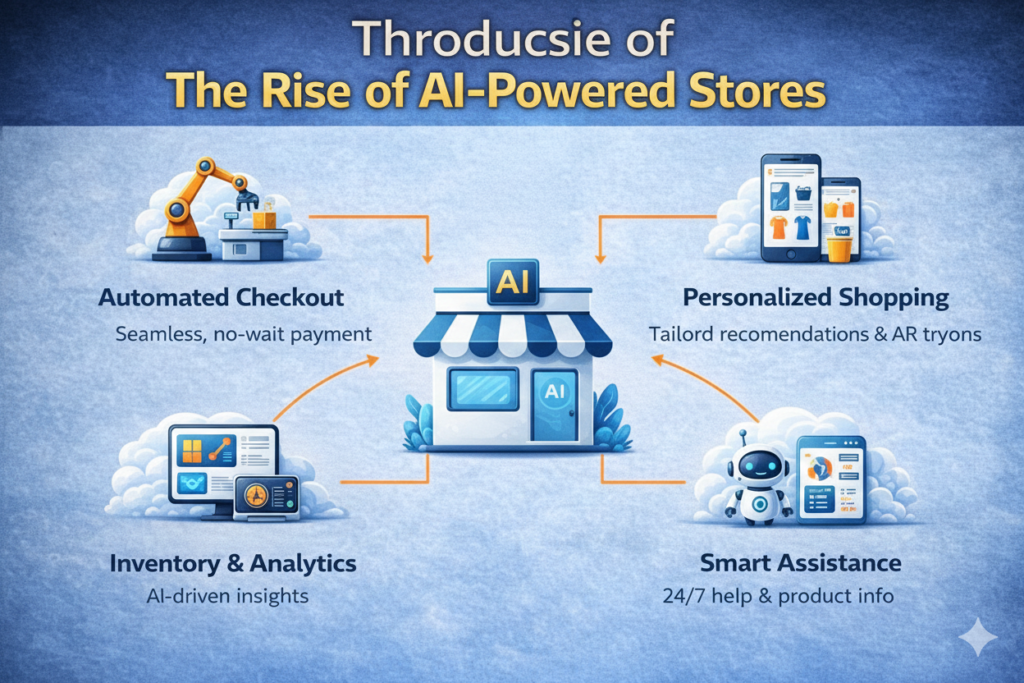
AI-driven e-commerce—often called AI Stores—represents a paradigm shift in how online shopping works. Instead of building static websites that display the same content to every visitor, AI-based systems learn from user behavior and instantly tailor the store experience to each person. Imagine opening an online shop where the homepage, banners, and product recommendations change in real time depending on your past searches, your location, and even your current mood inferred through engagement patterns. That’s exactly what the 2026 version of e-commerce will look like.
Artificial intelligence in e-commerce works across multiple layers. At the top layer, machine-learning algorithms analyze huge volumes of consumer data—purchase histories, browsing patterns, time spent on product pages, and abandoned carts—to predict what each shopper wants next. At the mid-layer, AI helps manage stock levels, delivery routes, and pricing dynamically, ensuring that businesses never overstock or undersell. And at the customer-facing layer, natural-language chatbots and voice assistants handle queries, recommend complementary items, and guide users through checkout without human involvement.
The appeal of this system is massive. A 2025 Forbes report predicted that AI-powered personalization will drive more than $2.3 trillion in global retail sales by 2026 (source). Small businesses using platforms like Shopify, WooCommerce, or Wix will have access to plug-and-play AI modules that replicate the advanced systems once reserved for giants such as Amazon. From predictive pricing to recommendation engines, the AI store revolution will level the playing field.
Inside the AI Store Ecosystem
By 2026, several components will define a fully functional AI store. The first is personalized storefronts, where each visitor sees a unique combination of banners, categories, and offers based on data analysis. The second is AI chat assistants that communicate naturally in multiple languages, making online support feel as human as possible. Third comes intelligent logistics—machine learning models that predict which products are about to trend and automatically reorder stock before it runs out. Finally, dynamic pricing engines will constantly adjust product prices depending on real-time demand, competitor movements, or even weather patterns that influence buying behavior.
These systems collectively form what industry experts call predictive commerce. Instead of reacting to consumer needs, AI stores anticipate them. For businesses operating from emerging markets like Pakistan or the UAE, this offers a chance to compete globally. A store in Lahore can deliver the same personalized experience as one in New York, simply by integrating AI tools and data automation.
Smart Marketing — The Next Frontier
If AI stores represent the “where” of future commerce, smart marketing defines the “how.” In 2026, marketing will no longer rely on guesswork or generic targeting. It will be powered by predictive analytics, automated creativity, and cross-platform intelligence.
Smart marketing uses AI to make decisions that human teams used to make manually. Algorithms determine which audiences to target, what visuals to display, and when to run ads for maximum impact. Tools like HubSpot AI and AdCreative.ai already use predictive modeling to test thousands of ad variations in minutes. Content creation platforms such as Jasper and Copy.ai generate personalized ad copy that aligns perfectly with customer intent.
A 2025 Gartner report on AI in marketing (link) predicted that by 2026, more than 85 percent of digital advertising campaigns will use AI-generated content in some form. Smart Insights, another reputable analytics source (link), found that companies integrating AI marketing automation achieved up to 41 percent higher ROI. These numbers clearly show that data-driven automation is no longer optional—it’s the foundation of competitiveness.
Smart marketing also extends to customer lifecycle automation. Instead of one-size-fits-all newsletters, AI creates unique emails, notifications, and messages for each segment. If a user abandons a cart, an algorithm predicts why, then sends a custom discount or reminder at the exact time that person is most likely to return. When combined with AI stores, marketing and sales become a single continuous feedback loop that optimizes itself automatically.
Global E-Commerce Trends Leading to 2026
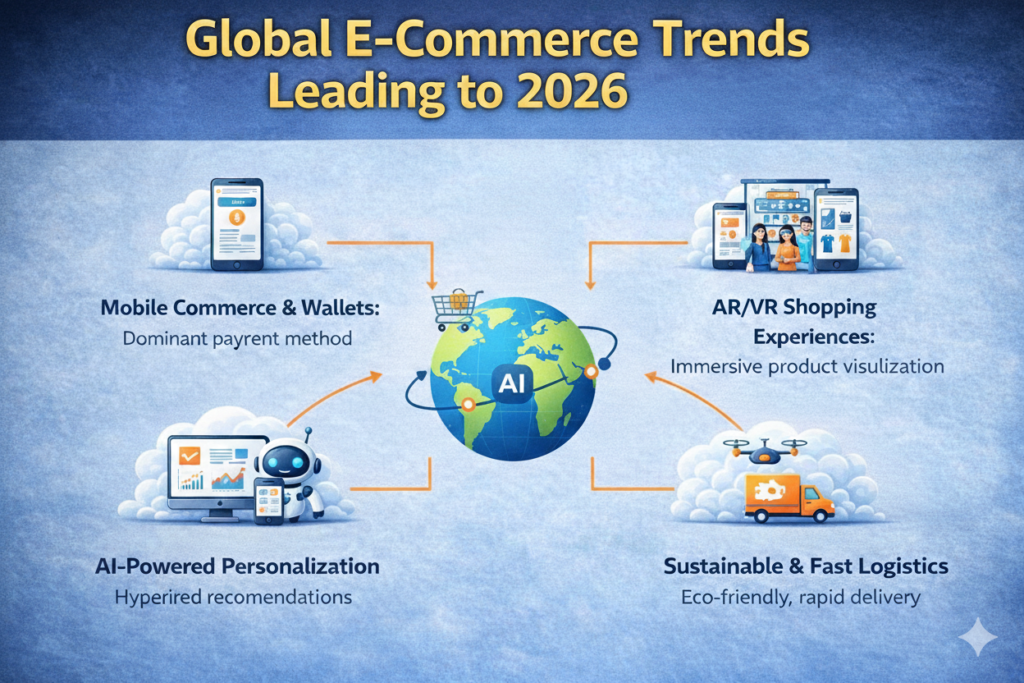
The transformation is not happening in isolation. Several macro-trends are shaping how e-commerce evolves worldwide.
Voice Commerce is one of the biggest. Devices like Alexa, Google Assistant, and Siri are rapidly becoming default shopping portals. By 2026, industry analysts expect over 50 percent of online purchases to begin with voice commands. This requires brands to optimize product titles and meta-descriptions for voice queries such as “best running shoes under $100” or “order me a wireless mouse.”
Another major shift is Augmented Reality shopping. AR integrations will let buyers virtually “try” products before purchasing. In the past, only luxury brands like Sephora or IKEA experimented with this feature; by 2026, even mid-range stores will use AI-powered AR tools to enhance product confidence and reduce returns.
Ethical AI and trust will also play a central role. According to a 2025 Statista survey, 72 percent of global shoppers said they prefer brands that openly disclose how AI is used in recommendations and pricing. Transparent communication will therefore be critical for customer retention.
Sustainability is another frontier. AI will optimize supply chains by reducing waste and improving delivery routes. Brands using AI logistics software like Alibaba’s Smart Warehouse or Amazon’s Predictive Routing are already cutting operational emissions by double digits. As environmental concerns grow, eco-efficiency will also become a selling point.
Finally, there’s the rise of AI content commerce, where blogs, videos, and social posts link directly to e-commerce catalogs through automatic keyword mapping. Websites like RankifyContent.com will serve as integrated AI content research and optimization hubs, helping entrepreneurs create SEO-friendly blogs, track product keywords, and discover profitable niches. This kind of intelligent content marketing will define how brands attract traffic in the future.
AI Across the Customer Journey
The traditional e-commerce funnel—awareness, interest, decision, action, loyalty—will be completely re-engineered by AI.
During the discovery phase, AI uses social signals and browsing history to predict what a consumer is about to want next. Rather than waiting for search queries, it places the right product in front of them through predictive ads. In the engagement phase, AI chatbots converse in real time, answering questions and cross-selling related items. During the decision phase, dynamic pricing and urgency signals encourage conversion. In the purchase phase, AI payment systems analyze fraud risk within milliseconds and approve transactions securely. Finally, the retention phase relies on AI to send personalized thank-you messages, discounts, and product suggestions based on customer satisfaction scores.
Essentially, AI connects the entire shopping journey into a continuous loop of data learning and optimization. This loop enables businesses to achieve a level of marketing efficiency and customer satisfaction previously impossible without massive human labor.
AI-Driven Decision-Making and Predictive Insights
One of the most remarkable changes in 2026 will be how decisions are made. Instead of relying on intuition or quarterly reports, businesses will depend on real-time predictive dashboards that update every few seconds. AI-powered analytics tools will process millions of data points — from social-media trends to customer heatmaps — and forecast product demand weeks in advance.
For instance, Shopify Plus and WooCommerce already provide AI-assisted analytics, but by 2026, these systems will become fully autonomous. They’ll recommend not only which products to restock but also when to launch seasonal sales, how to price bundles, and which customer segment to target first. A recent Gartner forecast on AI in retail predicted that 60 percent of e-commerce businesses will have implemented autonomous decision systems by 2026 (Gartner Report).
For entrepreneurs in Pakistan or emerging markets, this shift is game-changing. Access to intelligent analytics means you can compete globally without massive teams. A small brand in Lahore can now use free or affordable AI tools to analyze consumer intent, plan content, and optimize ad budgets — something that previously required expensive agencies.
Platforms like RankifyContent.com help small store owners and bloggers extract similar insights by offering SEO keyword research, product-trend tracking, and competitor analysis — all powered by automation.
The Human + AI Hybrid Model
A fear often associated with automation is that AI will replace humans entirely. In truth, the 2026 model is collaborative. AI manages the technical side — data processing, segmentation, optimization — while humans focus on strategy, creativity, and emotional connection.
Take marketing campaigns, for example. AI can generate hundreds of ad copies and images in seconds, but a marketer still needs to choose the tone, emotion, and message that best fits the brand. Designers will rely on AI tools like Adobe Firefly or Midjourney for initial ideas, yet human sensibility will guide the final aesthetic. Copywriters will use ChatGPT-style assistants to craft drafts, then refine them with real brand voice.
The result is faster execution without losing originality. As Smart Insights noted, “2026 will reward brands that use AI to enhance creativity, not replace it.” (Smart Insights)
Building Trust and Transparency
As e-commerce becomes smarter, trust will become a major differentiator. Customers are aware that AI tracks their data and recommends products accordingly. The brands that thrive will be those that practice ethical transparency.
In 2026, successful businesses will clearly disclose how AI affects customer experience — whether through personalized recommendations, dynamic pricing, or predictive shipping. They’ll also allow users to opt out or customize their privacy preferences. Research from Statista shows that 74 percent of online buyers in 2026 will reward transparent companies with higher loyalty rates (Statista Report).
To build such trust, e-commerce sites should display “AI Disclosure” sections on their websites and provide simple explanations like, “This recommendation was generated by our AI assistant based on your preferences.”
For content creators, especially those running information platforms such as RankifyContent, transparency can also mean citing data sources, crediting research, and linking to verified reports — building long-term credibility with readers.
Future Marketing Strategies for 2026
Marketing in 2026 will rely heavily on automation, personalization, and context awareness. Below are some strategies that businesses should prepare for:
1. Predictive Advertising: AI will forecast which product a customer is likely to buy next and automatically run personalized ads. This “intent-based marketing” could replace traditional pay-per-click systems.
2. Programmatic Creativity: Platforms will dynamically adjust visuals, colors, and CTAs based on audience data. No two viewers will see the same banner ad.
3. Conversational Funnels: Chatbots and voice assistants will replace static landing pages. Instead of clicking through multiple tabs, customers will chat directly with an AI agent that completes the sale.
4. Video Commerce: Short-form and AI-generated videos will dominate product discovery. Tools like Runway ML and Pika Labs will create instant product ads optimized for TikTok, Instagram Reels, and YouTube Shorts.
5. Smart SEO & Content AI: With the rise of AI-driven search, Google will reward content that is contextually rich and authentic. Using tools like RankifyContent.com to generate SEO-focused yet human-readable articles will be essential for ranking high in 2026.
6. Data Ethics as a Brand Value: Marketers will promote data safety and ethical AI as part of their core identity, much like eco-friendly brands do today.
The Pakistan & Emerging-Market Advantage
For entrepreneurs in Pakistan, the Middle East, or South Asia, the 2026 digital economy represents a massive opportunity. Internet adoption is booming, youth populations are tech-savvy, and local payment systems like Easypaisa, JazzCash, and Stripe Connect are expanding cross-border capabilities.
Freelancers, agencies, and SMEs can combine AI tools and low-cost infrastructure to compete globally. A Lahore-based digital-marketing agency could serve clients in London or Dubai without ever meeting in person. By deploying AI automation for content, keyword research, and reporting — tools available through RankifyContent — these businesses can scale faster and maintain high-quality output.
Moreover, the cost of digital advertising in South Asian markets is significantly lower than in Western countries. This allows early adopters of AI marketing to achieve outsized ROI before global saturation. The combination of AI ad automation and affordable CPC rates makes Pakistan an untapped goldmine for 2026 e-commerce innovation.
The Ethical and Regulatory Landscape
With power comes responsibility. Governments and international organizations are actively drafting AI regulations that will influence how e-commerce operates. The EU AI Act, set to be implemented by 2026, will require companies to disclose the use of automated decision systems. Similar frameworks are emerging in the U.S., U.K., and Asia.
E-commerce owners should prepare by auditing their AI tools for data privacy compliance and transparency. Retailers relying on personalization algorithms will need explicit consent from users for tracking behavior. At the same time, local regulators in Pakistan and the GCC are expected to adopt lighter versions of these rules, giving early-stage businesses a window to adapt.
Consumers, on the other hand, are becoming more informed about how their data is used. AI ethics and algorithmic fairness will soon influence brand perception as much as product quality. Adhering to ethical AI standards won’t just be about compliance — it will become a marketing asset that builds loyalty.
E-Commerce Technology Stack of 2026
Running a smart store in 2026 will mean integrating several layers of technology:
- Front-end Experience Layer: Built with headless commerce platforms like Shopify Hydrogen or Next.js Commerce, allowing flexible personalization.
- AI Engine: A core system handling recommendations, chat, and pricing — powered by OpenAI, Google Vertex AI, or local solutions.
- Automation Layer: Tools like Zapier, Make, or n8n connecting apps, automating tasks such as sending receipts or updating stock.
- Data Analytics & BI: Platforms like Power BI, Tableau, or Looker Studio turning raw numbers into actionable dashboards.
- Security & Compliance: AI-based fraud detection and identity verification software ensuring safe transactions.
Each layer feeds the next, resulting in a frictionless, intelligent retail ecosystem. The brands that adopt this full stack early will dominate search rankings, conversions, and customer retention.
Preparing Your Business for the 2026 Shift
To prepare for this new era, e-commerce founders can follow a structured roadmap:
- Audit Your Data: Clean up customer lists, unify analytics across channels, and switch to first-party data tracking.
- Experiment with AI Plugins: Start small — add product-recommendation widgets or chatbots to test performance.
- Automate Marketing: Use AI to handle repetitive tasks like ad optimization and email sequences.
- Invest in Learning: Train your team on prompt engineering, analytics, and content AI.
- Create Thought Leadership Content: Publish blogs on RankifyContent.com discussing your journey with AI integration to attract backlinks and traffic.
- Monitor Trends Quarterly: Follow sources like Forbes, Smart Insights, and Gartner to stay ahead.
Following this plan will ensure that your business evolves with technology rather than reacting to it.
Challenges Businesses Must Overcome
Despite the potential, AI-driven commerce is not without challenges. Smaller brands may struggle with data volume or technical complexity. There’s also the risk of algorithmic bias, where AI might favor certain demographics inadvertently. Maintaining ethical and inclusive systems will require active oversight.
Another challenge is content saturation. As more brands use AI to generate blogs, social posts, and ads, digital noise will increase. To stand out, your content must remain authentic, fact-checked, and humanized — qualities that Google increasingly values in its EEAT (Experience, Expertise, Authoritativeness, Trustworthiness) framework.
This is where RankifyContent’s SEO tools become particularly valuable: they enable users to refine AI-generated content with keyword density, readability, and fact-checking to ensure compliance with Google’s EEAT standards.
Looking Beyond 2026 — The Next Five Years
If 2026 is the year of transition, 2027–2030 will be the era of full integration. Experts predict that AI will handle almost every logistical task in e-commerce — from manufacturing forecasts to personalized packaging.
Blockchain-based smart contracts will merge with AI for transparent transactions. AR and VR shopping will reach maturity, creating virtual malls where avatars try clothes and pay instantly through crypto wallets. Social commerce will be driven by influencers collaborating with AI-generated personalities, blurring the line between real and synthetic marketing.
For digital entrepreneurs, the lesson is clear: staying still is not an option. Innovation must become a habit. By starting with the right foundation in 2026, you’ll position your brand to lead in the next decade of intelligent commerce.
Frequently Asked Questions (FAQ)
1. What is the main role of AI in e-commerce by 2026?
By 2026, artificial intelligence will be the backbone of all successful e-commerce systems. AI will manage product recommendations, dynamic pricing, personalized customer experiences, automated customer service, and predictive analytics. From improving search accuracy to automating order fulfillment, AI helps online stores operate with greater efficiency and customer satisfaction. Brands that integrate AI tools such as chatbots, analytics dashboards, and visual search engines will outperform traditional stores in conversions and engagement.
2. How do AI stores differ from normal e-commerce websites?
Unlike traditional online stores, AI-powered e-commerce sites adapt to every visitor in real time. Each shopper gets a customized homepage, personalized offers, and targeted suggestions based on previous interactions. AI stores also analyze behavior patterns to forecast demand, restock automatically, and adjust pricing dynamically. This data-driven personalization creates a seamless shopping experience that feels intelligent rather than static.
3. What are smart marketing tools, and how will they impact 2026 businesses?
Smart marketing tools use machine learning and predictive algorithms to automate advertising, email campaigns, SEO, and customer segmentation. In 2026, these systems will decide when and where to show ads for the best results. For instance, tools like HubSpot AI, AdCreative.ai, and Jasper will design, write, and deploy high-converting campaigns with minimal human input. The main advantage is precision — your marketing budget reaches the right people at the right moment, leading to higher ROI and lower ad waste.
4. Can small businesses or startups benefit from AI stores?
Absolutely. One of the biggest myths about AI is that it’s only for large corporations. In 2026, affordable AI integrations for Shopify, WooCommerce, and WordPress will make automation accessible to small business owners worldwide. Even freelancers and micro-entrepreneurs in Pakistan or the UAE can build AI-enabled stores that compete internationally. Platforms such as RankifyContent.com offer easy tools for keyword research, SEO optimization, and product-trend analysis to help small stores grow organically.
5. Will AI marketing replace human marketers completely?
No — AI will augment human marketers, not replace them. While algorithms handle data-driven tasks such as targeting, bidding, and content generation, humans will remain essential for strategy, storytelling, and emotional intelligence. The best-performing companies in 2026 will combine automation with human creativity — using AI for speed and humans for empathy.
6. What are the ethical risks of AI in online business?
AI introduces risks such as data misuse, biased algorithms, and lack of transparency. To maintain trust, businesses must follow ethical AI standards — disclosing when and how algorithms make decisions, ensuring unbiased recommendations, and protecting customer privacy. Many global policies, including the EU AI Act, will require transparency from e-commerce brands by 2026. Ethical marketing will become a major trust factor in customer retention.
7. How can I prepare my store for AI and smart marketing in 2026?
Start with small, practical steps. Begin by gathering and cleaning your customer data, integrating AI chatbots for instant support, and testing AI-based SEO tools. Automate repetitive tasks such as product descriptions, social-media posts, and email follow-ups. Finally, stay updated by reading authentic AI and marketing blogs on RankifyContent.com — a hub for tools, case studies, and expert resources that will keep you ahead of digital trends.
8. How will e-commerce evolve beyond 2026?
Beyond 2026, expect even deeper integration of AI with AR, VR, and blockchain technology. Consumers will shop in virtual showrooms where products are visualized in 3D and paid for with secure digital wallets. Smart contracts and decentralized supply chains will eliminate fraud and delays. The ultimate goal is an intelligent global marketplace that feels personal, instant, and trustworthy — powered entirely by automation and creativity.
Conclusion
As we step into 2026, the e-commerce industry stands at the edge of its most transformative phase yet. AI and smart marketing will define the winners and losers of the digital marketplace. The coming years will reward brands that combine intelligence with authenticity, automation with ethics, and technology with creativity.
Whether you’re an entrepreneur, freelancer, or digital marketer, your goal should be clear: learn how AI works, integrate it gradually, and stay transparent with your audience. Build your authority by publishing valuable insights on RankifyContent.com, cite real data, and use AI as your partner, not your replacement.
The future of e-commerce isn’t just about selling products online — it’s about creating intelligent experiences that feel personal, seamless, and trustworthy. If you start preparing now, by 2026 you won’t be following the trend; you’ll be setting it.