Table of Contents
Introduction: Off-Page SEO Techniques for Ecommerce
In the hyper-competitive digital marketplace of 2026, a visually stunning ecommerce store with perfect on-page SEO is merely the price of entry. It’s the digital equivalent of opening a beautiful shop on a deserted island. The true catalyst for growth, visibility, and sustainable revenue lies beyond your website’s code—in the vast, interconnected ecosystem of the internet. This is the realm of off-page SEO.
For ecommerce businesses, off-page SEO has evolved far beyond its simplistic roots of “building backlinks.” In 2026, it is a sophisticated discipline of digital brand authority building, strategic relationship forging, and omnichannel trust signaling. Search engines, led by increasingly intelligent algorithms like Google’s MUM and multimodal search, now prioritize entities that demonstrate expertise, authoritativeness, and trustworthiness (E-E-A-T) through signals gathered from across the web.
This comprehensive, 4000-word guide is your strategic manual. We will move past outdated tactics and dive deep into the proven, forward-looking off page seo techniques for ecommerce website that will define success in 2026. We’ll explore not just the “how,” but the “why,” providing actionable strategies, real-world use cases, and expert insights to help your store attract qualified buyers, build unshakable credibility, and secure top rankings that convert.
Understanding Off-Page SEO: The 2026 Definition for Ecommerce
At its core, off-page SEO refers to all actions taken outside of your own website to influence your search engine rankings and online presence. These are signals you earn, rather than create directly. For ecommerce, the primary goal is to convince search engines—and, by extension, potential customers—that your brand is a reputable, popular, and trustworthy source for the products you sell.
The landscape in 2026 is characterized by three major shifts:
- The Rise of E-E-A-T as a Ranking Cornerstone: Google’s emphasis on Experience, Expertise, Authoritativeness, and Trustworthiness means your brand’s reputation, as evidenced by third-party validation, is paramount. A deep dive into Google’s Search Quality Rater Guidelines reveals how crucial these concepts are.
- The Integration of Brand Signals: Search engines heavily weigh brand mentions, discussions, and sentiment across news sites, social platforms, forums, and video channels, even without a direct link.
- The Evolution of Link Equity: While backlinks remain powerful, the quality, context, and topical relevance of those links matter more than ever. A single link from a highly authoritative site in your niche is worth thousands of low-quality directory submissions.
The Pillars of Modern Ecommerce Off-Page SEO
Your 2026 strategy should be built on these interconnected pillars.
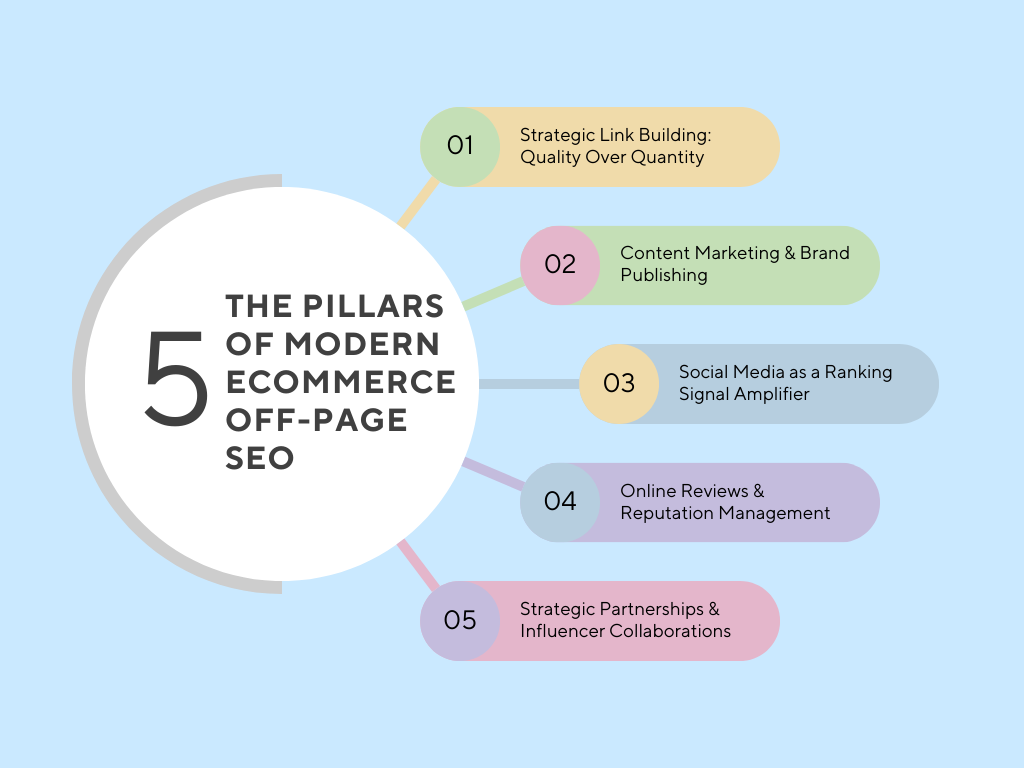
1. Strategic Link Building: Quality Over Quantity
This is the most recognized pillar, but its execution has matured dramatically.
- Digital PR & Ecommerce Outreach: Instead of begging for links, create linkable assets. This includes original industry research (“State of DTC Fitness Apparel 2026”), high-production value buying guides (“The Engineer’s Ultimate Guide to Choosing a 3D Printer”), or tools (e.g., a “Coffee Bean Grind Size Calculator” for a kitchenware store). Then, conduct targeted outreach to journalists, bloggers, and industry analysts.
- Broken Link Building & Resource Page Link Acquisition: Find broken links on relevant high-authority blogs’ resource pages. Politely inform the webmaster and suggest your superior, in-depth product guide or category page as a replacement.
- Guest Posting for Authority (Not Just Links): Contribute genuine, expert articles to publications your target audience reads. The goal is to showcase your brand’s expertise. The link is a valuable byproduct, but the brand exposure and referral traffic are equally important.
- Unlinked Brand Mention Monitoring: Use tools to find places where your brand is mentioned but not linked. A friendly “thank you” email can often convert these into valuable backlinks.
2. Content Marketing & Brand Publishing
Your content is the engine that drives off-page interest. In 2026, ecommerce brands must think like publishers.
- Expert Blog & Resource Centers: Move beyond simple product descriptions. Create content that solves problems at every stage of the customer journey. A furniture store might publish articles on “Small Space Interior Design Principles” or “Sustainable Wood Sourcing.”
- Visual & Interactive Content: Infographics, comprehensive video tutorials (hosted on YouTube, embedded on-site), and interactive tools (e.g., a “Sunglasses Face Shape Matcher”) are highly shareable and attract natural links.
- Syndication & Repurposing: Turn a flagship guide into a webinar series, a podcast episode, and a suite of social media clips, amplifying its reach and earning links from different platforms.
3. Social Media as a Ranking Signal Amplifier
While direct social shares are a debated “ranking factor,” their indirect impact is undeniable.
- Community Building: Foster genuine communities on platforms like Instagram, TikTok, or niche forums. User-generated content (UGC), reviews, and discussions are powerful brand signals.
- Social Listening & Engagement: Actively engage in conversations about your industry. Answering questions on Reddit’s r/BuyItForLife or a specialized Facebook group positions you as an expert.
- Platform-Specific Authority: A viral YouTube product teardown or a highly-pinned Pinterest board drives massive traffic and signals popularity to search engines.
4. Online Reviews & Reputation Management
For ecommerce, reviews are a critical off-page trust signal.
- Google Business Profile (for Local/Physical Components): Collect and manage reviews diligently. Rich snippets with star ratings in SERPs drastically increase click-through rates.
- Third-Party Review Platforms: Encourage reviews on trusted industry-specific sites (e.g., Trustpilot, Sitejabber) and niche communities.
- Managing Negative Feedback: Professional, solution-oriented responses to negative reviews can actually improve trust, showing you stand behind your products.
5. Strategic Partnerships & Influencer Collaborations
Collaborations extend your brand’s reach into new, trusted networks.
- Micro & Nano-Influencer Partnerships: In 2026, authenticity trumps follower count. Partner with influencers who have highly engaged audiences in your exact niche. Provide them with products for honest review or co-creation.
- Affiliate Marketing Programs: A well-structured program turns passionate customers and niche content creators into brand ambassadors. Their in-depth review pages are often rich, keyword-optimized pieces of content that link back to you.
- Co-Branding & Cross-Promotions: Partner with non-competing brands that share your target audience for joint webinars, giveaways, or product bundles.
Step-by-Step Actionable Strategies for 2026
Let’s translate these pillars into a concrete 90-day action plan.
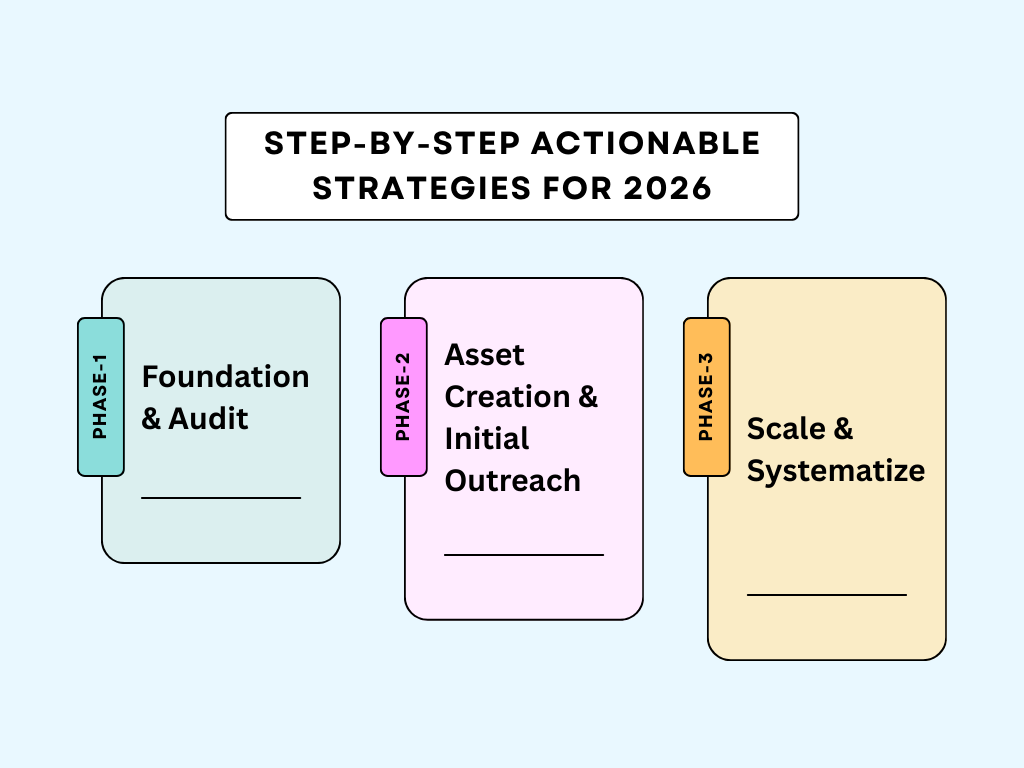
Phase 1: Foundation & Audit
- Competitor Backlink Analysis: Use tools like Ahrefs or Semrush to dissect where your top 3 competitors’ backlinks come from. Identify potential opportunities for your own outreach.
- Unlinked Mention Audit: Set up Google Alerts and use a tool like Mention to find existing brand mentions without links.
- Identify 5 Key Industry Publications: Research blogs, online magazines, and news sites where your ideal customer spends time.
Phase 2: Asset Creation & Initial Outreach
- Create One “10x” Linkable Asset: Dedicate resources to creating one exceptional piece of content (research report, ultimate guide, interactive tool) that is objectively better than anything else on the topic.
- Develop a Target Media List: Curate a list of 50-100 relevant journalists, bloggers, and webmasters, complete with contact info and notes on their coverage.
- Execute Your First Outreach Campaign: Craft personalized outreach emails referencing the recipient’s previous work and clearly explaining why your asset would be valuable to their audience. Focus on building a relationship, not just blasting a link request.
Phase 3: Scale & Systematize
- Launch a Micro-Influencer Program: Systematically identify and reach out to 20-30 micro-influencers in your niche with a clear, fair collaboration proposal.
- Formalize an Affiliate Program: Use a platform like ShareASale or PartnerStack to manage affiliates, providing them with high-quality marketing materials.
- Institute a Review Generation System: Automate post-purchase email sequences to politely ask for reviews on your site and Google.
Common Off-Page SEO Mistakes Ecommerce Sites Must Avoid
- Mistake 1: Buying Links or Using PBNs (Private Blog Networks). This is a high-risk, outdated tactic that will almost certainly lead to penalties in 2026.
- Mistake 2: Neglecting Local SEO for Hybrid Businesses. If you have a physical warehouse or store, a fully optimized Google Business Profile is non-negotiable.
- Mistake 3: Inconsistent NAP (Name, Address, Phone) Citations. Inaccurate business information across directories hurts local rankings and trust.
- Mistake 4: Focusing Exclusively on Homepage Links. Deep links to high-value category pages and product guides pass more relevant “link juice” and rank those specific commercial pages.
- Mistake 5: Ignoring Brand-Building for Direct Link Acquisition. A strong brand earns links naturally. Invest in public relations and community, not just SEO outreach.
Expert Tips & Best Practices for 2026 and Beyond
- Think “Topical Authority”: Don’t just build links to your site; build links that establish your site as the leading expert on a specific cluster of topics (e.g., “home brewing,” “minimalist travel gear”).
- Leverage Data & Original Research: Commission or conduct your own surveys. Data-driven insights are among the most linkable and shareable assets. Publishing on sites like Statista can add tremendous authority.
- Prepare for Video & Visual Search: Optimize your YouTube channel and use structured data for product videos. As visual search grows, having a strong presence on visual platforms becomes an off-page SEO advantage.
- Prioritize Relationships Over Transactions: View every outreach email, influencer collaboration, or customer review interaction as the start of a long-term relationship, not a one-time exchange.
- Monitor Your Brand’s E-E-A-T Footprint: Regularly audit what the internet says about you. The first page of Google search results for your brand name should reflect authority, trust, and positive sentiment.
Frequently Asked Questions (FAQ) Section
1. What is the most important off-page SEO factor for ecommerce in 2026?
While backlinks remain critical, the overarching most important factor is demonstrating E-E-A-T (Experience, Expertise, Authoritativeness, Trustworthiness) through a combination of high-quality backlinks from reputable sources, a positive and widespread brand reputation, and expert engagement in your industry.
2. How many backlinks do I need to start seeing results?
There is no magic number. A single backlink from a supremely authoritative site like The New York Times Wirecutter or a leading niche publication can have more impact than 1,000 low-quality links. Focus on the quality and relevance of each link.
3. Is social media marketing considered off-page SEO?
Yes, indirectly. While social shares are not a direct ranking factor, the brand awareness, traffic, and amplification of your content that social media provides are significant off-page signals. A viral social post can lead to natural coverage and links from other websites.
4. How do I build backlinks if I’m a new ecommerce brand with no reputation?
Start by creating exceptional, helpful content (guides, infographics). Engage in community forums (Reddit, Quora) by providing genuine advice without self-promotion. Consider digital PR angles around your founder’s story or a unique product differentiator. Partner with micro-influencers who are accessible to new brands.
5. Are directory submissions still worth it for ecommerce?
For general, low-quality web directories, no. However, being listed in highly relevant, niche-specific industry directories or local business chambers (if applicable) can provide valuable, contextually relevant citations.
6. How important are .edu or .gov backlinks for ecommerce?
They are powerful due to the inherent trust of these domains, but they are also very difficult to obtain legitimately. Do not spend excessive energy chasing them. Focus on authoritative commercial and editorial sites within your industry, which are more relevant and achievable.
7. Can user-generated content (UGC) help with off-page SEO?
Absolutely. UGC in the form of reviews, social media posts, and forum discussions creates a web of brand mentions and signals of popularity and trust. Featuring UGC on your product pages also enhances E-E-A-T by showing real customer experiences.
8. How long does it take for off-page SEO efforts to show impact?
Off-page SEO is a long-term strategy. You may see initial referral traffic from a successful placement within weeks. However, the full impact on organic search rankings typically takes 4-9 months, as search engines need time to discover, crawl, and process the new authority signals pointing to your site.
9. Should I disavow spammy backlinks?
Only if you have a manual action penalty from Google or a significant number of truly toxic, spammy links pointing to your site. In most cases, Google’s algorithm is good at discounting low-quality links. Incorrect use of the disavow tool can harm your site. When in doubt, consult an SEO professional.
10. How do I measure the ROI of off-page SEO?
Track key metrics beyond rankings: Organic traffic growth (especially to targeted commercial pages), growth in referring domains, changes in branded search volume (a sign of brand building), and ultimately, increases in organic revenue/conversions. Tools like Google Search Console and Google Analytics 4 are essential.
Conclusion & The Future Outlook
Mastering off page seo techniques for ecommerce website in 2026 is not about gaming the system; it’s about authentically building a brand that the internet—and its gatekeeper, Google—deems worthy of prominence. It’s a marathon, not a sprint, requiring consistency, creativity, and a genuine commitment to providing value.
The future points toward even greater integration of AI in search, the continued rise of visual and voice search, and an unrelenting focus on user experience and trust. The brands that will thrive are those that understand their off-page presence—their digital footprint of authority, partnerships, and community—is their most valuable SEO asset.
Key Takeaways:
- Shift from link building to authority and relationship building.
- Content is your primary outreach currency; invest in creating exceptional, link-worthy assets.
- E-E-A-T is the guiding principle for all off-page activities.
- Integrate influencer marketing, digital PR, and community engagement into your core SEO strategy.
- Measure success holistically through traffic, brand growth, and revenue, not just backlink count.
For advanced ecommerce growth strategies, technical insights, and scalable content frameworks, explore professional resources at rankifycontent.com.