Table of Contents
Introduction
Working from home has become more than just a trend—it is now a sustainable way to earn income and build long-term businesses. With the rise of ecommerce, social media, and digital platforms, finding the best product to sale from home has become easier and more accessible than ever. People no longer need offices, warehouses, or large investments to start selling products successfully.
Selling from home offers flexibility, low startup costs, and the freedom to work on your own schedule. However, success depends heavily on choosing the right product. The best products to sell from home are those that match market demand, are easy to manage, and can be marketed effectively without heavy overhead.
What Does “Best Product to Sale From Home” Mean?
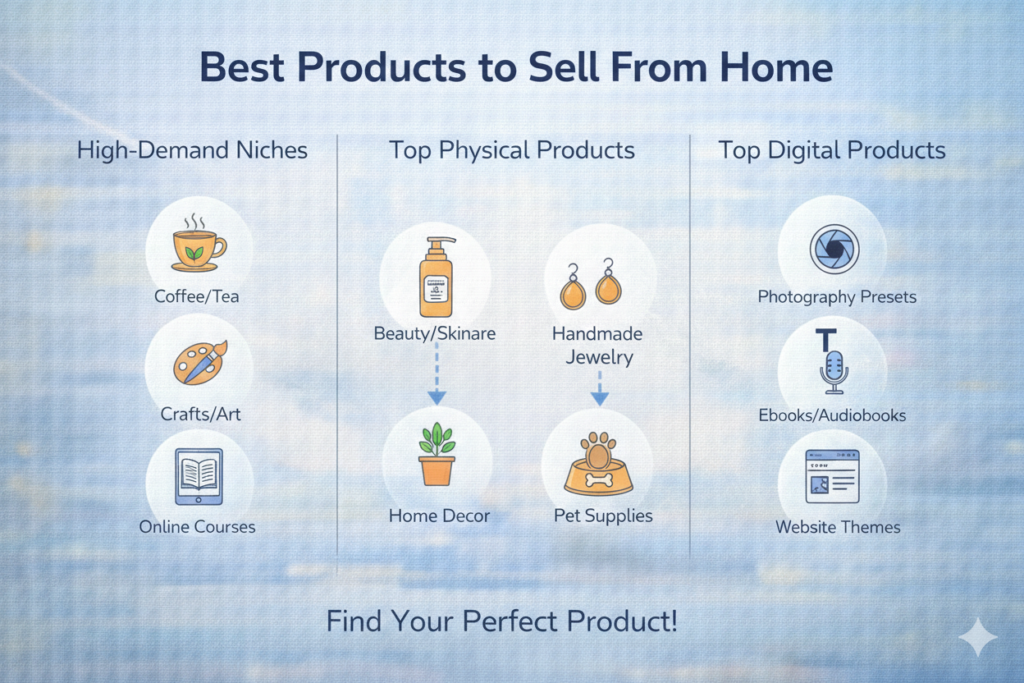
The best product to sale from home refers to items that can be produced, sourced, or managed from a home environment without requiring large storage space, expensive equipment, or complex logistics. These products are usually lightweight, easy to ship, or delivered digitally.
The ideal home-based product balances affordability, demand, and profitability. It should allow sellers to start small, test the market quickly, and scale gradually without taking major financial risks.
Why Selling Products From Home Is a Smart Choice
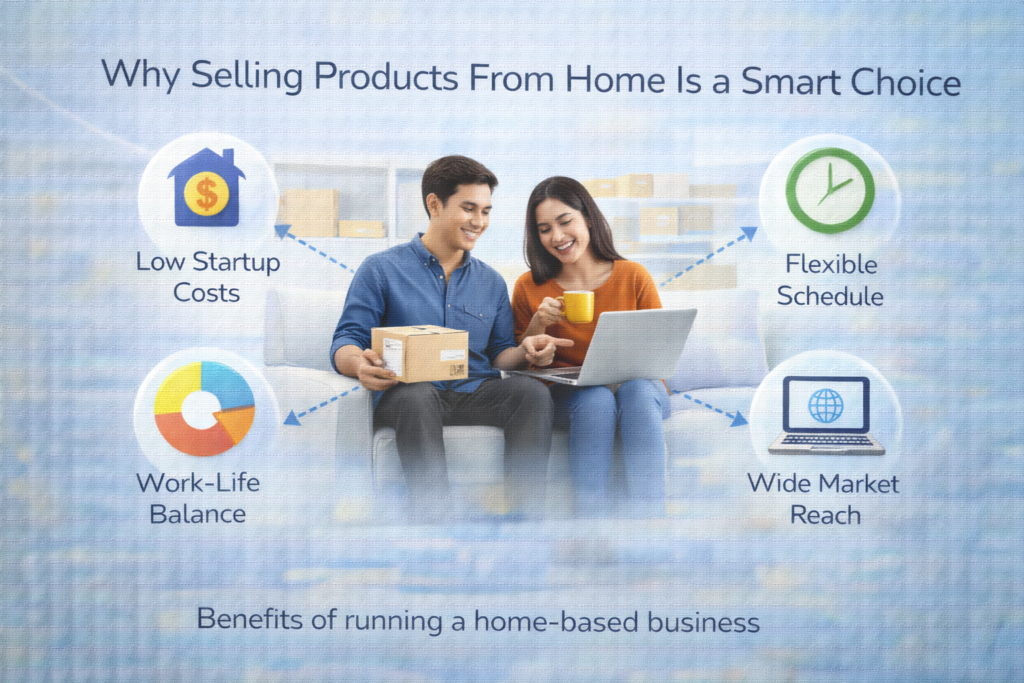
Selling from home significantly reduces business expenses. There is no need to rent office space, hire staff initially, or invest heavily in infrastructure. This makes home-based selling especially attractive for beginners, students, freelancers, and anyone looking for additional income.
Another major advantage is control. When you choose the best product to sale from home, you control pricing, marketing, branding, and customer relationships. This independence allows faster decision-making and better profit management.
Characteristics of the Best Products to Sell From Home
Not every product is suitable for home-based selling. The best products share common characteristics. They are easy to store, have consistent demand, low return rates, and can be shipped without high costs. Products that solve everyday problems or fulfill specific needs perform especially well.
The best product to sale from home should also allow differentiation. Even simple products can succeed if they offer better quality, improved design, or clearer value than competitors.
Physical vs Digital Products for Home Selling
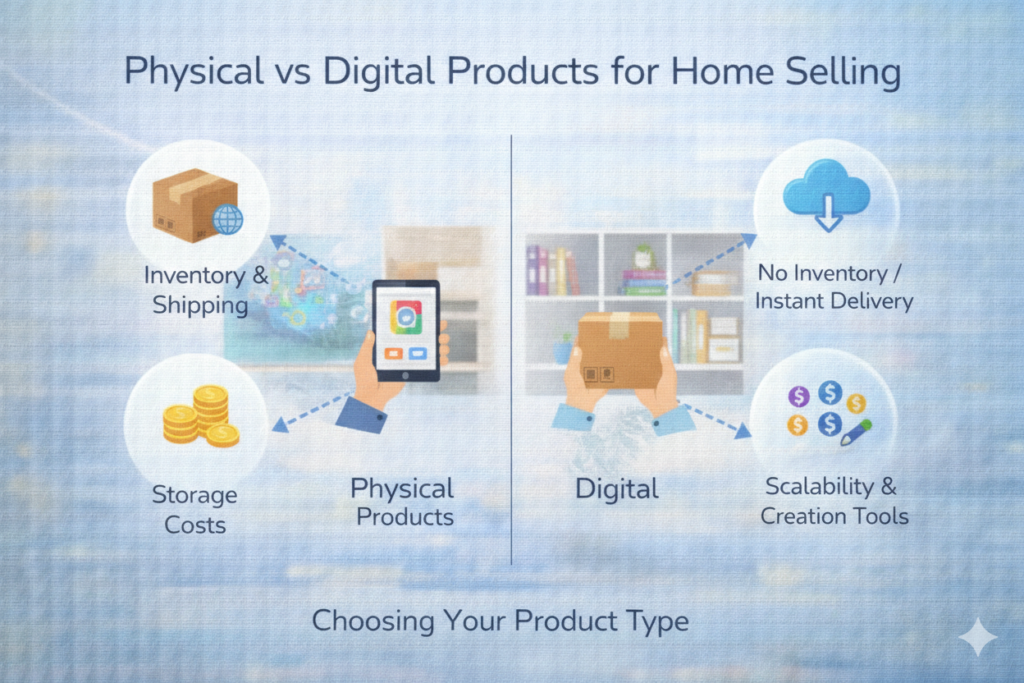
Home sellers can choose between physical and digital products. Physical products include handmade items, accessories, beauty tools, home décor, or small gadgets. These products require basic storage and shipping but often have strong demand.
Digital products, on the other hand, require no shipping or inventory. Items such as ebooks, online courses, templates, and digital tools are considered some of the best products to sell from home because they offer high margins and scalability. Choosing between physical and digital depends on skills, resources, and business goals.
Low-Investment Products Ideal for Home Businesses
Low-investment products are especially suitable for home-based sellers. These products allow testing without major financial commitment. Examples include accessories, organizers, stationery items, beauty tools, and print-on-demand products.
Low-investment products reduce pressure and allow learning through experience. Many successful sellers start with simple products and expand once they understand market behavior.
Importance of Demand and Market Research
No matter how convenient a product is, it will not sell without demand. Researching customer needs, trends, and competition is essential when choosing the best product to sale from home. Understanding what people are actively searching for and buying increases the chance of success.
Customer reviews, social media trends, and online marketplaces provide valuable insights into demand gaps and opportunities. Products that address common complaints or unmet needs often perform better than generic items.
Selling Platforms for Home-Based Products
Home-based sellers have access to multiple platforms. Online marketplaces, ecommerce websites, and social media platforms allow sellers to reach customers without physical storefronts. Each platform has its own advantages depending on the product type and target audience.
Many sellers start with one platform and expand as sales grow. Choosing the right platform plays a major role in how effectively a product can be marketed from home.
Common Mistakes When Choosing Home-Based Products
A common mistake is choosing products based on personal preference rather than market demand. Another error is underestimating costs such as packaging, shipping, and marketing. Some sellers also choose products that are too competitive without differentiation.
Avoiding these mistakes requires research, planning, and patience. The best product to sale from home is one that aligns with both market demand and your capabilities.
Best Product Ideas to Sell From Home
Choosing the best product to sale from home depends on simplicity, demand, and manageability. Products that require minimal storage space and can be shipped easily are ideal for home-based sellers. Popular product ideas include handmade crafts, home décor items, phone accessories, beauty tools, kitchen gadgets, and stationery products.
Handmade and customized products are especially attractive because they allow sellers to charge premium prices. Items such as personalized gifts, candles, soaps, and artwork benefit from uniqueness and emotional value, making them strong candidates for home selling.
Digital Products as Home-Based Business Opportunities
Digital products are considered among the best products to sell from home due to their low overhead and high scalability. Products such as ebooks, printable planners, templates, online courses, and digital art require no physical inventory or shipping.
Once created, digital products can be sold repeatedly with minimal effort. This makes them ideal for individuals with skills in writing, design, teaching, or software tools. Digital products also allow global reach without logistical challenges.
Print-on-Demand Products for Home Sellers
Print-on-demand is another excellent option for home-based sellers. This model allows sellers to design products such as t-shirts, mugs, notebooks, and wall art while third-party services handle printing and shipping.
Print-on-demand eliminates the need for inventory and upfront investment, making it beginner-friendly. Home sellers can focus on creativity, branding, and marketing while outsourcing production.
High-Demand Physical Products for Home Selling
Some physical products consistently perform well when sold from home. These include small home organizers, beauty accessories, fitness tools, pet accessories, and eco-friendly products. These items solve everyday problems and are easy to store and ship.
High-demand products often benefit from repeat purchases and word-of-mouth marketing. Sellers who focus on quality and customer satisfaction can build long-term trust and stable income.
Niche Products and Low Competition Opportunities
Finding niche products can significantly increase profitability. Instead of targeting broad markets, home sellers can focus on specific audiences or needs. Niche products face less competition and allow better differentiation.
Examples include products for specific hobbies, professions, or lifestyle needs. Niche-focused selling often results in higher conversion rates because the product directly addresses a clear problem.
Where to Sell Products From Home
Home-based sellers have multiple selling platforms to choose from. Online marketplaces provide access to large audiences, while personal ecommerce stores offer branding control. Social media platforms are also powerful channels for selling directly to customers.
Each platform suits different product types. Many successful sellers use a combination of platforms to maximize reach and reduce dependency on a single channel.
Tools and Resources for Home Sellers
Home sellers benefit from using tools that simplify operations. Inventory tracking, order management, customer communication, and marketing tools help streamline daily tasks.
Using the right tools saves time and allows sellers to focus on growth. Even small home businesses can operate professionally with minimal investment.
Pricing Strategies for Home-Based Products
Pricing plays a critical role in selling products from home. Prices must cover costs while remaining attractive to customers. Home sellers should avoid underpricing, as it reduces perceived value and profit potential.
Value-based pricing, bundles, and limited-time offers can improve conversions. Understanding customer willingness to pay helps sellers price products more effectively.
Common Challenges in Home-Based Selling
Home-based sellers face challenges such as time management, limited storage space, and marketing visibility. However, these challenges can be managed with planning and efficient processes.
Sellers who treat their home business seriously and continuously improve are more likely to succeed. Learning from mistakes and adapting strategies is part of long-term growth.
Scaling a Home-Based Product Business the Right Way
Scaling a home-based business requires a thoughtful and disciplined approach. Once you identify the best product to sale from home and begin receiving steady orders, the goal should not be rapid expansion at any cost, but sustainable growth that maintains quality and customer trust. Many home sellers fail when they try to scale too quickly without proper systems in place.
Smart scaling starts with optimizing existing operations. This includes improving order processing, standardizing packaging, organizing inventory efficiently, and documenting daily workflows. When these foundations are strong, sellers can confidently increase order volume without overwhelming themselves. Gradual scaling protects both mental workload and business reputation.
Expanding Product Lines From Home
One of the safest ways to scale is by expanding within the same product niche. Instead of launching unrelated products, sellers should introduce complementary or upgraded versions of existing items. This could include bundles, size variations, premium versions, or accessories that enhance the main product.
This strategy works well because it targets the same audience and leverages existing customer trust. When customers already like your product, they are more likely to purchase related items. Product expansion from home allows growth without dramatically increasing marketing costs or complexity.
Advanced Marketing Strategies for Home Sellers
Marketing becomes more important as competition increases. For home-based sellers, the most effective marketing strategies focus on authenticity, education, and problem-solving. Customers trust real people more than faceless brands, which gives home sellers a unique advantage.
Content marketing plays a major role in selling from home. Short videos, behind-the-scenes content, product demos, and customer testimonials build trust quickly. Explaining how and why a product works is often more effective than aggressive selling. Over time, consistent content positions the seller as a reliable solution provider rather than just a product seller.
Building a Strong Brand From Home
Branding is one of the most powerful long-term assets for home-based sellers. Even when selling simple products, branding increases perceived value and customer loyalty. A strong brand helps sellers move away from price competition and build repeat business.
Branding from home includes consistent visuals, clear messaging, quality packaging, and reliable customer service. Customers remember how a product made them feel, not just the product itself. Home sellers who invest in branding early are better positioned for long-term success.
Managing Operations, Time, and Work-Life Balance
Running a business from home comes with unique challenges. Without structure, work can easily spill into personal life. Successful home sellers create routines, set work hours, and define clear boundaries between business and personal time.
Using simple automation tools for order management, customer responses, and marketing helps save time. When operations are organized, sellers can focus on growth rather than daily stress. Time management is not just a productivity issue—it directly affects long-term sustainability.
Customer Experience and Retention
Customer retention is often underestimated by home-based sellers. However, repeat customers are one of the most reliable sources of revenue. A positive first experience—fast delivery, good packaging, clear instructions, and responsive support—encourages customers to buy again.
Offering small incentives such as discounts for repeat purchases or exclusive offers builds loyalty. Home sellers who prioritize customer experience often grow faster with lower marketing costs.
Common Mistakes That Limit Home-Based Growth
One common mistake is choosing products based on personal interest rather than market demand. Another is underpricing products, which reduces profit and perceived value. Some sellers also ignore feedback, missing valuable opportunities for improvement.
Scaling without planning is another major risk. Sellers who grow too fast without proper inventory or time management often burn out or damage customer trust. Sustainable growth always beats fast growth.
Frequently Asked Questions (FAQs)
What is the best product to sale from home for beginners?
The best product to sale from home for beginners includes digital products, print-on-demand items, handmade goods, small accessories, and low-storage physical products. These require minimal investment and are easy to manage.
Can selling from home become a full-time business?
Yes, many full-time businesses started from home. With the right product, branding, and consistency, home-based selling can grow into a stable and scalable income source.
Do I need a license to sell products from home?
This depends on your location and product type. Some products may require basic registration or compliance. Sellers should always check local regulations before scaling.
Is digital selling better than physical selling from home?
Digital selling offers higher margins and scalability, but physical products can be easier to start for some sellers. The best choice depends on skills, resources, and long-term goals.
How long does it take to see results selling from home?
Results vary based on product selection, marketing, and effort. Some sellers see results within weeks, while others take months. Consistency and learning are key factors.
Final Extended Conclusion (With External & Internal Dofollow Links)
Choosing the best product to sale from home is one of the most realistic and sustainable ways to enter online business today. Home-based selling offers flexibility, low startup costs, and the ability to test ideas without major financial risk. As online shopping and remote work continue to grow, opportunities for home entrepreneurs are expanding across industries.
Successful home businesses are built on demand, value creation, and long-term thinking—not shortcuts. According to insights published by Shopify, home-based and low-overhead businesses are among the most resilient ecommerce models because they allow sellers to adapt quickly to market changes (external dofollow link:
https://www.shopify.com/blog/business-ideas).
Similarly, research shared by Oberlo highlights that sellers who focus on niche products and customer trust perform better than those competing purely on price (external dofollow link:
https://www.oberlo.com/blog/online-business-ideas). These findings reinforce the idea that selling from home can evolve into a serious and profitable business when approached strategically.
For readers who want to explore more guidance on ecommerce growth, product research, and home-based business strategies, you can find in-depth resources in our home business learning section (internal dofollow link example:
https://rankifycontent.com/home-based-business-ideas).
In conclusion, the best product to sale from home is one that aligns with market demand, fits your resources, and supports long-term growth. With patience, smart planning, and continuous improvement, a home-based business can grow from a simple idea into a sustainable source of income and independence.