Table of Contents
Introduction
In the highly competitive Amazon marketplace, visibility determines success. No matter how good a product is, it cannot generate sales if customers cannot find it. This is where an amazon product ranking app becomes a critical tool for Amazon sellers. Product ranking directly impacts how often a product appears in search results, how many clicks it receives, and how many conversions it generates. Products that rank on the first page—especially in the top positions—receive the majority of traffic, while those buried deeper rarely get noticed.
An amazon product ranking app removes uncertainty from selling on Amazon. Instead of guessing why sales fluctuate, sellers gain access to clear data that shows how their products perform for specific keywords. This allows sellers to make informed decisions based on evidence rather than assumptions, which is essential for long-term success.
What Is an Amazon Product Ranking App?
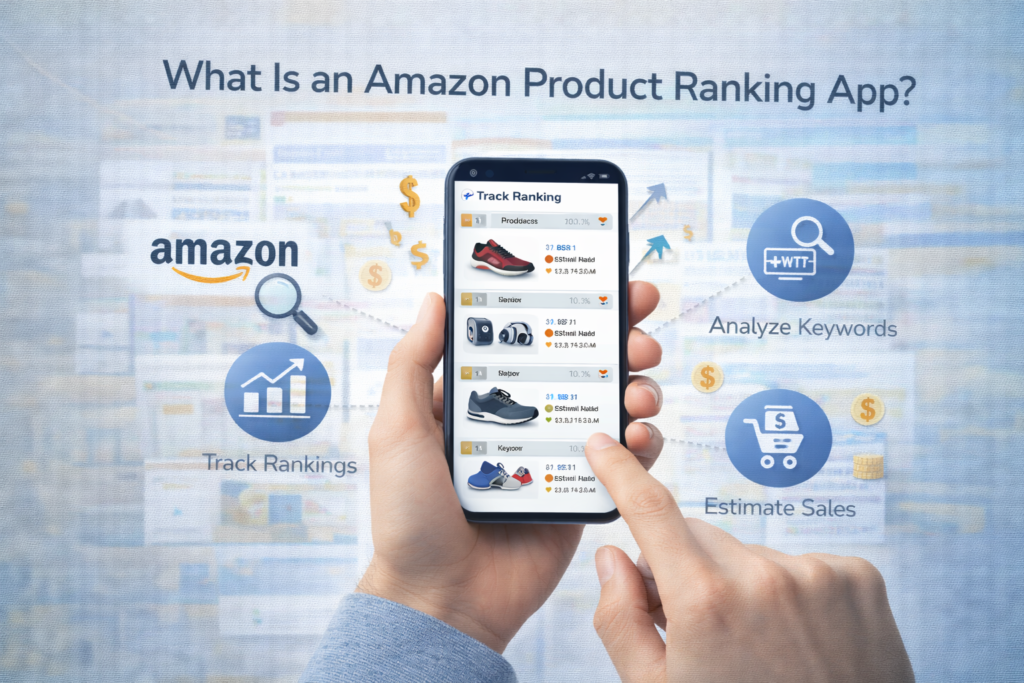
An amazon product ranking app is a specialized software tool that tracks where a product appears in Amazon search results for selected keywords. It monitors keyword positions over time, showing whether rankings improve, decline, or remain stable. This information helps sellers understand how visible their products are to potential buyers.
Most ranking apps store historical data, allowing sellers to analyze trends and patterns. Some advanced apps also include competitor ranking comparison, alerts for ranking drops, and category-level insights. These features turn raw data into actionable intelligence, making ranking apps essential for professional Amazon selling.
Why Product Ranking Matters on Amazon
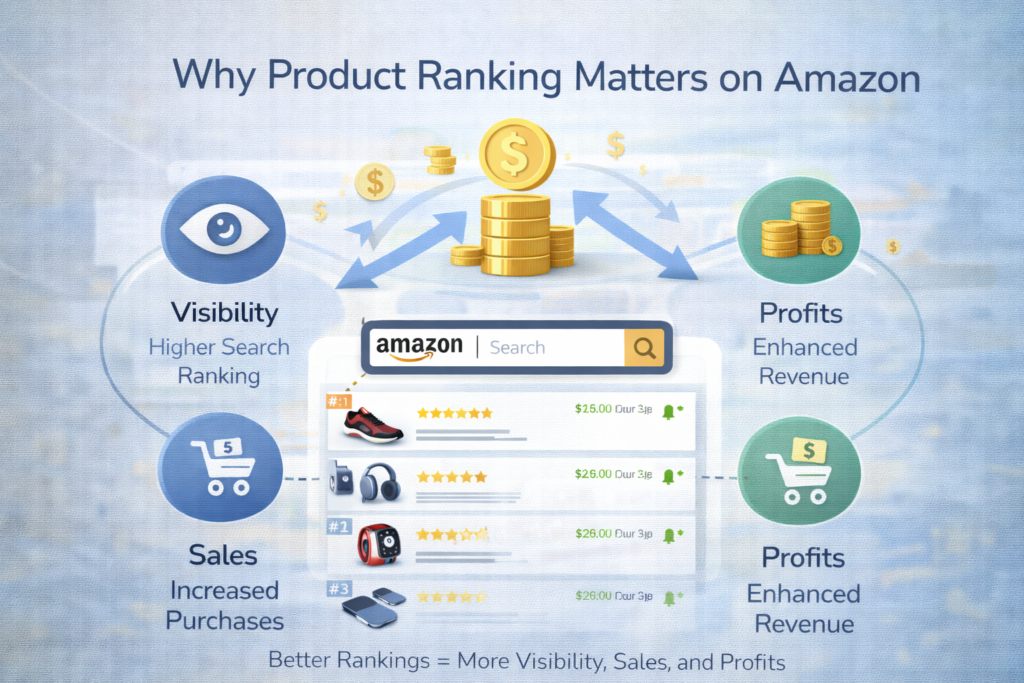
Product ranking is the gateway to organic sales on Amazon. Higher-ranking products receive more impressions, more clicks, and ultimately more purchases. This creates a positive cycle: better ranking leads to more sales, and more sales further strengthen ranking due to Amazon’s algorithm.
Using an amazon product ranking app allows sellers to understand this cycle clearly. Sellers can see which keywords contribute most to visibility and which ones need improvement. Without ranking data, sellers often waste time optimizing the wrong elements or investing in ineffective advertising strategies.
Keyword Ranking vs Category Ranking
Amazon rankings are generally divided into keyword rankings and category rankings. Keyword ranking shows where a product appears when customers search a specific keyword, such as “wireless earbuds” or “kitchen organizer.” Category ranking, on the other hand, reflects a product’s performance relative to others within its category, usually based on sales velocity.
An amazon product ranking app focuses primarily on keyword rankings because keywords are the main drivers of buyer traffic. However, understanding category ranking alongside keyword ranking provides a more complete view of overall performance. Together, these metrics help sellers evaluate both visibility and competitiveness.
How Amazon Product Ranking Apps Work
Most amazon product ranking apps track keywords by simulating searches or analyzing Amazon’s ranking signals across different locations and devices. They check where a product appears for a given keyword and record that position at regular intervals.
Over time, this data builds a ranking history that shows trends rather than isolated changes. Sellers can then correlate ranking changes with actions such as listing updates, price changes, reviews gained, or advertising campaigns. This cause-and-effect understanding is what makes ranking apps so powerful.
Benefits of Using an Amazon Product Ranking App
One of the biggest advantages of using an amazon product ranking app is clarity. Sellers can clearly identify which keywords are performing well and which ones need optimization. This allows for better prioritization and more efficient use of time and budget.
Ranking apps also help sellers track the impact of PPC campaigns. If rankings improve after running ads, it confirms the strategy is working. If rankings drop, sellers can quickly investigate and adjust. This continuous feedback loop supports smarter growth and prevents costly mistakes.
Role of Ranking Apps in Listing Optimization
Listing optimization is one of the most effective ways to improve Amazon rankings, but optimization without measurement is incomplete. An amazon product ranking app shows whether changes to titles, bullet points, descriptions, images, or backend keywords actually improve rankings.
This allows sellers to test changes systematically rather than randomly. Over time, even small improvements in ranking can lead to significant increases in organic traffic and sales, making ranking apps a cornerstone of optimization strategy.
Competitor Tracking Through Ranking Apps
Competition on Amazon is intense, and sellers rarely operate in isolation. Ranking apps allow sellers to monitor competitor rankings for the same keywords. This insight reveals which competitors dominate page one and how competitive certain keywords truly are.
By analyzing competitor movements, sellers can identify opportunities to target alternative keywords, improve conversion rates, or adjust pricing. Competitive intelligence turns ranking data into a strategic advantage rather than just a reporting tool.
Ranking Volatility and Algorithm Changes
Amazon rankings are dynamic and can change due to algorithm updates, competitor actions, seasonal demand, or pricing shifts. Without a ranking app, sellers often notice these changes only after sales drop.
An amazon product ranking app provides early warnings by highlighting sudden ranking changes. This allows sellers to respond quickly—by adjusting bids, improving listings, or addressing conversion issues—before long-term damage occurs.
Beginner vs Advanced Use of Ranking Apps (Extended)
Beginners often start by tracking a limited number of keywords to understand basic ranking behavior. As experience grows, sellers expand tracking to include dozens or hundreds of keywords across multiple ASINs.
Advanced sellers use amazon product ranking apps as part of a complete data ecosystem that includes advertising analytics, conversion tracking, and inventory management. At this level, ranking data becomes a strategic planning tool rather than just a monitoring feature.
Common Mistakes When Using Amazon Product Ranking Apps
A common mistake is tracking too many keywords without a clear strategy. This creates data overload and confusion. Another mistake is reacting emotionally to daily ranking fluctuations instead of analyzing long-term trends.
Ranking apps are most effective when used consistently and analytically. Sellers should focus on patterns, not panic, and use ranking data to guide decisions rather than dictate impulsive changes.
How to Use an Amazon Product Ranking App Step by Step
Using an amazon product ranking app effectively requires a structured approach rather than random tracking. The first step is selecting the right ASINs to monitor. Sellers should focus on their main products and avoid tracking too many items at once, especially in the beginning. This keeps the data manageable and meaningful.
The next step is adding target keywords. These should include primary keywords (high-volume, main search terms) and secondary keywords (long-tail or supporting terms). Once keywords are added, the ranking app begins tracking positions over time. Sellers should allow several days or weeks of data collection before making conclusions, as rankings naturally fluctuate.
Choosing the Right Keywords to Track
Keyword selection is one of the most critical aspects of using an amazon product ranking app. Tracking irrelevant or overly broad keywords leads to misleading data. Instead, sellers should focus on keywords with clear buying intent—terms customers use when they are ready to purchase, not just browse.
Long-tail keywords often convert better and are easier to rank for, especially for new products. A balanced keyword list includes both competitive keywords for long-term growth and easier keywords for quicker wins. This strategic selection ensures ranking data reflects real sales potential.
Understanding Ranking Positions and Their Meaning
Not all ranking positions deliver equal value. Ranking in the top 3 positions generates significantly more clicks than ranking on the bottom of page one. Page two and beyond receive minimal traffic.
An amazon product ranking app helps sellers understand where visibility truly comes from. Instead of celebrating small ranking improvements, sellers should aim for meaningful positions that drive traffic. This perspective helps prioritize optimization efforts effectively.
Using Ranking Data to Improve Listings
Ranking data is only valuable if it leads to action. When a keyword ranking improves, sellers should analyze what changed—such as listing updates, image improvements, or pricing adjustments. When rankings drop, it signals potential issues with relevance or conversion rate.
By connecting ranking changes with listing edits, sellers can refine titles, bullet points, descriptions, and backend keywords more strategically. Over time, this process leads to stronger relevance and higher organic rankings.
Relationship Between PPC Advertising and Ranking
Paid advertising and organic ranking are closely connected. Running ads on important keywords can increase visibility and sales velocity, which may positively influence organic ranking. An amazon product ranking app helps sellers monitor this relationship clearly.
If rankings improve during or after a PPC campaign, it indicates that advertising is supporting organic growth. If rankings remain unchanged, sellers may need to optimize listings or adjust targeting. Ranking apps help avoid wasted ad spend by showing real impact.
Tracking Ranking Stability Over Time
One common mistake is reacting to daily ranking changes. Amazon rankings naturally fluctuate due to competition, demand, and algorithm updates. Ranking apps provide historical data that helps sellers distinguish between normal variation and real performance shifts.
Stable rankings over time indicate strong listing relevance and conversion. Unstable rankings suggest weaknesses that need attention. Long-term trend analysis is far more valuable than short-term movements.
Competitor Keyword Ranking Analysis
Advanced sellers use amazon product ranking apps to track competitor ASINs for the same keywords. This reveals which competitors consistently dominate top positions and which ones fluctuate.
By studying competitor behavior, sellers can identify opportunities to target less competitive keywords, improve differentiation, or adjust pricing. Competitor ranking analysis turns data into competitive advantage.
Ranking Improvement Through Conversion Optimization
Amazon’s algorithm rewards products that convert well. Even with good keyword optimization, poor conversion rates limit ranking growth. Ranking apps help identify keywords that get impressions but fail to climb rankings.
This often indicates conversion issues such as weak images, unclear value propositions, or insufficient reviews. Improving conversion elements directly supports ranking improvement and sales growth.
Using Alerts and Notifications Effectively
Many amazon product ranking apps offer alerts for major ranking changes. These alerts help sellers respond quickly to sudden drops caused by competitors, stock issues, or listing problems.
However, alerts should be used wisely. Not every drop requires immediate action. Sellers should evaluate context before making changes to avoid unnecessary disruptions.
Beginner vs Advanced Ranking Strategies
Beginners should focus on tracking a small set of high-intent keywords and learning how rankings respond to listing changes. This builds understanding without overwhelming data.
Advanced sellers manage larger keyword sets, multiple ASINs, and competitor tracking. At this level, ranking apps become strategic planning tools rather than simple trackers.
Common Mistakes When Using Ranking Apps (Advanced View)
Many sellers track rankings but fail to act on the data. Others overreact to small changes or ignore conversion metrics. Ranking data should always be combined with sales, traffic, and conversion insights.
An amazon product ranking app is most effective when used as part of a broader optimization strategy, not in isolation.
Using an Amazon Product Ranking App for Scaling
Once a product achieves stable rankings and consistent sales, the real opportunity begins—scaling. An amazon product ranking app becomes extremely powerful at this stage because it helps sellers decide what to scale, when to scale, and how to scale.
Instead of launching random new products, sellers can analyze which keywords are driving the most visibility and sales. These insights allow sellers to expand variations, introduce complementary products, or launch similar products using proven keyword demand. Scaling based on ranking data significantly reduces risk and increases the probability of success.
Portfolio Management Using Ranking Data
Advanced sellers rarely manage a single product. They manage product portfolios, and ranking apps play a central role in this process. By tracking multiple ASINs and keyword sets, sellers can compare performance across products and allocate resources more effectively.
Ranking data helps identify which products deserve more advertising budget, which ones need listing optimization, and which products should be phased out. Portfolio-level visibility transforms Amazon selling from guesswork into a structured business system.
Brand Building with the Help of Ranking Apps
Brand growth on Amazon depends on keyword dominance and search visibility. An amazon product ranking app allows brands to measure how well they own their core keywords compared to competitors.
Brands that consistently rank across multiple high-intent keywords gain authority and trust in Amazon’s ecosystem. Over time, this reduces reliance on paid ads and increases organic sales. Ranking apps help brands track progress toward long-term visibility goals rather than focusing only on short-term sales spikes.
Using Ranking Data to Launch New Products
One of the smartest ways to use an amazon product ranking app is during new product launches. Instead of targeting random keywords, sellers can analyze which keywords already perform well for similar products.
By launching new products around validated keywords, sellers enter the market with a data-backed strategy. Ranking apps then help monitor early performance, allowing quick adjustments before competitors gain an advantage.
Identifying Declining Products Early
Ranking drops often appear before sales decline. A ranking app acts as an early-warning system by highlighting downward trends that may not yet show in revenue.
This allows sellers to investigate issues such as increased competition, reduced conversion rates, pricing problems, or stock limitations. Early action prevents long-term damage and protects revenue streams.
Common Myths About Amazon Product Ranking Apps
Myth 1: Ranking apps automatically improve rankings
Ranking apps do not change rankings themselves—they provide insight. Improvement comes from actions taken based on data.
Myth 2: Tracking more keywords always helps
Tracking too many keywords can dilute focus. Quality keyword tracking always beats quantity.
Myth 3: Rankings never fluctuate if a product is strong
Fluctuations are normal. What matters is long-term trend stability, not daily movement.
Limitations of Amazon Product Ranking Apps
While powerful, ranking apps are not perfect. Rankings may vary by location, device, or personalization. Sellers should treat ranking data as directional rather than absolute.
Ranking apps work best when combined with conversion data, advertising analytics, and inventory tracking. They are decision-support tools, not standalone solutions.
Best Practices for Long-Term Use
To get maximum value from an amazon product ranking app:
- Track only relevant, high-intent keywords
- Review trends weekly, not hourly
- Combine ranking insights with sales and conversion data
- Use data to guide actions, not emotions
Consistency and discipline separate professional sellers from casual users.
Frequently Asked Questions (FAQs)
How often should I check keyword rankings?
Weekly trend analysis is ideal. Daily checks can cause overreaction.
Can ranking apps help reduce ad spend?
Yes. Strong organic rankings reduce dependence on paid ads over time.
Do ranking apps work for private label brands?
Absolutely. They are especially valuable for brand growth and keyword ownership.
Is ranking more important than reviews?
Both matter. Rankings bring traffic, reviews build trust. They work together.
Should I stop ads once rankings improve?
Not always. Many sellers maintain ads to protect rankings from competitors.
Can I rely only on category ranking?
No. Keyword rankings drive targeted buyer traffic and are more actionable.
How many keywords should I track per product?
Usually 10–30 well-researched keywords are sufficient for most products.
Can an amazon product ranking app help new sellers with zero reviews?
Yes, an amazon product ranking app is especially useful for new sellers. Even without reviews, sellers can track keyword movement, identify low-competition keywords, and understand which optimizations improve visibility. This helps new products gain traction faster instead of relying only on paid ads.
How accurate are amazon product ranking apps?
Most ranking apps are highly accurate in showing trend direction, but rankings may vary slightly due to location, device type, and personalized search results. Sellers should focus on ranking trends over time, not exact daily positions.
Should I track short-tail or long-tail keywords?
Both are important, but long-tail keywords are usually easier to rank for and convert better. Short-tail keywords are competitive and take longer to dominate. A balanced mix provides faster results and long-term growth.
Can ranking apps detect algorithm penalties or suppression?
Ranking apps can indirectly signal problems. Sudden ranking drops across multiple keywords may indicate listing suppression, indexing issues, or strong competitor actions. Sellers should then investigate listing health and account notifications.
Do ranking apps work for all Amazon marketplaces?
Most modern amazon product ranking apps support multiple marketplaces such as Amazon US, UK, Canada, Germany, and other regions. Sellers should ensure the app supports their target marketplace before relying on the data.
Is ranking tracking useful for seasonal products?
Yes. Ranking apps help sellers understand seasonal keyword behavior, allowing them to prepare inventory and ads before demand peaks. This is extremely valuable for seasonal or trend-based products.
How does ranking data help with inventory planning?
Strong rankings usually lead to higher sales velocity. By monitoring ranking trends, sellers can forecast demand more accurately and avoid stockouts, which can severely damage rankings.
Can ranking apps replace keyword research tools?
No. Ranking apps and keyword research tools serve different purposes. Keyword tools help discover opportunities, while ranking apps help monitor performance. The best results come from using both together.
How long does it take to see ranking improvements?
Ranking improvement depends on competition, listing quality, and conversion rate. Minor improvements can appear within days, while major ranking gains often take weeks or months of consistent optimization.
Should agencies and brands use ranking apps differently?
Yes. Agencies and brands often track hundreds of keywords across multiple ASINs. They use ranking data for portfolio management, reporting, and strategic planning, not just individual product optimization.
Can I automate decisions using ranking data?
Ranking data can guide decisions, but full automation is risky. Human judgment is still required to interpret market context, competitor behavior, and conversion factors.
Final Conclusion:
An amazon product ranking app has become an essential tool for sellers who want to survive and grow in today’s highly competitive Amazon marketplace. With millions of products competing for visibility, relying on assumptions or incomplete data is no longer a viable strategy. Ranking apps provide clear insight into keyword performance, helping sellers understand exactly where their products stand and how to improve their visibility over time.
Industry research strongly supports data-driven selling. According to Amazon’s own seller guidance, tracking keyword performance and optimizing listings based on data plays a critical role in improving organic visibility and long-term sales growth:
https://sell.amazon.com/learn .
Similarly, Shopify highlights that sellers who monitor keyword rankings and conversion performance consistently outperform those who rely only on paid advertising:https://www.shopify.com/blog/amazon-seo .
What makes an amazon product ranking app truly powerful is its ability to connect ranking data with real business decisions. Sellers can evaluate the impact of listing optimizations, PPC campaigns, pricing changes, and inventory levels before small issues turn into major losses. Over time, this creates a predictable and scalable business model rather than a trial-and-error approach.
For sellers looking to deepen their understanding of product research, optimization, and scaling strategies, explore our detailed ecommerce learning resources and guides https://rankifycontent.com/amazon-product-research-guide .
In conclusion, an amazon product ranking app is not just a tracking tool—it is a strategic asset. When combined with strong listings, smart advertising, and consistent optimization, it empowers sellers to control visibility, reduce risk, and build sustainable Amazon brands. Sellers who master ranking data today position themselves ahead of competitors tomorrow.