Table of Contents
Introduction
In today’s competitive digital economy, success in ecommerce or online business does not start with marketing or branding—it starts with finding products that people actually want to buy. Many beginners fail not because they lack effort, but because they choose the wrong product. Without demand, even the best-designed website or marketing campaign cannot succeed.
Finding products is the foundation of every profitable online business. Whether you are selling on marketplaces, running your own ecommerce store, or working from home, product selection determines profit margins, scalability, and long-term sustainability. This guide explains how to approach finding products in a smart, data-driven, and low-risk way.
What Does “Finding Products” Mean in Online Business?
Finding products refers to the process of researching, evaluating, and selecting items that have strong demand, acceptable competition, and profit potential. It is not about randomly choosing items or copying competitors—it is about understanding market needs and matching them with viable products.
Product finding includes identifying customer problems, studying trends, analyzing competitors, reviewing pricing structures, and estimating costs. A well-chosen product aligns market demand with your resources, skills, and long-term business goals.
Why Finding Products Is the Most Important Step
Many people focus on selling platforms, ads, or branding before choosing the right product. However, the product itself determines how easy or difficult everything else will be. A strong product sells with less marketing effort, while a weak product requires constant promotion with little return.
Finding products correctly reduces risk, saves money, and increases the chance of success. When demand already exists, you are not convincing people to buy—you are simply offering a better solution.
Product Demand: The Core of Product Finding
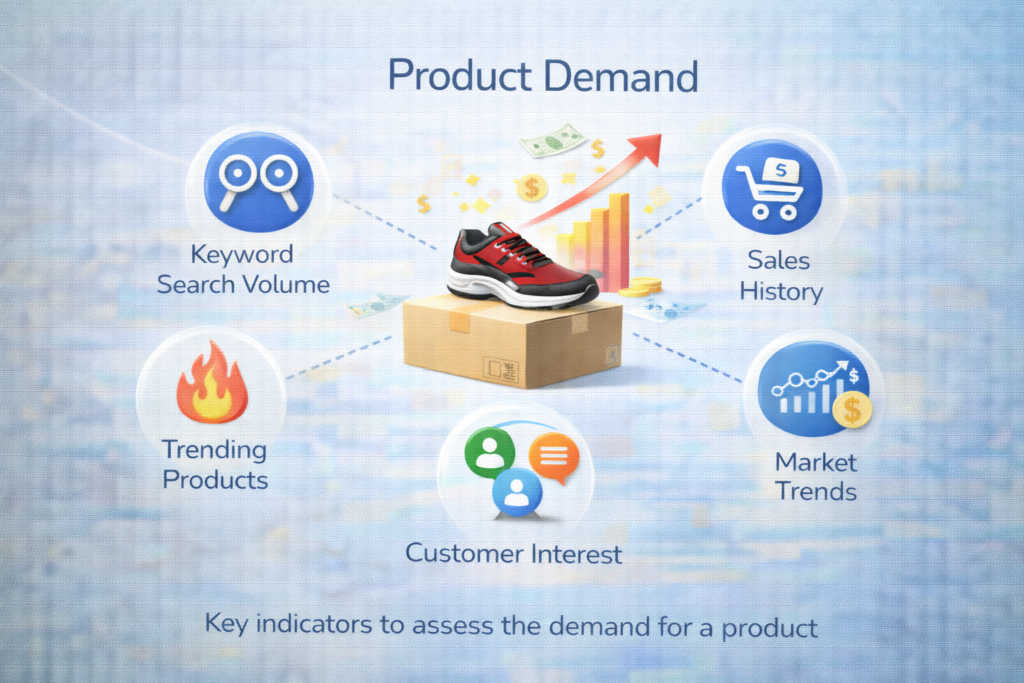
Demand is the most critical factor when finding products. A product must solve a real problem, fulfill a need, or offer value that customers are actively searching for. Without demand, price and quality become irrelevant.
Demand can be identified through search behavior, customer discussions, repeat purchases, and problem-based needs. Products that address daily challenges, improve convenience, or save time tend to perform better than novelty items.
Evergreen Products vs Trend-Based Products
When finding products, it is important to understand the difference between evergreen and trend-based items. Evergreen products have consistent demand throughout the year, making them more stable and predictable. Examples include household tools, personal care items, and productivity products.
Trend-based products experience short-term spikes in demand. While trends can be profitable, they carry higher risk. Long-term businesses usually prioritize evergreen products and selectively test trends to avoid dependency on short-lived demand.
Competition Analysis in Product Finding
Competition analysis helps determine whether a product is worth entering. High demand with extremely strong competition can make profitability difficult, especially for beginners. However, competition alone is not bad—it often confirms demand.
Smart product finding focuses on identifying gaps in the market. Poor reviews, limited variations, outdated designs, or weak branding indicate opportunities to improve existing products rather than starting from scratch.
Price Range and Profit Potential
A critical part of finding products is understanding pricing. Products that are too cheap often leave little room for profit after fees and marketing costs. Products that are too expensive may require high trust and strong branding.
The best products usually fall into a price range where customers expect value but are comfortable purchasing online. Profitability depends not only on selling price, but on sourcing costs, shipping, packaging, and potential returns.
Physical Products vs Digital Products
Finding products also involves deciding between physical and digital items. Physical products require sourcing, storage, and shipping but often have broad demand. Digital products require skills and upfront creation effort but offer higher margins and scalability.
Both options can be profitable. The best choice depends on skills, budget, and long-term vision. Many successful businesses start with one model and expand into the other later.
Problem-Solving Products Perform Better
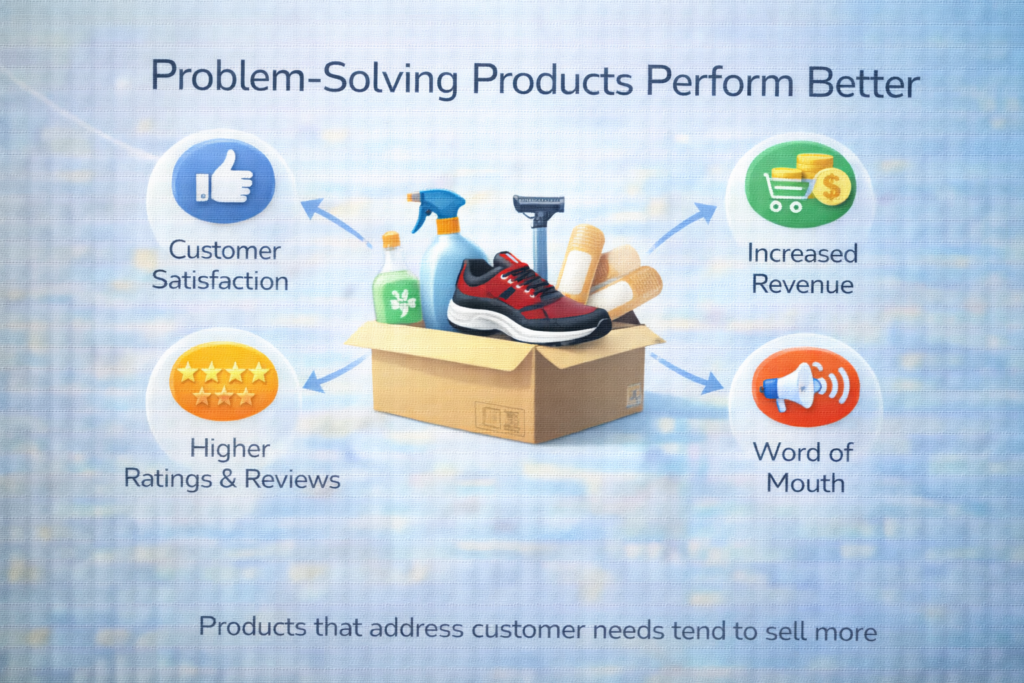
Products that solve clear problems are easier to market and sell. When finding products, always ask: What problem does this solve? Customers are more likely to buy solutions than features.
Problem-solving products reduce marketing complexity because the value is obvious. Clear benefits lead to higher conversions and better customer satisfaction.
Mistakes to Avoid When Finding Products
A common mistake is choosing products based on personal interest rather than market demand. Another is copying saturated products without differentiation. Many beginners also ignore costs, leading to unprofitable pricing.
Rushing product selection without research often leads to failure. Finding products should be treated as a strategic process, not guesswork.
Step-by-Step Process for Finding Products
Finding products successfully requires a structured approach rather than random searching. The first step is identifying a market or category that interests you and has proven demand. Once the market is chosen, the focus shifts to understanding customer problems, existing solutions, and unmet needs.
The next step involves narrowing down product ideas based on feasibility. This includes checking whether the product can be sourced easily, shipped efficiently, and sold at a profitable price. A step-by-step process ensures that emotions and assumptions do not influence product decisions.
Using Customer Problems to Find Winning Products
One of the most effective ways of finding products is by identifying customer problems. Customers often express frustrations through reviews, comments, forums, and social media. These complaints reveal opportunities for better products.
Products that fix small but recurring problems perform extremely well. When a product clearly improves daily life, customers do not need convincing—they already want a solution. Problem-driven product discovery reduces marketing effort and increases conversion rates.
Marketplace Research for Finding Products
Marketplaces are powerful research environments because they show real buying behavior. Bestseller lists, trending sections, and customer reviews provide direct insight into what people are purchasing and why.
While researching, focus on products with consistent demand rather than temporary hype. Look for listings with strong sales but mixed or negative reviews—these often indicate demand with room for improvement. This is one of the most reliable strategies for finding products with high potential.
Keyword-Based Product Discovery
Search behavior reveals buying intent. When people search repeatedly for the same product-related terms, it indicates demand. Keyword research helps uncover what customers are actively looking for.
During the process of finding products, keyword data helps validate demand before investing money. Products with steady search interest throughout the year are generally safer than those with seasonal spikes.
Social Media and Trend Platforms
Social platforms are excellent sources for early product ideas. Viral content, product demos, and user discussions often highlight emerging needs before they appear on marketplaces.
However, trends must be handled carefully. While they can generate fast sales, they also carry risk. Smart sellers combine trend awareness with demand validation to avoid short-lived products.
Supplier-Based Product Discovery
Suppliers and manufacturers often reveal product opportunities before they reach mainstream markets. Browsing supplier catalogs can spark ideas for new or improved products.
When using this method, the focus should not be copying existing items but adapting them to solve specific problems or target niche audiences. Supplier research works best when combined with customer feedback analysis.
Evaluating Competition the Right Way
Competition analysis is a critical part of finding products. High competition does not automatically mean a product is bad—it often confirms strong demand. The real question is whether you can differentiate.
Differentiation can be achieved through better quality, clearer instructions, improved design, bundles, or branding. Products with weak branding and poor presentation are easier to compete against, even in crowded markets.
Cost, Pricing, and Margin Analysis
Before finalizing a product, sellers must calculate total costs. This includes sourcing, packaging, shipping, platform fees, advertising, and potential returns. Many beginners skip this step and later discover that the product is not profitable.
Successful product finding balances demand with margin potential. A product that sells well but leaves no profit after costs is not a winning product.
Product Validation Before Full Launch
Validation is the safety net in product discovery. Instead of ordering large quantities, sellers should test products in small batches or through limited marketing campaigns.
Validation confirms whether customers are willing to pay, not just interested. This step protects capital and prevents costly mistakes. The most successful sellers treat validation as mandatory, not optional.
Physical vs Digital Product Validation
Physical products are validated through sales performance, reviews, and repeat purchases. Digital products can be validated through pre-orders, landing pages, or audience feedback.
Both models require proof of demand before scaling. Choosing the right validation method depends on product type and business model.
Common Errors in Product Research
One major error in finding products is copying competitors without improvement. Another is ignoring customer feedback or assuming demand without data.
Rushing the process often leads to poor decisions. Product research should be slow, logical, and evidence-based. Sellers who respect this process significantly increase their chances of success.
Advanced Product Validation Strategies
Once initial research suggests a product has potential, advanced validation becomes essential. This stage goes beyond basic demand checks and focuses on confirming real buying behavior. Advanced validation may include limited test launches, small paid advertising experiments, pre-orders, or direct audience feedback through surveys and email lists.
The goal of advanced validation is to answer one critical question: Will customers actually pay for this product at a profitable price? Many ideas look promising on paper but fail when exposed to real buyers. Strong validation reduces risk and gives confidence before investing more time and capital.
Scaling Products After Validation
Scaling begins only after a product has proven demand and stable performance. When finding products, many sellers make the mistake of scaling too early. True scaling requires consistency in sales, positive customer feedback, and manageable operational processes.
Scaling strategies include increasing marketing reach, expanding distribution channels, improving supply chains, and optimizing listings or product pages. However, scaling should always be gradual. Sudden growth without proper planning can lead to quality issues, delayed deliveries, and negative reviews, all of which damage long-term potential.
Building a Product-Based Brand
Successful sellers do not stop at a single product. They use finding products as an ongoing process to build a brand around a niche or audience. Instead of launching random items, they create product ecosystems where each product complements the others.
Brand-based selling increases trust, repeat purchases, and customer lifetime value. Over time, branding reduces dependence on advertising and price competition. Customers buy from brands they trust, not just products they see first.
Creating a Long-Term Product Portfolio
A strong product portfolio balances risk and stability. This includes a mix of evergreen products with consistent demand and carefully selected new launches. Sellers who continuously research and test new ideas stay ahead of competitors.
Finding products should never stop after the first success. Markets evolve, customer needs change, and competition increases. Continuous product research ensures long-term relevance and growth.
Managing Risk in Product Selection
Risk management is a critical but often ignored part of finding products. Relying on a single product, supplier, or platform exposes businesses to sudden changes. Diversification across products and channels protects revenue streams.
Keeping inventory levels controlled, monitoring customer feedback, and staying updated with market trends helps reduce uncertainty. Sellers who plan for risks are better positioned to survive market fluctuations.
Data-Driven Decision Making
Successful product finding relies on data rather than assumptions. Sales performance, conversion rates, customer reviews, and return rates provide valuable insights into product health.
Data-driven sellers adjust pricing, improve product features, and refine marketing strategies based on evidence. This approach creates predictable growth and reduces emotional decision-making.
Common Advanced Mistakes to Avoid
Even experienced sellers make mistakes when finding products. One common error is expanding too far from the core niche, which weakens brand identity. Another is ignoring operational capacity while scaling.
Some sellers also rely too heavily on trends without backup evergreen products. Sustainable businesses balance innovation with stability.
Frequently Asked Questions (FAQs)
What is the best way to start finding products as a beginner?
Beginners should start by identifying common problems, researching demand, and validating ideas with small tests. Simple, problem-solving products are easier to validate and sell.
How long does product research usually take?
Product research can take days or weeks depending on depth. Rushing the process increases risk. Quality research saves time and money in the long run.
Is finding products easier for physical or digital products?
Both require research, but digital products are easier to test due to low cost. Physical products often have broader demand but higher operational complexity.
Can I rely on trends when finding products?
Trends can be profitable but risky. They should be tested carefully and balanced with evergreen products for long-term stability.
How many products should I test before choosing one?
There is no fixed number. Successful sellers often test multiple ideas and scale only those that show clear demand and profitability.
Do I need paid tools for finding products?
Paid tools can help, but they are not required. Many insights come from customer reviews, marketplaces, and search behavior analysis.
What makes a product truly profitable?
A profitable product has demand, manageable competition, good margins, and low return rates. Profitability is about net profit, not sales volume.
Should I copy competitors’ products?
Copying without improvement is risky. The best approach is to improve existing products by solving common customer complaints.
Final Extended Conclusion (With External & Internal Dofollow Links)
The process of finding products is the backbone of every successful online business. Marketing, branding, and scaling become much easier when the product itself meets real demand. Instead of chasing quick wins, smart sellers focus on research, validation, and long-term value creation.
Industry insights support this approach. According to Shopify’s ecommerce research, businesses that prioritize product-market fit and customer needs outperform those that rely heavily on advertising alone (external dofollow link:
https://www.shopify.com/blog/product-market-fit). Similarly, Oberlo highlights that data-driven product research significantly increases success rates for new online sellers (external dofollow link:
https://www.oberlo.com/blog/product-research).
Finding products is not a one-time task—it is an ongoing strategy. Markets change, competitors evolve, and customer expectations grow. Sellers who continuously research, test, and improve their product offerings stay competitive and profitable.
For readers who want to dive deeper into ecommerce growth, validation techniques, and product research frameworks, explore our detailed guides in the product research and ecommerce learning section (internal dofollow link example:
https://rankifycontent.com/product-research-guide).
In conclusion, finding products is both a skill and a discipline. Those who approach it patiently, strategically, and with a customer-first mindset build businesses that last—not just products that sell once.