Table of Contents
Introduction
The digital economy is growing faster than ever, and online consumers are increasingly willing to pay for knowledge, tools, and convenience rather than physical goods. In this evolving landscape, digital products on Shopify have emerged as one of the most profitable and scalable online business models. Entrepreneurs no longer need warehouses, shipping partners, or inventory management systems to build a successful ecommerce brand.
Shopify has become a preferred platform for selling digital products because it offers full ownership, flexible customization, and seamless automation. Whether you are a content creator, educator, designer, or business owner, Shopify allows you to transform your skills or ideas into downloadable products that can be sold globally, 24/7, with minimal overhead.
What Are Digital Products on Shopify?
Digital products on Shopify are non-physical items that customers purchase online and receive electronically after checkout. These products are delivered through instant downloads, email access, or gated content areas, depending on the setup. Unlike physical products, digital items do not require restocking or shipping, which makes them highly efficient to manage.
Digital products can be created once and sold repeatedly without additional production costs. This makes them ideal for entrepreneurs looking to build passive or semi-passive income streams. Shopify supports this model through integrations and apps that automate delivery, licensing, and customer access.
Why Shopify Is Ideal for Selling Digital Products
Shopify stands out because it gives sellers complete control over their business. Unlike marketplaces that limit branding and customer data, Shopify allows full customization of store design, pricing strategy, and marketing funnels. This is a major advantage when selling digital products, where trust, branding, and perceived value matter greatly.
Another reason digital products on Shopify perform well is automation. Once payment is completed, digital delivery can be triggered automatically without manual involvement. This allows sellers to scale without increasing workload, making Shopify ideal for solo founders and small teams.
Popular Types of Digital Products on Shopify
There is a wide variety of digital products that sell successfully on Shopify. Educational content such as ebooks, video courses, workshops, and tutorials is one of the strongest categories because customers are willing to invest in learning and skill development.
Other popular digital products include design templates, website themes, social media planners, resume templates, stock photography, music files, mobile presets, and software tools. Shopify also supports memberships and subscription-based digital products, allowing sellers to build recurring revenue models.
Digital Products on Shopify vs Marketplaces
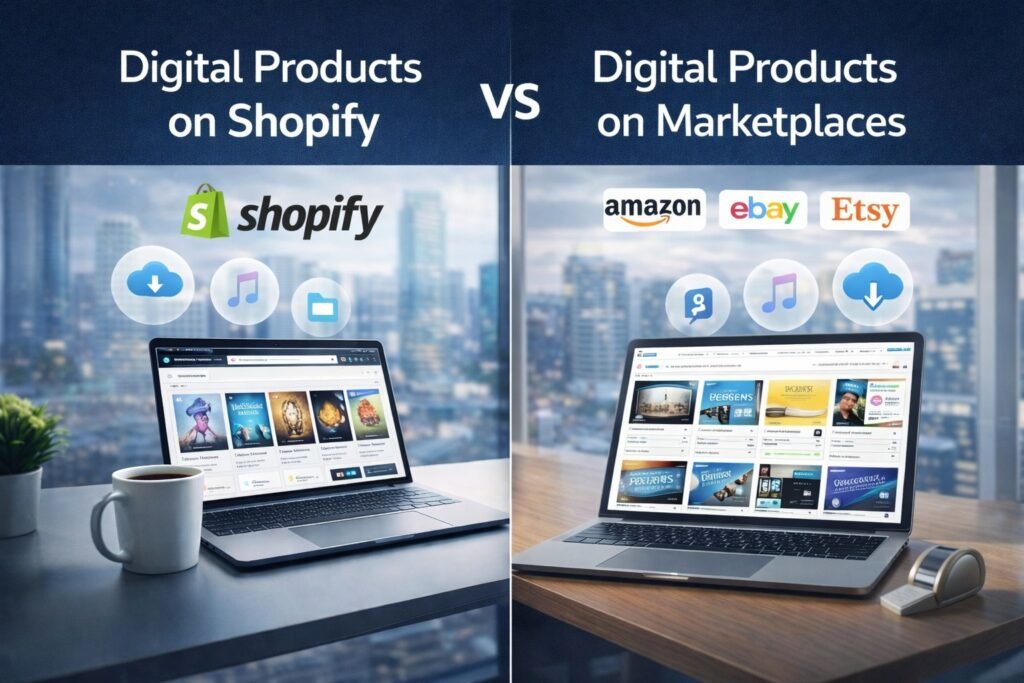
Selling digital products on Shopify is fundamentally different from selling on third-party marketplaces. Marketplaces provide traffic but limit control, branding, and customer relationships. Shopify, on the other hand, allows sellers to build independent brands with long-term value.
With Shopify, sellers own their email lists, customer data, and pricing decisions. This independence allows for upselling, bundling, remarketing, and community-building—strategies that are difficult or impossible on marketplaces. For serious digital entrepreneurs, Shopify offers greater long-term growth potential.
Cost Efficiency and Profit Margins
One of the biggest advantages of digital products on Shopify is cost efficiency. After the initial creation cost, digital products have virtually zero marginal cost. This results in significantly higher profit margins compared to physical products.
There are no expenses related to storage, shipping, packaging, or returns. This allows sellers to reinvest more profits into marketing, improving content, and expanding product lines. Over time, a well-structured digital product business on Shopify can achieve strong financial sustainability.
Scalability of Digital Products on Shopify
Scalability is a key reason many entrepreneurs choose digital products on Shopify. A single product can be sold to thousands of customers worldwide without additional operational effort. This scalability makes digital products ideal for long-term business growth.
Shopify’s infrastructure supports high traffic volumes, multiple currencies, and international payments. Sellers can scale marketing campaigns, launch new products, or expand into new markets without worrying about logistics constraints.
Who Can Benefit from Selling Digital Products on Shopify?
Selling digital products on Shopify is suitable for a wide range of professionals. Educators can sell courses and learning materials, designers can sell templates and creative assets, consultants can sell guides and frameworks, and developers can sell digital tools.
Even beginners can start small by creating a single digital product and gradually expanding. Shopify’s user-friendly interface makes it accessible, while its advanced features support growth as the business matures.
Challenges of Selling Digital Products on Shopify
While the model is highly attractive, selling digital products on Shopify is not without challenges. Competition can be strong in popular niches, and customers expect high-quality, well-presented content. Poor-quality digital products lead to refunds, negative feedback, and weak brand reputation.
Marketing is another challenge. Unlike marketplaces with built-in traffic, Shopify sellers must drive their own traffic through SEO, social media, ads, or email marketing. However, this challenge also creates an opportunity to build a strong, independent brand.
Importance of Branding and Trust
Branding plays a crucial role in the success of digital products on Shopify. Customers cannot physically evaluate digital products before purchase, so trust becomes a deciding factor. Professional design, clear product descriptions, previews, testimonials, and guarantees help reduce hesitation.
Strong branding allows sellers to charge premium prices and stand out in competitive markets. Over time, a trusted digital brand can expand beyond single products into full digital ecosystems.
Best Digital Product Ideas to Sell on Shopify
Choosing the right product idea is the foundation of success when selling digital products on Shopify. The most profitable digital products usually solve a specific problem, save time, or help customers achieve a desired outcome. Products that offer transformation—such as learning a skill, improving productivity, or simplifying a task—tend to perform exceptionally well.
Popular digital product ideas include ebooks, online courses, templates, planners, social media content packs, resume templates, stock photos, design assets, coding resources, and business toolkits. Educational and professional digital products often command higher prices because customers view them as investments rather than expenses. Niche-focused products usually outperform generic ones because they address clear and targeted needs.
Validating Digital Product Ideas Before Launch
Before investing time into creating digital products on Shopify, validation is critical. Validation helps confirm that customers are willing to pay for your idea. This can be done by researching competitors, analyzing pricing, reviewing customer feedback, and studying demand trends on search engines and social platforms.
Another effective validation method is audience testing. Sharing a concept through social media, email lists, or landing pages helps measure interest before full product creation. Validated ideas reduce risk and significantly increase the chances of success once the product is launched on Shopify.
Essential Apps for Selling Digital Products on Shopify
Shopify does not allow file downloads by default, which makes apps essential for selling digital products smoothly. Digital delivery apps automate file access, send download links after purchase, and protect content from unauthorized sharing.
These apps allow sellers to deliver PDFs, videos, zip files, and license keys securely. Some apps also support limited downloads, expiration dates, and customer access control. Using the right apps ensures a seamless customer experience and reduces manual workload, which is crucial for scaling digital products on Shopify.
Automating Delivery and Customer Access
Automation is one of the biggest advantages of selling digital products on Shopify. Once the product is purchased, customers should receive instant access without manual involvement. Automated delivery improves customer satisfaction and reduces support requests.
Advanced setups may include gated content, membership access, or drip delivery for courses. Automation allows sellers to focus on marketing and product improvement rather than order fulfillment, making digital products highly scalable.
Pricing Strategies for Digital Products on Shopify
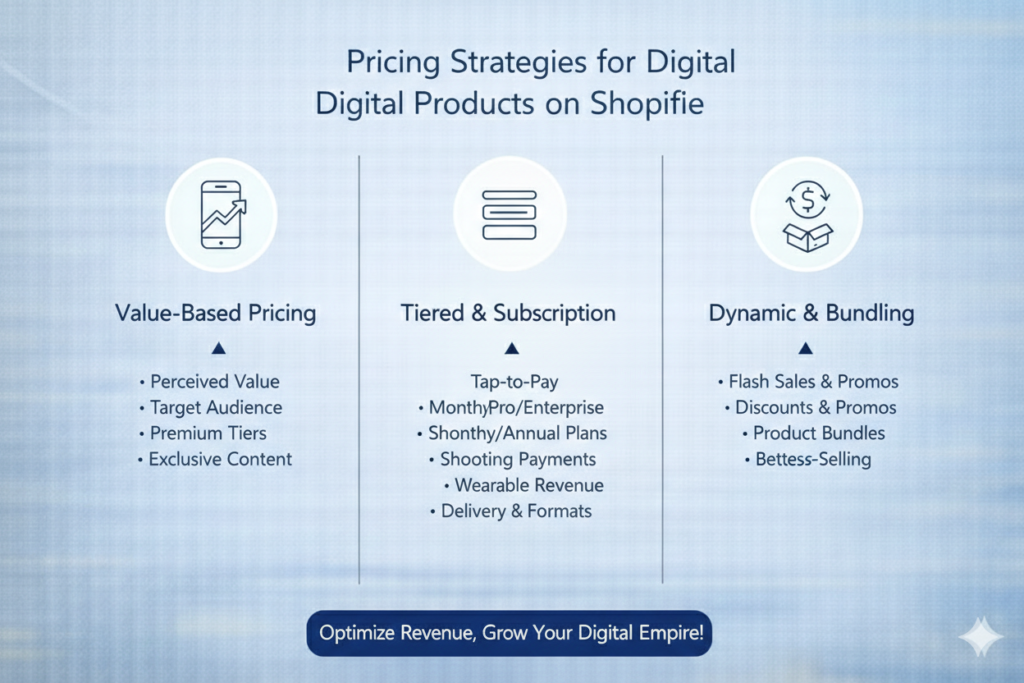
Pricing digital products on Shopify requires balancing perceived value and market expectations. Unlike physical products, pricing is not tied to manufacturing costs, so value-based pricing is often the most effective approach. Customers are willing to pay more for digital products that deliver clear results or expertise.
Common pricing strategies include one-time purchases, bundles, tiered pricing, and subscriptions. Bundling related digital products increases average order value, while tiered pricing allows customers to choose based on budget and needs. Strategic pricing tests help optimize revenue without reducing perceived quality.
Creating High-Converting Product Pages
Product pages play a critical role in selling digital products on Shopify. Since customers cannot physically evaluate the product, the product page must clearly communicate value, benefits, and outcomes. High-quality visuals, previews, screenshots, and sample pages increase trust.
Effective product pages focus on benefits rather than features. Clear descriptions, structured sections, FAQs, testimonials, and guarantees reduce buyer hesitation. A well-optimized product page often determines whether traffic converts into sales.
Checkout Experience and Conversion Optimization
A smooth checkout experience is essential for digital products on Shopify. Reducing friction, simplifying steps, and offering multiple payment options improve conversion rates. Digital buyers expect fast and secure transactions.
Optimizing checkout includes clear pricing, transparent refund policies, and trust signals such as security badges and customer reviews. Small improvements in checkout flow can lead to significant revenue growth over time.
Marketing Digital Products on Shopify
Marketing is one of the biggest challenges—and opportunities—when selling digital products on Shopify. Unlike marketplaces, Shopify sellers must generate their own traffic. Common marketing channels include SEO, content marketing, social media, paid ads, and email marketing.
Content marketing works especially well for digital products because it builds authority and trust. Blogs, videos, tutorials, and lead magnets attract potential customers and position the product as a solution. Email marketing supports launches, promotions, and long-term customer relationships.
Customer Support and Refund Management
Even with digital products, customer support remains important. Clear instructions, usage guides, and FAQs reduce confusion and refund requests. Providing prompt and professional support builds trust and brand reputation.
Refund policies should be transparent and fair. Although digital products cannot be “returned,” offering limited refunds can increase customer confidence and conversions. Good support often turns first-time buyers into loyal customers.
Common Mistakes When Selling Digital Products on Shopify
Many beginners struggle due to avoidable mistakes. One common error is launching without validation, leading to poor demand. Another is underpricing high-value products, which hurts perceived quality and revenue.
Ignoring branding, poor product presentation, and weak marketing strategies also limit success. Sellers who treat digital products as long-term assets rather than quick wins achieve more sustainable growth.
Scaling Digital Products on Shopify
Once your digital products start generating consistent sales, the next phase is scaling. Scaling digital products on Shopify is different from physical ecommerce because growth is not limited by inventory or logistics. Instead, scaling focuses on increasing traffic, improving conversion rates, and expanding the digital product ecosystem.
Successful scaling strategies include launching complementary products, creating bundles, and upselling higher-value versions of existing products. Sellers often expand from a single ebook into full courses, toolkits, or memberships. Shopify’s flexible structure allows businesses to scale rapidly while maintaining automation and efficiency.
Branding and Authority Building for Digital Products
Branding plays a decisive role in long-term success when selling digital products on Shopify. Since customers cannot physically touch or test digital products, trust and credibility become the most important buying factors. Strong branding reassures customers that the product delivers real value.
Professional design, consistent messaging, clear positioning, and authentic storytelling help build authority. Brands that focus on education, transparency, and customer success often outperform competitors, even at higher price points. Over time, branding transforms a digital product store into a trusted digital brand.
Customer Retention and Lifetime Value
Retention is often overlooked in digital product businesses, but it is one of the most powerful growth drivers. Selling digital products on Shopify allows businesses to build long-term relationships through email marketing, updates, and exclusive offers.
Providing free updates, bonus content, or early access to new products encourages repeat purchases. Memberships, subscriptions, and private communities further increase customer lifetime value. Retention-focused strategies reduce dependency on paid ads and create predictable revenue streams.
Protecting Digital Products from Piracy
Content protection is an important consideration when selling digital products on Shopify. While no system is completely piracy-proof, several measures help reduce unauthorized sharing. Secure delivery apps, download limits, watermarked files, and license-based access are common solutions.
Clear terms of use and copyright notices also discourage misuse. However, most successful sellers focus more on delivering value than worrying excessively about piracy. A strong brand, frequent updates, and customer trust often outweigh the risks of unauthorized sharing.
Legal and Policy Considerations
Legal compliance is essential for sustainable growth. Sellers must ensure that their digital products are original, properly licensed, and compliant with intellectual property laws. Using copyrighted material without permission can lead to legal issues and store shutdowns.
Transparent policies—such as refund terms, privacy policies, and terms of service—protect both the seller and the customer. Shopify makes it easy to add legal pages, which increases trust and reduces disputes as the business scales.
Marketing for Long-Term Growth
As competition increases, long-term marketing strategies become essential. SEO, content marketing, and email lists are especially effective for digital products on Shopify because they build authority and organic traffic over time.
Educational content such as blogs, tutorials, webinars, and videos positions the digital product as a solution rather than a sales pitch. When marketing focuses on value and education, conversions increase naturally, and customer trust deepens.
When to Expand Beyond Digital Products
Many successful Shopify sellers start with digital products and later expand into services, coaching, or physical complements. Expansion should be strategic and aligned with the original brand mission.
Digital products often serve as the foundation of a larger ecosystem. By maintaining focus and quality, sellers can expand revenue streams without diluting brand identity.
Future of Digital Products on Shopify
The future of digital products on Shopify is closely tied to the creator economy, online education, and remote work trends. Demand for digital learning, tools, and resources continues to grow across industries.
AI-assisted content creation, personalization, and interactive digital products will shape the next phase of growth. Sellers who focus on specialization, audience trust, and continuous improvement will remain competitive in evolving markets.
Frequently Asked Questions (FAQs)
What are digital products on Shopify?
Digital products on Shopify are non-physical items that customers can purchase online and receive electronically. These include ebooks, online courses, templates, planners, design files, software tools, memberships, and other downloadable or access-based products delivered after checkout.
Is Shopify good for selling digital products?
Yes, Shopify is one of the best platforms for selling digital products. It offers full control over branding, pricing, customer data, and store design. With the help of digital delivery apps, Shopify allows automated product delivery, making it highly scalable and efficient.
Do I need inventory to sell digital products on Shopify?
No, inventory is not required. Digital products are created once and can be sold unlimited times without restocking. This makes digital products on Shopify a low-risk and high-margin business model.
What types of digital products sell best on Shopify?
Popular digital products include ebooks, online courses, templates, planners, stock photos, presets, business toolkits, and educational resources. Products that solve specific problems or help customers achieve clear results usually perform best.
How are digital products delivered to customers on Shopify?
Digital products are delivered automatically using Shopify apps that send download links or grant access after purchase. Delivery can be instant, scheduled, or restricted based on usage limits, depending on the setup.
Can beginners sell digital products on Shopify?
Yes, selling digital products on Shopify is beginner-friendly. The platform is easy to use, and sellers can start with a single product and grow gradually. No technical or coding skills are required to get started.
How much does it cost to sell digital products on Shopify?
Costs include a Shopify subscription plan and optional app fees for digital delivery. There are no costs for inventory, shipping, or storage, which keeps startup expenses low compared to physical ecommerce.
How do I market digital products on Shopify?
Digital products on Shopify can be marketed through SEO, content marketing, social media, email marketing, and paid ads. Educational content and value-driven marketing strategies work especially well for digital products.
Can digital products on Shopify be refunded?
Refund policies depend on the seller. While digital products cannot be physically returned, offering limited or conditional refunds can increase customer trust and conversions. Clear refund policies are recommended.
Is selling digital products on Shopify sustainable long-term?
Yes, it is highly sustainable when approached strategically. Digital products can generate income for years with updates, branding, and marketing. Sellers who focus on quality, trust, and audience needs build long-term digital businesses.
Final Extended Conclusion (With External & Internal Dofollow Links)
Selling digital products on Shopify has become one of the most powerful and future-ready online business models in today’s digital economy. As consumers increasingly value convenience, knowledge, and instant access, digital products provide an unmatched opportunity to create scalable income without the limitations of inventory, shipping, or physical fulfillment. Shopify’s flexible ecosystem enables creators and entrepreneurs to build independent brands while maintaining full control over pricing, customer relationships, and long-term growth strategies.
Throughout this guide, we explored how digital products on Shopify allow sellers to transform skills, expertise, and creativity into profitable online assets. From ebooks and online courses to templates, memberships, and digital tools, the possibilities are vast. Unlike marketplaces that restrict branding and ownership, Shopify empowers sellers to design custom experiences, build email lists, and nurture customer trust—critical elements for sustainable digital businesses.
Industry experts consistently highlight Shopify as a leading platform for digital commerce because of its automation, scalability, and ecosystem of apps. According to Shopify’s official ecommerce insights, digital products are among the fastest-growing segments due to high margins and global accessibility (external dofollow link:
https://www.shopify.com/blog/digital-products). Additionally, leading ecommerce analysts note that creators who sell digital products through independent platforms like Shopify achieve greater long-term brand equity than those relying solely on third-party marketplaces (external dofollow link:
https://www.bigcommerce.com/articles/ecommerce/digital-products/).
From a growth perspective, digital products on Shopify also serve as a foundation for building complete digital ecosystems. Sellers can start with a single downloadable product and expand into bundles, subscriptions, coaching, or premium content—all without increasing operational complexity. This makes Shopify especially attractive for creators, educators, consultants, and online entrepreneurs seeking predictable and scalable income.
For readers looking to deepen their ecommerce knowledge, explore advanced monetization strategies, and learn how to scale digital businesses effectively, you can find more detailed guides and step-by-step resources in our ecommerce learning hub (internal dofollow link example:
https://rankifycontent.com/ecommerce-growth-strategies). Aligning product creation, branding, marketing, and customer retention into a unified system is the key to long-term success.
In conclusion, digital products on Shopify are not a short-term trend—they represent a sustainable, high-margin, and globally scalable business model. When built with the right strategy, quality content, and customer-first mindset, a Shopify-based digital product business can evolve from a single idea into a powerful online brand with lasting impact and consistent revenue.