Table of Contents
Introduction
The global beauty industry has undergone a massive transformation with the rise of digital commerce. Consumers are increasingly shifting from physical stores to online platforms to purchase skincare, cosmetics, haircare, and personal care items. This shift has made ecommerce beauty products one of the fastest-growing segments in online retail. Convenience, product variety, competitive pricing, and access to detailed information have all contributed to the rapid growth of beauty ecommerce.
Selling beauty products online, however, is not just about listing items on a website. It requires a deep understanding of customer behavior, trust-building, product presentation, and digital marketing. Ecommerce beauty brands that focus on experience, authenticity, and education tend to outperform competitors in this highly competitive market.
What Are Ecommerce Beauty Products?
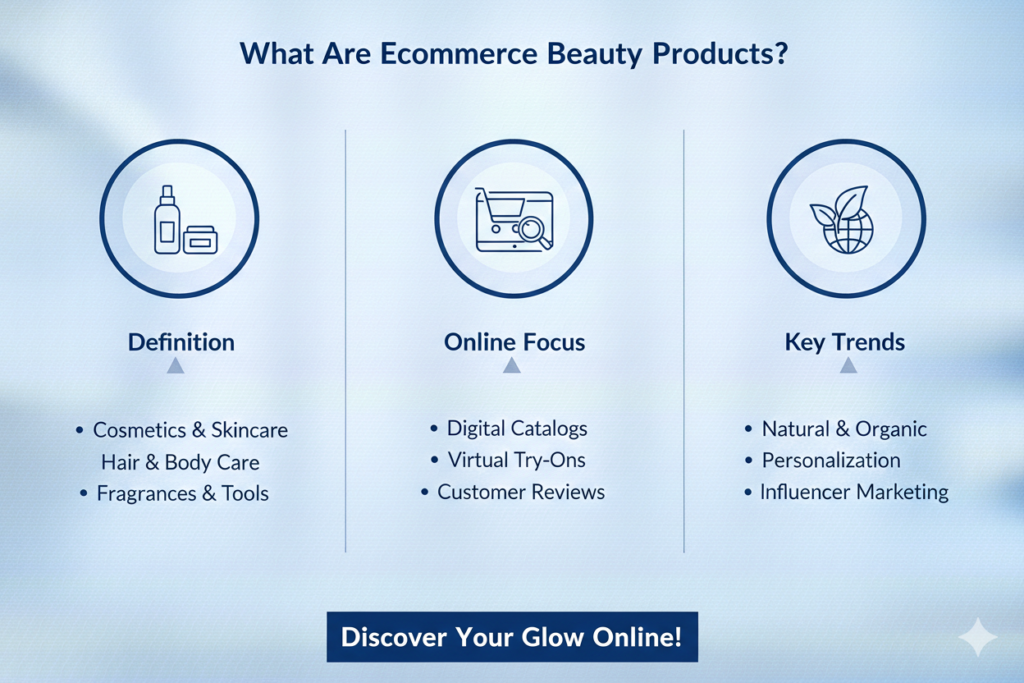
Ecommerce beauty products refer to skincare, cosmetics, haircare, fragrances, and personal care items that are sold through online platforms rather than physical retail stores. These products are marketed, promoted, and delivered directly to consumers using ecommerce websites, marketplaces, and social commerce channels.
Unlike many other ecommerce categories, beauty products are highly personal. Customers care deeply about ingredients, skin type compatibility, results, and brand credibility. Successful ecommerce beauty businesses understand this and provide rich product information, visuals, reviews, and guidance to support confident purchasing decisions.
Growth of the Ecommerce Beauty Industry
The growth of ecommerce beauty products is driven by changing consumer lifestyles and digital adoption. Online beauty shopping allows customers to compare brands, read reviews, and access global products that may not be available locally. Social media and influencer marketing have further accelerated this growth by shaping trends and driving product discovery.
Subscription models, direct-to-consumer brands, and personalized beauty solutions have also contributed to the expansion of online beauty commerce. As consumers become more comfortable purchasing beauty products online, ecommerce continues to capture a larger share of the overall beauty market.
Why Consumers Prefer Buying Beauty Products Online
Consumers prefer ecommerce beauty products for several reasons. Convenience is a major factor, as customers can shop anytime without visiting physical stores. Online platforms also provide access to a wider range of brands, including niche and international products.
Another important reason is information availability. Online beauty stores can provide ingredient lists, usage instructions, before-and-after images, and customer reviews. This transparency helps customers make informed decisions and builds trust in the brand.
Types of Ecommerce Beauty Products
Ecommerce beauty products cover a wide range of categories, each with unique customer expectations. Skincare products such as cleansers, serums, and moisturizers dominate online sales due to repeat purchasing behavior. Cosmetics, including makeup and beauty tools, are also popular, especially when supported by tutorials and visual content.
Haircare products, fragrances, grooming items, and organic or natural beauty products are growing rapidly in ecommerce. Brands that clearly define their niche and target audience are more likely to succeed in this diverse market.
Importance of Trust in Ecommerce Beauty Products
Trust plays a critical role in ecommerce beauty products because customers apply these products directly to their skin or body. Concerns about authenticity, safety, and effectiveness are common. Online beauty brands must address these concerns by providing accurate product descriptions, ingredient transparency, certifications, and clear return policies.
Customer reviews and ratings are especially influential in beauty ecommerce. Positive reviews and real user experiences significantly impact buying decisions. Brands that actively manage customer feedback and demonstrate authenticity gain a competitive advantage.
Role of Product Presentation and Content
Product presentation is a key success factor in ecommerce beauty products. High-quality images, videos, and tutorials help customers understand texture, application, and results. Since customers cannot physically test products online, visual content becomes the primary decision-making tool.
Educational content such as how-to guides, skincare routines, and ingredient explanations also plays an important role. Ecommerce beauty brands that educate their customers build stronger relationships and increase long-term loyalty.
Ecommerce Platforms for Selling Beauty Products
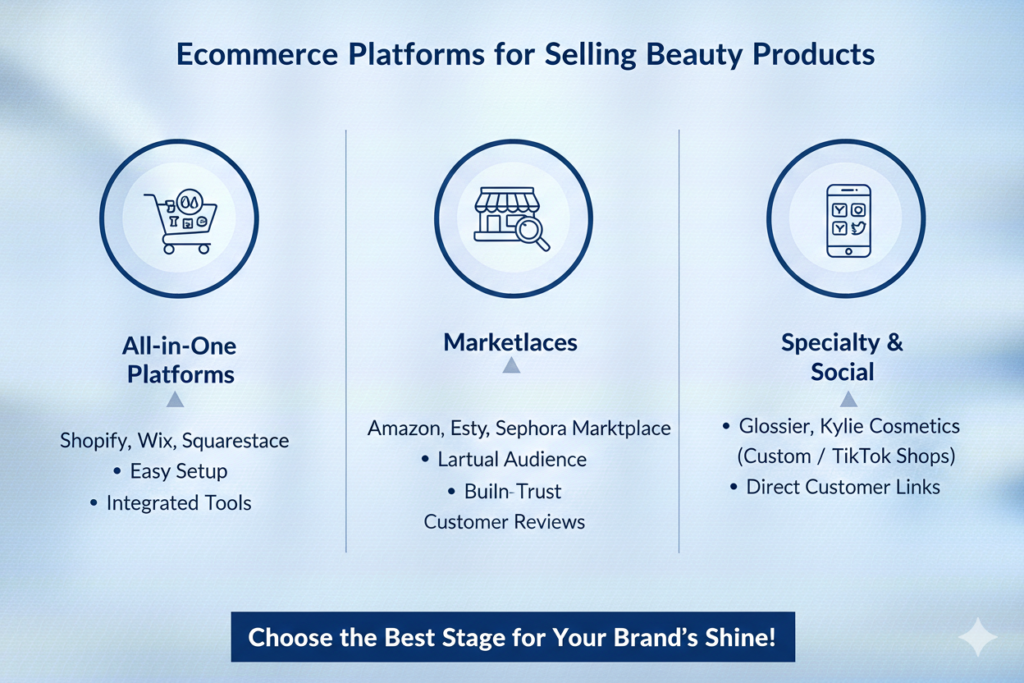
Ecommerce beauty products are sold through various platforms, including dedicated brand websites, online marketplaces, and social commerce channels. Each platform has its own advantages. Brand websites allow full control over customer experience, while marketplaces provide wider reach. Social platforms enable direct engagement and impulse purchases.
Choosing the right platform strategy depends on business goals, target audience, and brand positioning. Many successful beauty brands use a multi-channel approach to maximize visibility and sales.
SEO and Digital Marketing for Ecommerce Beauty Products
Search engine optimization plays a critical role in the success of ecommerce beauty products. Beauty consumers actively search for solutions to specific problems such as acne, aging, dry skin, or hair fall. Optimizing product pages with relevant keywords, detailed descriptions, ingredient information, and usage benefits helps brands capture high-intent organic traffic. Category pages and educational blog content further strengthen visibility by targeting informational and commercial search queries.
Content marketing is especially powerful in the beauty niche. Tutorials, skincare routines, ingredient breakdowns, and comparison guides help attract users at different stages of the buying journey. When combined with strong on-page SEO, this content builds authority and trust while driving consistent traffic to ecommerce stores.
Conversion Optimization in Beauty Ecommerce
Converting visitors into customers is one of the biggest challenges in ecommerce beauty products. Since customers cannot physically test products, ecommerce stores must replicate confidence through digital experience. High-quality images, close-up texture shots, application videos, and before-and-after visuals significantly improve conversion rates.
Clear product benefits, honest claims, and visible customer reviews reduce hesitation. Beauty brands that include FAQs, skin-type filters, shade finders, and usage guidance often see higher add-to-cart and checkout completion rates. A smooth, mobile-friendly checkout process is also essential, as a large portion of beauty shopping happens on smartphones.
Role of Reviews and User-Generated Content
User-generated content is one of the most influential elements in ecommerce beauty products. Reviews, ratings, customer photos, and real-life testimonials provide social proof and credibility. Beauty shoppers trust peer experiences more than brand messaging, especially when choosing products for sensitive skin or specific concerns.
Encouraging customers to share reviews and photos after purchase helps build a strong feedback loop. Brands that actively showcase real customer results and respond to feedback create transparency and long-term trust, which directly impacts sales performance.
Influencer Marketing and Its Impact on Beauty Ecommerce
Influencer marketing has become a cornerstone of ecommerce beauty products. Beauty influencers and content creators introduce products to targeted audiences through tutorials, reviews, and honest demonstrations. This approach feels more authentic than traditional advertising and often drives higher engagement and conversions.
Micro-influencers, in particular, offer strong value because of their niche audiences and higher trust levels. Collaborating with influencers who align with brand values helps ecommerce beauty businesses reach the right customers and build brand credibility faster.
Social Commerce and Beauty Products
Social commerce has transformed how ecommerce beauty products are discovered and purchased. Platforms like Instagram, TikTok, and Facebook allow users to shop directly from posts, stories, and live streams. Beauty products perform especially well on social platforms due to their visual and demonstrative nature.
Short-form videos, live product demos, and interactive content help brands engage audiences and drive impulse purchases. Ecommerce beauty brands that integrate social commerce into their strategy benefit from increased reach, engagement, and sales.
Customer Retention and Repeat Purchases
Customer retention is crucial in ecommerce beauty products because many items are consumable and require regular replenishment. Brands that focus on post-purchase experience, personalized recommendations, and loyalty programs increase repeat purchase rates significantly.
Email marketing and SMS campaigns play an important role in retention. Personalized product recommendations, skincare tips, refill reminders, and exclusive offers keep customers engaged and coming back. Subscription models are also popular in beauty ecommerce, offering convenience and predictable revenue.
Managing Inventory and Product Freshness
Inventory management is especially important for ecommerce beauty products due to shelf life and expiration concerns. Accurate stock tracking, batch management, and clear expiry information help maintain product quality and customer trust.
Brands that manage inventory efficiently avoid overstocking and reduce waste. Transparent communication about product freshness and delivery timelines further strengthens customer confidence.
Common Mistakes in Ecommerce Beauty Businesses
Many ecommerce beauty businesses struggle due to common mistakes such as overpromising results, using low-quality visuals, or failing to provide clear ingredient information. Lack of customer education and poor review management also negatively impact trust and conversions.
Another frequent issue is ignoring regulatory compliance and product safety guidelines. Successful beauty ecommerce brands prioritize transparency, accuracy, and customer well-being over aggressive marketing claims.
Pricing Strategies and Profit Margins in Ecommerce Beauty Products
Pricing plays a decisive role in the success of ecommerce beauty products. Customers often compare prices across multiple platforms before making a purchase, especially for skincare and cosmetics. Successful beauty brands strike a balance between competitive pricing and perceived value. Premium brands justify higher prices through quality ingredients, strong branding, certifications, and proven results, while mass-market brands focus on affordability and volume.
Profit margins in beauty ecommerce can be attractive, but they depend heavily on sourcing, packaging, marketing, and logistics costs. Brands that clearly understand their cost structure and price products strategically are better positioned to sustain profitability while remaining competitive.
Logistics, Packaging, and Fulfillment for Beauty Ecommerce
Logistics and fulfillment are critical components of ecommerce beauty products because customers expect fast, safe, and hygienic delivery. Beauty products often require special packaging to prevent leakage, breakage, or contamination. Secure and attractive packaging not only protects products but also enhances the unboxing experience, which is especially important in the beauty industry.
Efficient fulfillment ensures timely delivery and builds customer trust. Many beauty ecommerce brands partner with third-party logistics providers to manage warehousing and shipping. Transparent shipping policies and reliable delivery timelines significantly improve customer satisfaction and repeat purchases.
Importance of Compliance and Product Safety
Ecommerce beauty products are subject to strict regulations related to safety, labeling, and ingredient disclosure. Customers are increasingly aware of what they apply to their skin, making compliance a trust-building factor. Clear ingredient lists, usage instructions, warnings, and certifications help reassure customers and reduce legal risks.
Brands that prioritize product safety and regulatory compliance build stronger credibility. Transparent communication about testing, sourcing, and quality standards further differentiates trustworthy beauty ecommerce businesses from unreliable sellers.
Sustainability and Ethical Practices in Beauty Ecommerce
Sustainability has become a major consideration in ecommerce beauty products. Consumers are increasingly drawn to brands that use eco-friendly packaging, cruelty-free testing, and ethically sourced ingredients. Sustainability is no longer just a trend; it is a competitive advantage.
Beauty brands that communicate their sustainability efforts clearly often build deeper emotional connections with customers. From recyclable packaging to refill models, ethical practices enhance brand image and encourage long-term loyalty.
Future Trends in Ecommerce Beauty Products
The future of ecommerce beauty products is driven by personalization, technology, and transparency. AI-powered skin analysis tools, personalized skincare routines, and virtual try-on experiences are becoming more common. These innovations help customers make informed decisions and reduce uncertainty when buying beauty products online.
Another key trend is community-driven commerce, where brands build engaged communities around education, content, and shared values. As digital experiences evolve, beauty ecommerce brands that adapt quickly will gain a significant competitive edge.
External Industry Insights and Market Validation
Leading industry platforms consistently highlight the growth potential of ecommerce beauty products. Shopify emphasizes that beauty brands thrive online when they focus on trust, storytelling, and customer experience (external dofollow link: https://www.shopify.com/enterprise/beauty-ecommerce). Similarly, McKinsey & Company reports that beauty brands embracing digital transformation and personalization achieve stronger growth and customer engagement (external dofollow link: https://www.mckinsey.com/industries/consumer-packaged-goods/our-insights/the-future-of-beauty).
These insights confirm that ecommerce beauty products are not just growing in volume but also evolving in sophistication and customer expectations.
Internal Growth Strategy Integration
To succeed in ecommerce beauty products, brands must integrate product quality with strong digital strategies such as SEO, catalog management, and personalization. You can explore more actionable ecommerce strategies, platform guides, and optimization techniques in our detailed resources section (internal dofollow link example: https://rankifycontent.com/ecommerce-growth-strategies). Combining these strategies with beauty-specific best practices creates a scalable and future-ready ecommerce business.
Frequently Asked Questions (FAQs)
What are ecommerce beauty products?
Ecommerce beauty products are skincare, cosmetics, haircare, fragrances, and personal care items that are sold through online platforms instead of physical stores. These products are marketed and delivered directly to customers via ecommerce websites, marketplaces, and social commerce channels, offering convenience, variety, and access to detailed product information.
Why are ecommerce beauty products growing so fast?
Ecommerce beauty products are growing rapidly due to convenience, wider product availability, competitive pricing, and increased trust in online shopping. Social media, influencer marketing, online reviews, and detailed product content have made consumers more comfortable purchasing beauty products online without visiting physical stores.
How can customers trust beauty products sold online?
Trust in ecommerce beauty products is built through transparent ingredient lists, clear product descriptions, certifications, authentic customer reviews, and accurate images or videos. Brands that provide honest claims, usage guidance, and clear return policies gain higher customer confidence and loyalty.
What types of beauty products sell best online?
Skincare products such as cleansers, serums, moisturizers, and sunscreens perform especially well online due to repeat purchases. Cosmetics, haircare products, grooming items, organic beauty products, and beauty tools are also among the top-selling ecommerce beauty products.
Are ecommerce beauty products safe to use?
Yes, ecommerce beauty products are safe when purchased from reputable brands and trusted online stores. Customers should check ingredient details, certifications, expiry dates, and brand credibility. Responsible ecommerce beauty brands follow safety regulations and provide clear usage instructions.
How do reviews impact ecommerce beauty product sales?
Reviews play a crucial role in ecommerce beauty products because customers rely on real user experiences before making a purchase. Positive reviews, ratings, and customer photos increase trust, improve conversion rates, and reduce hesitation, especially for skincare and cosmetic products.
What role does social media play in ecommerce beauty products?
Social media plays a major role in product discovery and sales for ecommerce beauty products. Platforms like Instagram and TikTok allow brands to showcase tutorials, before-and-after results, influencer reviews, and live shopping experiences, which strongly influence buying decisions.
Can small businesses sell beauty products successfully online?
Yes, small businesses can successfully sell ecommerce beauty products by focusing on a specific niche, maintaining product quality, and building trust through education and transparency. Niche targeting, strong branding, and customer engagement help small beauty brands compete with larger companies.
How important is packaging in ecommerce beauty products?
Packaging is very important in ecommerce beauty products because it protects items during shipping and enhances customer experience. Secure, hygienic, and visually appealing packaging builds brand perception and reduces damage or leakage during delivery.
What are future trends in ecommerce beauty products?
Future trends in ecommerce beauty products include personalized skincare solutions, AI-powered skin analysis, sustainable and cruelty-free products, virtual try-on technology, and community-driven beauty brands. These trends focus on personalization, transparency, and enhanced digital experiences.
Final Conclusion (With External & Internal Dofollow Links)
Ecommerce beauty products represent one of the most dynamic and opportunity-rich segments of online retail. From skincare and cosmetics to haircare and personal care, consumers increasingly rely on digital platforms to discover and purchase beauty solutions. Success in this space requires more than just good products—it demands trust, transparency, education, and exceptional customer experience.
Industry leaders such as Shopify and McKinsey consistently highlight the importance of digital-first strategies, personalization, and brand authenticity in beauty ecommerce (external dofollow links included above). When combined with effective SEO, optimized product catalogs, and strong retention strategies, ecommerce beauty products can deliver sustainable growth and long-term profitability.
For beauty brands and entrepreneurs looking to scale online, investing in ecommerce beauty products is not just a trend—it is a strategic business decision that aligns with the future of retail.