Table of Contents
Introduction
As ecommerce continues to grow, managing hundreds or even thousands of products has become a major challenge for online businesses. Customers expect accurate information, consistent pricing, clear images, and smooth navigation across ecommerce stores. This is where ecommerce product catalog management plays a critical role. A well-managed product catalog ensures that customers can easily find products, understand their features, and make confident purchasing decisions.
Ecommerce product catalog management is not just about uploading products to a website. It involves organizing, maintaining, optimizing, and updating product data across multiple platforms while ensuring accuracy and consistency. Businesses that invest in proper catalog management often see improved customer experience, higher conversion rates, and fewer operational errors.
What Is Ecommerce Product Catalog Management?
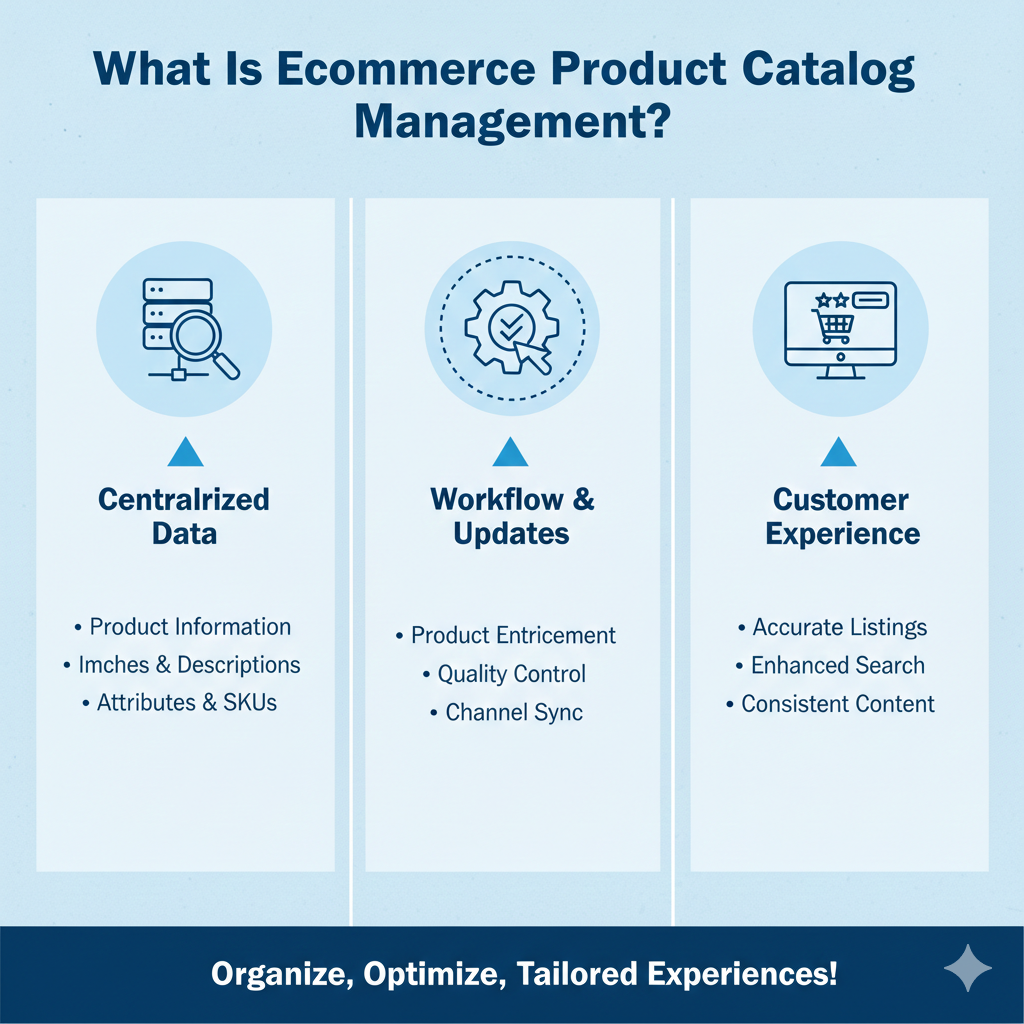
Ecommerce product catalog management refers to the process of creating, organizing, maintaining, and optimizing product information within an online store. This includes product titles, descriptions, prices, images, SKUs, categories, attributes, and inventory details. The goal is to present products in a structured and user-friendly way that supports both customers and backend operations.
A strong ecommerce product catalog management system ensures that all product data remains accurate, up to date, and consistent across different sales channels such as websites, marketplaces, and social commerce platforms. This consistency is essential for building trust and avoiding confusion.
Why Ecommerce Product Catalog Management Is Important
The importance of ecommerce product catalog management becomes clear when considering customer behavior. Online shoppers rely entirely on product information to make decisions. If product details are incomplete, outdated, or inconsistent, customers may lose trust and abandon the purchase.
Effective catalog management improves product discoverability by organizing items into logical categories and applying relevant attributes and filters. It also supports internal operations such as inventory tracking, pricing updates, and promotional campaigns. When product data is managed properly, businesses can scale more efficiently and avoid costly mistakes.
Impact on Customer Experience
Customer experience is directly influenced by how well an ecommerce product catalog is managed. Clear product titles, accurate descriptions, high-quality images, and consistent pricing make it easier for customers to understand what they are buying. Well-structured catalogs also improve navigation, allowing users to filter products by size, color, brand, or price range.
When customers can quickly find relevant products and trust the information provided, they are more likely to complete purchases. Poor catalog management, on the other hand, leads to confusion, frustration, and higher bounce rates.
Role of Product Data Accuracy in Ecommerce
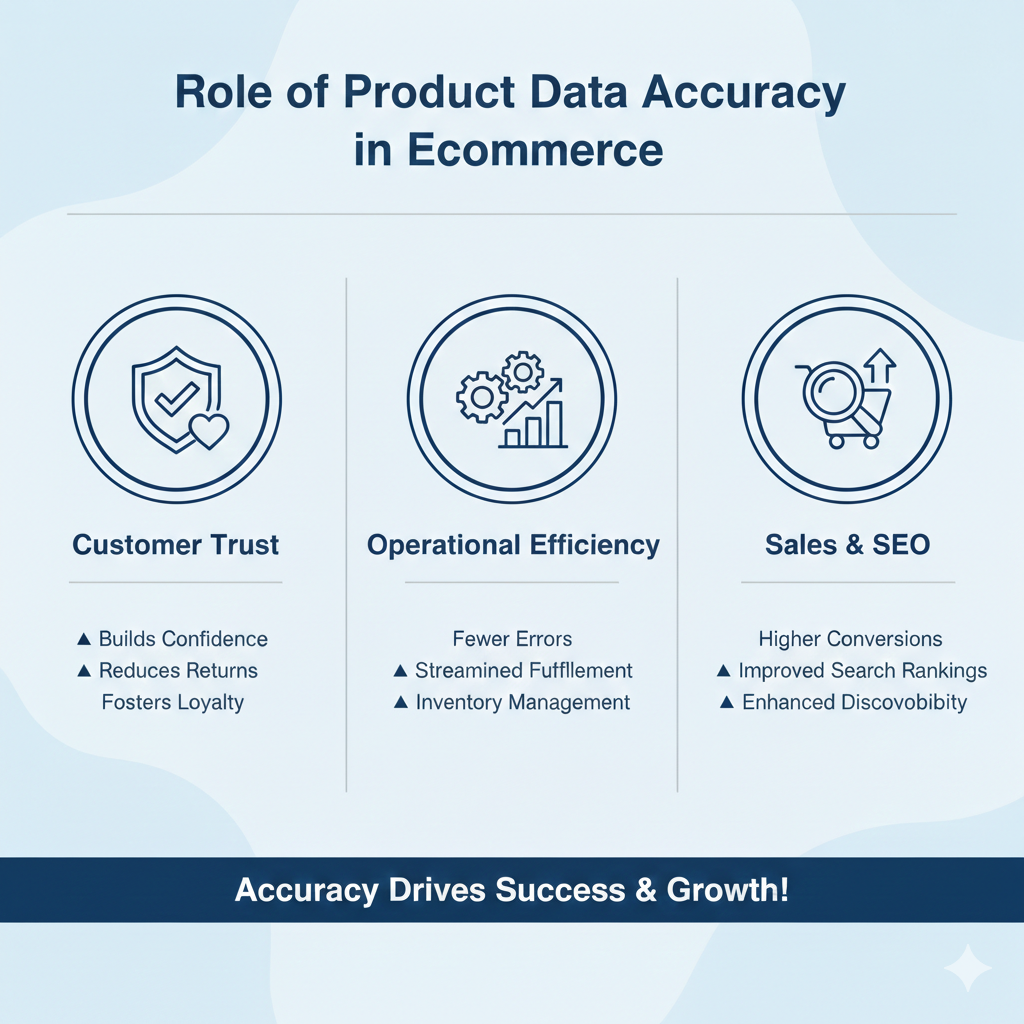
Accurate product data is the foundation of ecommerce product catalog management. Incorrect prices, missing specifications, or outdated availability information can damage customer trust and lead to negative reviews or returns. Consistent and reliable data helps ensure that customers receive exactly what they expect.
From a business perspective, accurate product data also supports better reporting, analytics, and decision-making. It allows ecommerce teams to track performance, identify best-selling products, and optimize inventory planning.
Ecommerce Product Catalog Structure and Organization
A well-organized catalog structure is essential for scalability. Products should be grouped into logical categories and subcategories that reflect how customers search and browse. Attributes such as size, color, material, and brand should be standardized across the catalog to ensure consistency.
Proper ecommerce product catalog management also involves maintaining clean URLs, structured product pages, and consistent naming conventions. These elements not only improve usability but also support search engine optimization and site performance.
Difference Between Manual and Automated Catalog Management
Many small ecommerce businesses start with manual product catalog management, entering product details individually and updating information manually. While this approach may work initially, it becomes inefficient as the catalog grows. Manual processes increase the risk of errors, inconsistencies, and delays.
Automated ecommerce product catalog management systems use tools and integrations to streamline data updates, synchronize inventory, and manage product information across channels. Automation improves accuracy, saves time, and allows businesses to scale without adding operational complexity.
Industries That Rely Heavily on Product Catalog Management
Ecommerce product catalog management is essential across almost all industries, but it is particularly critical for sectors with large or complex product ranges. Fashion and apparel brands manage multiple sizes, colors, and styles. Electronics sellers handle technical specifications and compatibility details. Home décor, beauty, and B2B ecommerce businesses also rely on structured catalogs to manage variations and bulk listings.
In each case, effective catalog management supports both customer satisfaction and operational efficiency.
SEO Benefits of Ecommerce Product Catalog Management
One of the most powerful yet often overlooked advantages of ecommerce product catalog management is its impact on search engine optimization. A well-structured product catalog helps search engines understand your website more clearly. Clean product titles, optimized descriptions, consistent attributes, and logical category structures make it easier for search engines to crawl and index product pages efficiently.
Proper catalog management also reduces duplicate content issues. When product variations such as size or color are handled through attributes instead of separate pages, it prevents content duplication and strengthens overall SEO performance. Optimized catalogs improve internal linking, keyword targeting, and user engagement—all of which contribute to better rankings and organic traffic growth.
Managing Ecommerce Product Catalogs Across Multiple Channels
Modern ecommerce businesses rarely sell on just one platform. Many operate across websites, marketplaces, and social commerce channels simultaneously. Ecommerce product catalog management ensures that product information remains consistent across all these touchpoints. Prices, descriptions, images, and inventory levels must match everywhere customers see your products.
Without centralized catalog management, inconsistencies can quickly arise, leading to customer confusion and operational errors. Effective catalog management systems synchronize product data across channels, ensuring accuracy and reducing manual workload. This consistency builds trust and strengthens brand credibility.
Ecommerce Product Catalog Management for Shopify Stores
Shopify store owners rely heavily on efficient ecommerce product catalog management to maintain clean and scalable product listings. As product counts grow, managing titles, descriptions, variants, and collections becomes increasingly complex. A structured catalog allows Shopify merchants to organize products logically, apply filters, and maintain consistent branding across listings.
Well-managed catalogs also support Shopify SEO features such as optimized URLs, meta data, and structured collections. This makes it easier for customers to discover products and improves visibility in search results.
WooCommerce and Custom Ecommerce Catalog Management
WooCommerce and custom ecommerce platforms offer greater flexibility, but they also require more disciplined catalog management. Ecommerce product catalog management in these environments involves maintaining structured databases, standardized attributes, and consistent naming conventions. This is especially important for stores with complex product variations or B2B catalogs.
With proper management, WooCommerce and custom platforms can scale efficiently while maintaining accuracy. Clean catalog data also improves performance, reporting, and integration with third-party tools such as CRM and inventory systems.
Role of Product Images and Media in Catalog Management
Images are a critical component of ecommerce product catalog management. High-quality visuals, when managed properly, enhance customer experience and support conversions. Each product should have consistent image formats, resolutions, and naming conventions to maintain visual consistency across the catalog.
Catalog management also involves optimizing image storage and performance. Proper compression, alt text, and media organization help improve page speed and SEO while ensuring that images load correctly across devices.
Common Ecommerce Product Catalog Management Mistakes
Many ecommerce businesses struggle due to poor catalog management practices. Common mistakes include inconsistent product naming, missing attributes, outdated prices, and incorrect inventory data. These issues often lead to customer dissatisfaction, abandoned carts, and increased support requests.
Another frequent mistake is overloading product descriptions with irrelevant information or under-describing key features. Effective ecommerce product catalog management balances clarity, completeness, and relevance to support customer decision-making.
How Product Catalog Management Supports Conversion Optimization
A clean and well-structured product catalog directly supports conversion rate optimization. When customers can easily navigate categories, apply filters, and understand product details, the buying process becomes smoother. Clear product information reduces hesitation and increases purchase confidence.
Ecommerce product catalog management also supports upselling and cross-selling strategies. Related products, bundles, and recommendations become easier to implement when catalog data is structured properly.
Data Accuracy and Inventory Synchronization
Inventory accuracy is a major challenge for ecommerce businesses, especially those operating across multiple channels. Ecommerce product catalog management ensures that stock levels are updated in real time, reducing overselling and stockouts. Accurate inventory data improves customer satisfaction and protects brand reputation.
From a business standpoint, synchronized inventory data supports better forecasting, purchasing decisions, and promotional planning. This operational efficiency becomes increasingly important as businesses scale.
Tools and Software for Ecommerce Product Catalog Management
As ecommerce businesses grow, managing product data manually becomes inefficient and error-prone. This is where dedicated tools and software for ecommerce product catalog management become essential. These tools help centralize product information, standardize attributes, and synchronize data across multiple sales channels. Product Information Management (PIM) systems, inventory tools, and catalog automation platforms allow businesses to manage large catalogs with accuracy and speed.
Modern catalog management tools support bulk updates, version control, and integration with ecommerce platforms such as Shopify, WooCommerce, and custom websites. By using the right software, businesses reduce operational workload, minimize errors, and ensure that customers always see accurate and up-to-date product information.
Cost Considerations and Scalability
The cost of ecommerce product catalog management depends on catalog size, complexity, and the level of automation required. Small businesses with limited products may start with basic catalog management features built into their ecommerce platforms. However, as product ranges expand, investing in advanced catalog management solutions becomes necessary.
Scalability is a key factor when evaluating catalog management investments. A scalable system allows businesses to add new products, categories, and channels without disrupting operations. Over time, efficient catalog management reduces operational costs by minimizing manual work, preventing costly errors, and supporting faster product launches.
Role of Ecommerce Product Catalog Management in Business Growth
Ecommerce product catalog management plays a strategic role in long-term business growth. A well-maintained catalog allows businesses to respond quickly to market trends, launch new products efficiently, and manage seasonal campaigns effectively. Accurate product data supports better decision-making and performance analysis, enabling businesses to identify high-performing products and optimize underperforming ones.
Additionally, strong catalog management supports brand consistency across all customer touchpoints. Whether customers browse your website, a marketplace listing, or a social commerce platform, consistent product information builds trust and strengthens brand credibility.
Future Trends in Ecommerce Product Catalog Management
The future of ecommerce product catalog management is closely linked to automation, artificial intelligence, and data intelligence. AI-powered catalog tools are increasingly used to automate product categorization, enrich descriptions, and detect data inconsistencies. These technologies help businesses manage large catalogs more efficiently while maintaining high data quality.
Another emerging trend is real-time catalog synchronization across omnichannel environments. As ecommerce continues to expand into new platforms and devices, centralized and intelligent catalog management will become even more critical for delivering seamless customer experiences.
Frequently Asked Questions (FAQs)
What is ecommerce product catalog management?
Ecommerce product catalog management is the process of creating, organizing, maintaining, and optimizing product information in an online store. It includes managing product titles, descriptions, prices, images, categories, attributes, SKUs, and inventory data. The main goal is to ensure that customers see accurate, consistent, and up-to-date product information across all ecommerce channels.
Why is ecommerce product catalog management important for online stores?
Ecommerce product catalog management is important because customers rely entirely on product information when shopping online. Poorly managed catalogs with missing or incorrect data can lead to confusion, abandoned carts, and higher return rates. A well-managed catalog improves customer experience, builds trust, supports SEO, and helps businesses scale efficiently.
How does product catalog management improve SEO?
Proper ecommerce product catalog management improves SEO by creating clean site structure, optimized product titles, consistent attributes, and well-organized categories. It helps search engines crawl and index product pages more effectively while reducing duplicate content issues. Optimized catalogs also improve internal linking and user engagement, which positively impacts search rankings.
What is the difference between product catalog management and inventory management?
Product catalog management focuses on managing product information such as descriptions, images, categories, and attributes, while inventory management deals with stock levels and availability. Although they are closely related, ecommerce product catalog management ensures data accuracy and presentation, whereas inventory management ensures correct stock quantities and fulfillment.
Can ecommerce product catalog management help reduce product returns?
Yes, effective ecommerce product catalog management helps reduce product returns by providing accurate descriptions, clear images, and correct specifications. When customers receive products that match what they saw online, dissatisfaction and return requests decrease significantly.
Is ecommerce product catalog management necessary for small businesses?
Yes, ecommerce product catalog management is essential even for small businesses. While small stores may have fewer products, maintaining accurate and organized product data from the beginning helps avoid problems as the business grows. A strong catalog foundation makes scaling easier and prevents costly errors later.
How do businesses manage large ecommerce product catalogs?
Large ecommerce businesses manage product catalogs using automated tools such as Product Information Management (PIM) systems and catalog management software. These tools centralize product data, allow bulk updates, and synchronize information across multiple channels, reducing manual effort and improving accuracy.
What are common mistakes in ecommerce product catalog management?
Common mistakes include inconsistent product naming, missing attributes, outdated prices, incorrect inventory data, poor image quality, and duplicate product listings. These errors negatively affect customer trust, SEO performance, and conversion rates. Structured catalog management helps avoid these issues.
Does ecommerce product catalog management support multichannel selling?
Yes, ecommerce product catalog management is crucial for multichannel selling. It ensures that product information remains consistent across websites, marketplaces, and social commerce platforms. Centralized catalog management reduces discrepancies and improves brand credibility across all sales channels.
What tools are used for ecommerce product catalog management?
Tools used for ecommerce product catalog management include built-in platform features (such as Shopify or WooCommerce), Product Information Management (PIM) systems, inventory synchronization tools, and catalog automation software. These tools help businesses manage large product catalogs efficiently and accurately.
Final Conclusion (With External & Internal Dofollow Links)
Ecommerce product catalog management is a foundational element of successful online selling. From improving customer experience and supporting SEO to enabling multichannel consistency and operational efficiency, effective catalog management impacts every stage of the ecommerce journey. Businesses that maintain accurate, well-structured product catalogs are better positioned to scale, compete, and build long-term customer trust.
Industry leaders emphasize the importance of structured product data in ecommerce success. For example, Shopify highlights how organized and consistent product information improves store performance and customer experience (external dofollow link: https://www.shopify.com/enterprise/product-information-management). Similarly, BigCommerce explains that strong product catalog management helps ecommerce brands reduce errors and improve conversions across channels (external dofollow link: https://www.bigcommerce.com/articles/ecommerce/product-catalog-management/).
For businesses aiming to strengthen their ecommerce operations further, catalog management should be integrated with broader optimization strategies such as SEO, conversion optimization, and digital growth planning. You can explore more actionable insights and best practices in our detailed ecommerce resources and guides (internal dofollow link example: https://rankifycontent.com/ecommerce-management-guides). Combining structured catalog management with these strategies creates a scalable and future-ready ecommerce foundation.
In conclusion, ecommerce product catalog management is not just an operational task—it is a strategic advantage. Brands that invest in clean, accurate, and scalable product catalogs are better equipped to meet customer expectations and succeed in an increasingly competitive ecommerce landscape.