Table of Contents
Introduction to IT Products
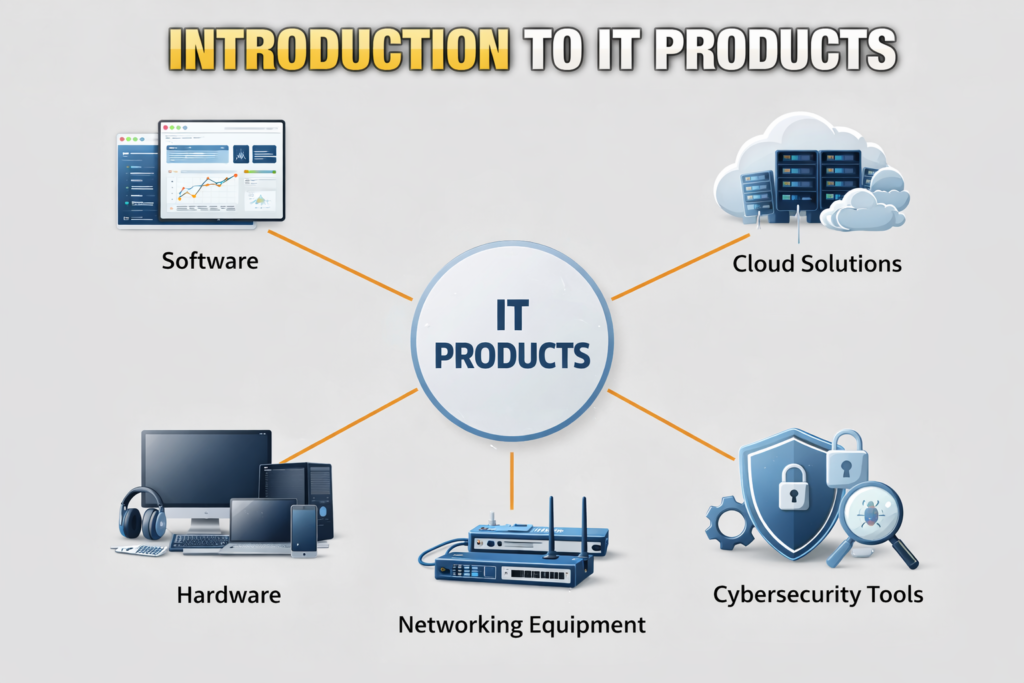
In today’s digital economy, IT products have become the backbone of almost every organization. From small startups to multinational enterprises, businesses rely on IT products to manage operations, secure data, improve productivity, and remain competitive. An IT product can be defined as any hardware, software, or digital solution designed to support information processing, communication, storage, and security.
By 2026, the role of IT products has expanded beyond basic computing. Businesses now depend on cloud platforms, cybersecurity tools, AI-powered software, and integrated digital ecosystems. Companies that fail to adopt modern IT products often struggle with inefficiency, security risks, and slow growth.
This guide explains what IT products are, their types, importance for businesses, and how organizations can build a strong IT foundation for long-term success.
What Is an IT Product?
An IT product refers to any technological solution used to create, process, store, secure, or exchange information. These products are designed to solve business problems, automate tasks, and enhance communication across teams and systems.
IT products generally fall into two main categories:
- IT hardware products (physical devices)
- IT software products (programs, applications, and platforms)
Together, they form an integrated system that supports business operations across finance, marketing, HR, logistics, customer support, and decision-making.
Evolution of IT Products: From Basic Tools to Smart Solutions
In the past, IT products were limited to desktop computers, printers, and basic accounting software. Over time, advancements in networking, cloud computing, and artificial intelligence transformed IT products into intelligent, scalable, and data-driven solutions.
By 2026, IT products are expected to:
- Operate in cloud-first environments
- Use AI for automation and analytics
- Support remote and hybrid work models
- Integrate seamlessly with other systems
This evolution allows businesses to scale faster while reducing operational costs.
Importance of IT Products for Modern Businesses
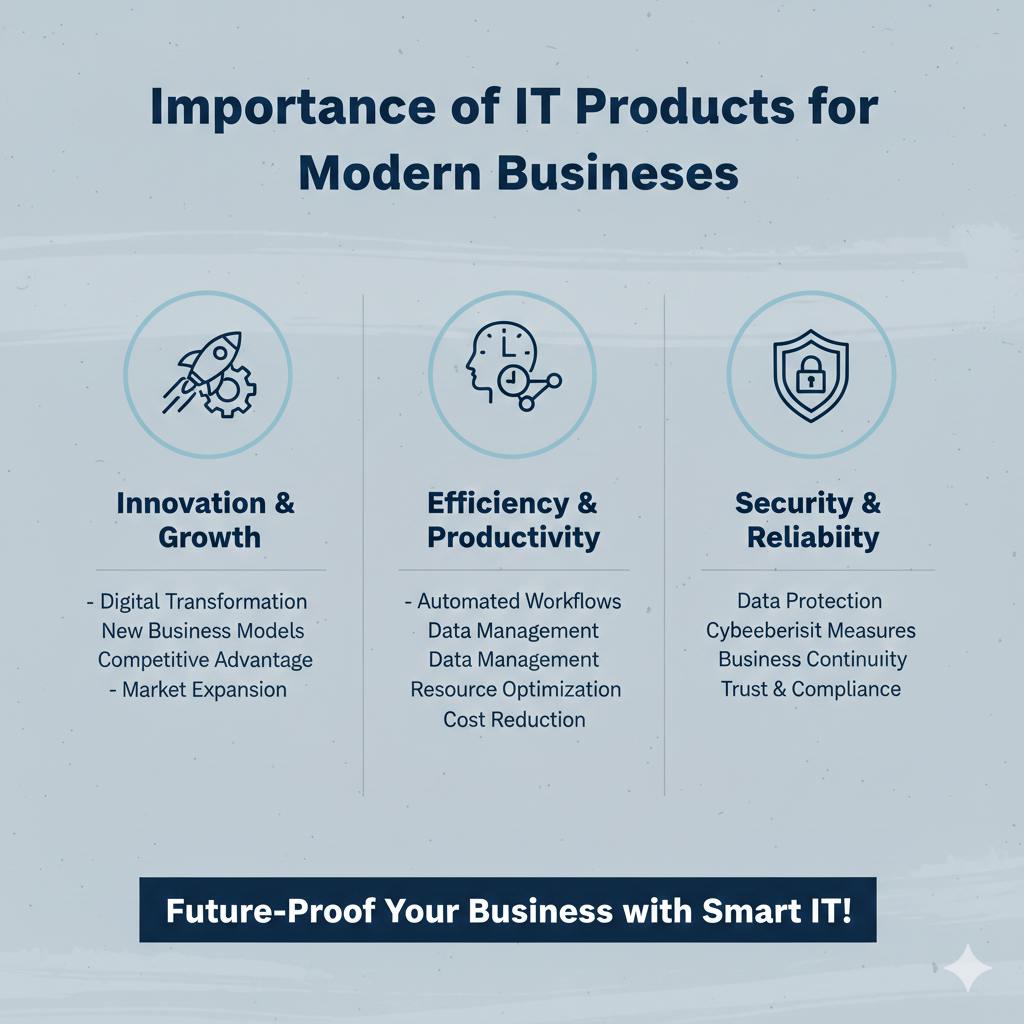
IT products are no longer optional—they are critical business assets. Companies that invest in the right IT products gain efficiency, security, and competitive advantage.
Improving Business Efficiency
Automation tools, ERP systems, and workflow software reduce manual effort, eliminate errors, and speed up processes. This allows employees to focus on high-value tasks rather than repetitive work.
Enhancing Data Security
Cybersecurity IT products protect sensitive data from breaches, malware, and unauthorized access. With increasing cyber threats, security-focused IT products are essential for compliance and trust.
Supporting Remote & Hybrid Work
Cloud-based IT products enable teams to collaborate from anywhere. Tools for communication, file sharing, and project management keep businesses productive regardless of location.
Enabling Data-Driven Decisions
Modern IT products collect and analyze data in real time, helping managers make informed decisions based on insights rather than assumptions.
Main Categories of IT Products
IT Hardware Products
IT hardware products include all physical components used in computing and networking. These products form the infrastructure on which software operates.
Common IT hardware products include:
- Desktop computers and laptops
- Servers and data storage devices
- Networking equipment (routers, switches)
- Printers and scanners
Hardware products are essential for reliability, performance, and scalability in business environments.
IT Software Products
IT software products are programs and applications that perform specific tasks. These products transform hardware into functional systems.
Examples of IT software products include:
- Operating systems
- Accounting and finance software
- Customer relationship management (CRM) tools
- Project management platforms
Many businesses now prefer subscription-based software models, which reduce upfront costs and allow continuous updates.
IT Products vs IT Services: Understanding the Difference
While often confused, IT products and IT services are not the same.
- IT products are tangible or downloadable solutions that businesses purchase or subscribe to.
- IT services involve support, maintenance, consulting, or implementation provided by professionals.
A successful IT strategy combines both—reliable IT products supported by expert IT services.
Role of Cloud-Based IT Products
Cloud-based IT products have revolutionized how businesses operate. Instead of relying on local servers, companies now store data and run applications in secure cloud environments.
Popular cloud-based IT products are offered by companies like Microsoft, Google, and Amazon Web Services.
External DOFOLLOW references:
Cloud IT products offer scalability, flexibility, and cost efficiency—making them ideal for businesses of all sizes.
IT Products for Small vs Large Businesses
Small Businesses
Small businesses typically need:
- Affordable IT products
- Easy-to-use software
- Cloud-based solutions with minimal setup
Examples include cloud accounting tools, basic cybersecurity software, and collaboration platforms.
Large Enterprises
Large organizations require:
- Advanced IT infrastructure
- Enterprise-grade security
- Customizable and scalable systems
They often invest in ERP systems, advanced analytics tools, and private cloud environments.
Common Challenges When Choosing IT Products
Many businesses struggle with IT product selection due to:
- Lack of technical knowledge
- Budget constraints
- Compatibility issues
- Security concerns
Choosing the wrong IT product can result in wasted investment and operational inefficiencies. That’s why proper evaluation is essential before purchasing.
Why IT Product Knowledge Is Critical in 2026
By 2026, digital transformation will accelerate further. Businesses without strong IT foundations will face:
- Reduced competitiveness
- Higher operational risks
- Difficulty scaling
Understanding IT products empowers organizations to future-proof operations and adapt to technological change.
Best IT Hardware Products for Businesses in 2026
IT hardware products form the physical backbone of every business IT system. Without reliable hardware, even the best software fails to deliver performance. In 2026, businesses are prioritizing energy-efficient, scalable, and high-performance IT hardware to support modern workloads.
Business Computers and Laptops
Modern businesses rely on powerful yet lightweight computers. IT products such as business laptops and desktops are designed for multitasking, security, and durability.
Key features businesses look for:
- Fast processors (Intel i7 / AMD Ryzen)
- SSD storage for speed
- Long battery life
- Built-in security chips
Companies often prefer enterprise solutions from brands like Dell, HP, and Lenovo.
External DOFOLLOW links:
Servers and Data Storage IT Products
Servers are critical IT products for organizations handling large volumes of data. In 2026, hybrid server models (on-premise + cloud) are increasingly popular.
Common server-related IT products include:
- Rack and tower servers
- Network Attached Storage (NAS)
- Backup and recovery systems
These IT products ensure data availability, business continuity, and scalability.
Networking IT Products
Networking IT products connect systems, employees, and customers. Reliable connectivity is essential for cloud computing, VoIP, and remote work.
Popular networking IT products:
- Routers and switches
- Firewalls
- Wireless access points
High-quality networking reduces downtime and improves productivity across departments.
Best IT Software Products for Businesses
While hardware provides structure, software IT products deliver functionality. In 2026, businesses prefer cloud-based, subscription-driven software for flexibility and cost control.
Operating Systems and Core Software
Every IT environment begins with an operating system. Business IT products in this category include:
- Windows enterprise editions
- Linux distributions for servers
- macOS for creative teams
These IT products manage resources, security, and system stability.
Accounting and Finance IT Products
Finance management is one of the most critical business functions. Accounting IT products automate invoicing, payroll, tax compliance, and reporting.
Popular features include:
- Real-time financial reporting
- Automated tax calculations
- Integration with banking systems
Such IT products reduce human error and improve financial transparency.
Customer Relationship Management (CRM) IT Products
CRM IT products help businesses manage customer data, sales pipelines, and communication.
Benefits of CRM IT products:
- Centralized customer information
- Improved customer retention
- Sales performance tracking
CRM tools are essential IT products for sales-driven organizations.
Cybersecurity IT Products: A Business Necessity
With increasing cyber threats, cybersecurity IT products are no longer optional. In 2026, businesses invest heavily in protecting digital assets.
Antivirus and Endpoint Protection
Endpoint security IT products protect individual devices from malware, ransomware, and phishing attacks.
Key capabilities include:
- Real-time threat detection
- Automatic updates
- Cloud-based threat intelligence
These IT products act as the first line of defense.
Firewall and Network Security Products
Firewall IT products monitor and control network traffic. They prevent unauthorized access and protect sensitive business data.
Modern firewall IT products offer:
- AI-based threat detection
- VPN support
- Intrusion prevention systems
Strong network security builds trust with customers and partners.
Data Backup and Recovery IT Products
Data loss can destroy businesses. Backup IT products ensure quick recovery from system failures, cyberattacks, or human error.
Essential features:
- Automated backups
- Cloud and local storage options
- Fast restoration
These IT products safeguard business continuity.
Cloud-Based IT Products for Modern Businesses
Cloud IT products are transforming how businesses operate. Instead of maintaining expensive infrastructure, companies now rely on scalable cloud platforms.
Major cloud IT product providers include Microsoft Azure, Google Cloud, and Amazon Web Services.
External DOFOLLOW links:
Cloud IT products allow businesses to scale resources on demand and reduce capital expenditure.
Productivity and Collaboration IT Products
Productivity IT products improve teamwork, communication, and task management—especially in remote and hybrid work environments.
Communication & Collaboration Tools
These IT products enable real-time communication and file sharing.
Common features:
- Video conferencing
- Team chat
- Document collaboration
They reduce email overload and improve workflow efficiency.
Project Management IT Products
Project management IT products help teams plan, execute, and track tasks efficiently.
Benefits include:
- Deadline tracking
- Resource allocation
- Performance monitoring
These IT products improve accountability and project success rates.
Choosing the Right Mix of IT Products
No single IT product fits every business. The right combination depends on:
- Business size
- Industry requirements
- Budget
- Growth plans
Smart organizations align IT product selection with long-term strategy rather than short-term cost savings.
Challenges Businesses Face with IT Products
Despite benefits, businesses may face challenges such as:
- Integration complexity
- Training requirements
- Ongoing subscription costs
Proper planning and vendor evaluation help overcome these issues.
How to Choose the Right IT Product for Your Business
Selecting the right IT product is a strategic decision that directly impacts productivity, security, and profitability. In 2026, businesses must evaluate IT products not just on price, but on scalability, integration, and long-term value.
A structured evaluation approach reduces risk and ensures alignment with business goals.
Step 1: Identify Business Needs Clearly
Before purchasing any IT product, businesses must define:
- What problem needs solving
- Which department will use the product
- Expected outcomes (efficiency, security, revenue growth)
Buying IT products without a clear objective often leads to underutilization and wasted investment.
Step 2: Compatibility and Integration Check
An IT product must integrate smoothly with existing systems. Compatibility issues increase costs and slow down adoption.
Businesses should evaluate:
- API availability
- Integration with current software
- Operating system support
Modern IT products are designed to work within connected digital ecosystems, not in isolation.
Step 3: Security and Compliance Evaluation
Security is a non-negotiable factor. IT products must comply with data protection regulations and industry standards.
Key security considerations include:
- Data encryption
- Access control
- Regular security updates
- Compliance certifications
Strong security-focused IT products protect both business data and customer trust.
Step 4: Cost, Licensing & ROI Analysis
The true cost of an IT product goes beyond purchase price. Businesses should calculate:
- Subscription or licensing fees
- Maintenance and upgrade costs
- Training requirements
- Expected return on investment (ROI)
The best IT products deliver measurable value over time rather than short-term savings.
Step 5: Vendor Reliability & Support
Vendor credibility matters. Reputable vendors provide:
- Timely updates
- Technical support
- Documentation and training
IT products from trusted companies like Microsoft, IBM, and Oracle are often preferred by enterprises.
External DOFOLLOW references:
Future Trends in IT Products (2026 and Beyond)
The IT landscape is evolving rapidly. Businesses that align IT product adoption with future trends gain a long-term competitive edge.
Artificial Intelligence (AI) Driven IT Products
AI-powered IT products are transforming decision-making and automation. These products:
- Analyze large datasets
- Automate routine tasks
- Predict business outcomes
AI-driven IT products reduce operational costs while improving accuracy and speed.
Automation and Low-Code IT Products
Low-code and no-code IT products allow businesses to build applications without deep programming expertise. This trend:
- Speeds up development
- Reduces dependency on developers
- Encourages innovation across departments
Automation-focused IT products improve efficiency and scalability.
Cloud-First and Hybrid IT Products
Cloud-first IT products are becoming standard. However, many enterprises adopt hybrid models combining cloud and on-premise solutions.
Benefits include:
- Flexibility
- Cost optimization
- Enhanced security control
Cloud IT products remain a central pillar of digital transformation.
Cybersecurity-Centric IT Products
With rising cyber threats, future IT products will prioritize:
- Zero-trust architecture
- AI-based threat detection
- Advanced identity management
Security-focused IT products will continue to dominate enterprise budgets.
Common Mistakes When Buying IT Products
Even experienced businesses make costly mistakes when selecting IT products.
Mistake 1: Buying Based on Price Alone
Cheaper IT products often lack scalability and security, leading to higher long-term costs.
Mistake 2: Ignoring User Experience
Complex IT products reduce adoption rates and productivity.
Mistake 3: Overlooking Future Growth
IT products should support business growth, not limit it.
Avoiding these mistakes ensures sustainable IT investments.
IT Products and Digital Transformation
Digital transformation is impossible without the right IT products. These products enable:
- Process automation
- Data-driven strategies
- Customer experience enhancement
Businesses that invest strategically in IT products adapt faster to market changes and customer expectations.
FAQs About IT Products
What is an IT product?
An IT product is a hardware, software, or digital solution designed to manage, process, store, or secure information for businesses.
Are IT products necessary for small businesses?
Yes. Cloud-based IT products make advanced technology affordable and accessible for small businesses.
How often should businesses upgrade IT products?
Most IT products should be reviewed every 2–3 years to ensure security, compatibility, and performance.
What is the future of IT products?
The future lies in AI-driven, cloud-based, and security-focused IT products.
Final Conclusion: IT Products as a Strategic Investment
In 2026, IT products are no longer just operational tools—they are long-term strategic investments that directly influence business growth, security, and competitiveness. From hardware and software to cloud platforms, AI-driven solutions, and cybersecurity systems, the right IT products enable businesses to operate efficiently, adapt quickly, and scale confidently in a rapidly evolving digital landscape.
However, success does not come from adopting every new technology. It comes from choosing IT products that align with business goals, integrate smoothly with existing systems, and deliver measurable return on investment. Organizations that focus on smart selection, future readiness, and continuous optimization gain a clear advantage over competitors.
To build a deeper understanding of how modern businesses can leverage technology effectively, you can also explore this detailed internal resource on business-focused digital solutions:
👉 https://rankifycontent.com/business-technology-guide
Ultimately, companies that treat IT products as strategic enablers rather than expenses will be better positioned to innovate, remain secure, and lead their industries in the years ahead.