Table of Contents
Dropshipping has evolved from a side hustle into a full-scale global business model. With the rapid growth of ecommerce, competition has increased, and success now depends heavily on supplier quality, pricing, reliability, and scalability. This is where B2B dropshipping websites play a crucial role.
Unlike retail marketplaces, B2B platforms connect you directly with manufacturers, wholesalers, and verified suppliers, allowing you to build a long-term business instead of chasing short-term profits. In this detailed guide, we will explore the top 10 B2B websites for dropshipping, focusing on platforms that serious entrepreneurs use to source products efficiently and profitably.
This article is written specifically for ecommerce founders, Shopify sellers, Amazon FBA operators, and digital entrepreneurs who want real supplier knowledge, not surface-level lists.
Understanding B2B Dropshipping
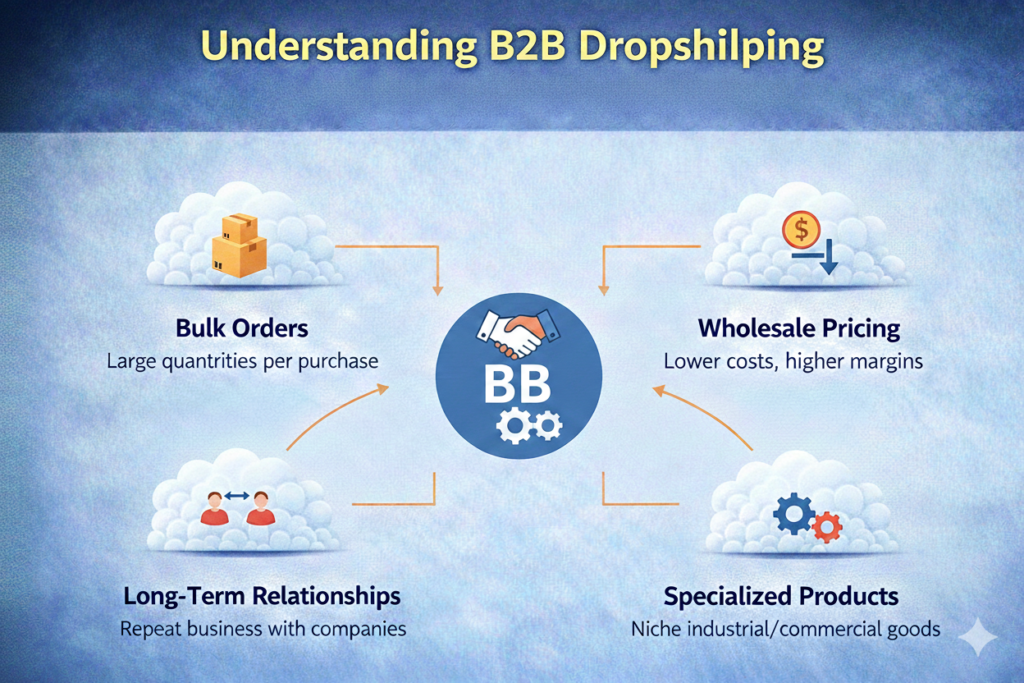
B2B dropshipping is a business-to-business supply model where sellers source products directly from manufacturers or wholesalers and ship them to customers without holding inventory. The key difference between B2B and traditional dropshipping is control and scalability.
With B2B dropshipping:
- You negotiate pricing directly with suppliers
- You can request custom branding and packaging
- You reduce per-unit costs as you scale
- You gain access to stable inventory
- You minimize risks related to supplier disappearance
This model is preferred by professional ecommerce businesses because it allows for brand building, profit optimization, and long-term growth.
Why B2B Platforms Are Better Than Retail Dropshipping Sites
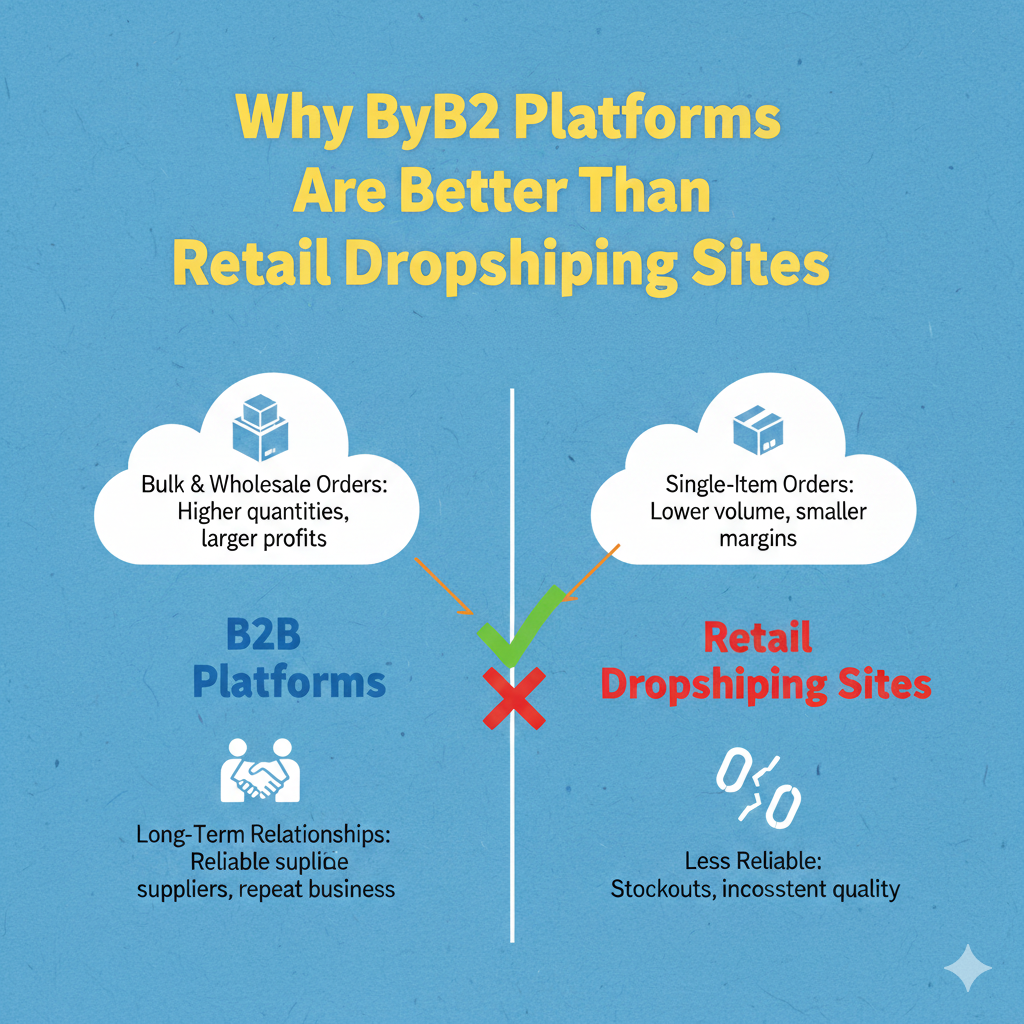
Retail-based dropshipping platforms often attract beginners, but they come with serious limitations. Prices are higher, branding is restricted, and supplier reliability can fluctuate.
B2B websites, on the other hand:
- Offer factory-level pricing
- Allow private labeling
- Support bulk and hybrid dropshipping
- Provide formal business documentation
- Enable direct supplier communication
For anyone planning to build a sustainable ecommerce brand, B2B platforms are not optional—they are essential.
Criteria Used to Select These Top 10 B2B Websites
Before listing the platforms, it is important to understand how they were evaluated. The selection is based on:
- Supplier verification standards
- Dropshipping compatibility
- Pricing transparency
- Product variety
- Global shipping options
- Buyer protection mechanisms
- Long-term business potential
Only platforms that meet professional ecommerce standards are included.
1. Alibaba – The Backbone of Global B2B Dropshipping
Alibaba is the world’s largest B2B marketplace and remains the most powerful platform for serious dropshippers. It connects buyers with manufacturers, factories, and large-scale wholesalers primarily based in China but also across Asia, Europe, and emerging markets.
Alibaba is not just a sourcing platform; it is an ecosystem for building brands. Suppliers on Alibaba offer customization, private labeling, logo printing, and tailored packaging solutions.
One of Alibaba’s most valuable features is Trade Assurance, a built-in protection system that safeguards buyers against quality issues and delayed shipments. This makes Alibaba suitable even for first-time B2B buyers who are cautious about international sourcing.
Official platform reference:
https://www.alibaba.com
Why Alibaba Is Ideal for Scalable Dropshipping
Alibaba is best suited for entrepreneurs who want to transition from basic dropshipping to brand ownership. It allows:
- Negotiation on pricing and MOQs
- Factory-direct communication
- Custom product development
- Long-term supplier contracts
While Alibaba is not traditionally advertised as a dropshipping platform, many suppliers are willing to support dropshipping if approached professionally.
Common Challenges With Alibaba
Alibaba does require effort. Beginners may find supplier communication complex, and MOQ negotiations can be intimidating. However, once these barriers are crossed, Alibaba becomes one of the most profitable sourcing platforms available.
2. AliExpress – The Entry Point for Dropshipping Beginners
AliExpress is often the first platform new dropshippers encounter. Owned by Alibaba Group, it bridges the gap between B2B and B2C by allowing single-unit purchases at wholesale-like prices.
AliExpress is popular because:
- No minimum order quantities
- Easy integration with Shopify
- Wide product variety
- Simplified checkout process
This platform is ideal for product testing before scaling to bulk sourcing on Alibaba or 1688.
Official website:
https://www.aliexpress.com
Why AliExpress Still Matters
Despite increased competition, AliExpress remains relevant because of its massive supplier base and improved shipping solutions such as AliExpress Standard Shipping and local warehouses in the US and Europe.
For beginners, AliExpress offers:
- Low risk entry
- Fast store setup
- Automation via dropshipping tools
However, long-term businesses often outgrow AliExpress due to branding limitations.
3. 1688 – The Hidden Weapon for High-Profit Dropshippers
1688 is a Chinese domestic wholesale platform owned by Alibaba Group. Unlike Alibaba, it is designed specifically for the Chinese market, which means prices are significantly lower.
This platform is widely used by professional sourcing agents and large ecommerce brands because it provides factory-direct pricing without international markup.
Official platform:
https://www.1688.com
Why 1688 Offers Better Profit Margins
The biggest advantage of 1688 is pricing. Products listed here are often 30–50% cheaper than Alibaba equivalents. This makes it extremely attractive for dropshippers focused on maximizing margins.
However, there are challenges:
- Platform is in Chinese
- Payment methods are limited
- International shipping is not supported directly
Most international users rely on sourcing agents to access 1688 effectively.
4. Global Sources – Premium B2B Marketplace for Verified Suppliers
Global Sources is a high-end B2B marketplace known for its strict supplier verification process. Unlike open platforms, Global Sources focuses on quality over quantity.
It is widely used by established brands and corporate buyers who value reliability and compliance.
Official website:
https://www.globalsources.com
Why Global Sources Is Trusted by Professionals
Global Sources conducts factory audits, verification checks, and supplier assessments. This reduces the risk of scams and substandard products.
It is particularly strong in:
- Electronics
- Smart devices
- Industrial goods
- Consumer tech accessories
The platform is ideal for businesses targeting regulated markets such as the United States and European Union.
Strategic Insight for Dropshippers
If you are building a long-term ecommerce brand, platforms like Alibaba, 1688, and Global Sources should be viewed as growth infrastructure, not just supplier directories. Many successful dropshipping brands start on AliExpress but later migrate to B2B platforms for cost control and branding.
For advanced ecommerce strategies, supplier comparison methods, and sourcing frameworks, you can explore additional in-depth resources published on RankifyContent.com, where ecommerce research is presented in a structured and practical manner.
5. DHgate – Low MOQ Wholesale Dropshipping Platform
DHgate is a China-based B2B marketplace that focuses on small and medium-sized buyers. It offers wholesale pricing with relatively low minimum order quantities, making it suitable for dropshippers who are not ready to commit to factory-level MOQs.
DHgate is commonly used for:
- Consumer electronics
- Mobile accessories
- Fashion items
- Home and lifestyle products
One of DHgate’s strengths is its buyer protection system, which ensures that funds are released to suppliers only after the buyer confirms satisfaction.
Official website:
https://www.dhgate.com
When DHgate Makes Sense for Dropshipping
DHgate works well for sellers who want:
- Wholesale pricing without large investments
- Faster onboarding compared to Alibaba
- A balance between B2B pricing and retail convenience
However, product quality can vary depending on the supplier, so it is essential to check ratings, reviews, and transaction history before committing.
6. Made-in-China – Manufacturer-Focused B2B Marketplace
Made-in-China is a specialized B2B platform that connects buyers directly with verified manufacturers and factories. Unlike open marketplaces, this platform focuses on industrial and production-level suppliers rather than trading companies.
It is especially useful for:
- Custom manufacturing
- Private labeling
- White-label products
- Compliance-focused markets
Official platform:
https://www.made-in-china.com
Why Made-in-China Is Valuable for Brand Builders
Made-in-China emphasizes transparency, factory audits, and product certifications. This makes it a strong choice for sellers targeting markets with strict quality and safety regulations.
Dropshippers who plan to scale into bulk imports or branded product lines often transition to Made-in-China once their products are validated.
7. SaleHoo – Verified Supplier Directory for Dropshippers
SaleHoo is not a traditional marketplace but a curated supplier directory. It lists thousands of verified dropshipping and wholesale suppliers from around the world, including the US, UK, China, and Australia.
SaleHoo is particularly popular among beginners because it helps avoid scams and unreliable vendors.
Official website:
https://www.salehoo.com
Why SaleHoo Is Beginner-Friendly
SaleHoo’s value lies in:
- Pre-verified suppliers
- Market research tools
- Educational resources
- Low risk of fraud
Instead of browsing open marketplaces, sellers can quickly find reliable suppliers that support dropshipping and small orders.
8. Spocket – US & EU-Based Dropshipping Suppliers
Spocket focuses on suppliers based in the United States and Europe, making it ideal for businesses that prioritize fast shipping and high-quality products.
While pricing is higher than Chinese platforms, Spocket offers:
- Faster delivery times
- Better product quality
- Strong branding potential
Official platform:
https://www.spocket.co
Who Should Use Spocket?
Spocket is best suited for:
- Brand-focused ecommerce stores
- Customers who expect fast delivery
- Premium product niches
Many Shopify store owners use Spocket to differentiate themselves from generic dropshipping stores that rely on long shipping times.
9. Wholesale Central – Free US Wholesale Directory
Wholesale Central is a free B2B directory that connects retailers with wholesalers and dropshipping suppliers, primarily in the United States.
Although the interface is simple, the platform provides access to suppliers that are not available on mainstream marketplaces.
Official site:
https://www.wholesalecentral.com
Benefits of Wholesale Central
- No membership fees
- US-based suppliers
- Faster domestic shipping
- Suitable for niche products
The main drawback is that supplier verification is limited, so due diligence is necessary.
10. CJDropshipping – All-in-One Dropshipping Ecosystem
CJDropshipping is more than just a supplier marketplace. It offers a complete dropshipping solution, including:
- Product sourcing
- Warehousing
- Order fulfillment
- Custom packaging
- Branding services
It integrates seamlessly with Shopify and WooCommerce, making it a popular alternative to AliExpress.
Official website:
https://www.cjdropshipping.com
Why CJDropshipping Is Popular Among Shopify Sellers
CJDropshipping allows sellers to request product sourcing directly from manufacturers. This removes the need to search multiple platforms and negotiate individually.
For growing stores, CJDropshipping provides a balance between automation and customization.
How to Verify B2B Suppliers Before Dropshipping
Supplier verification is one of the most critical steps in B2B dropshipping. Even reputable platforms can host unreliable vendors.
Before finalizing a supplier:
- Check business licenses and certifications
- Review transaction history and ratings
- Request product samples
- Communicate clearly about shipping timelines
- Use buyer protection or escrow services
Professional dropshippers treat supplier verification as a mandatory investment, not an optional step.
Common Mistakes in B2B Dropshipping
Many dropshippers fail not because of the business model, but due to avoidable mistakes.
Common errors include:
- Choosing suppliers based only on price
- Skipping sample orders
- Relying on a single supplier
- Ignoring shipping times
- Not setting clear quality standards
To build a sustainable business, focus on long-term reliability, not short-term savings.
Using B2B Platforms for Long-Term Brand Growth
B2B dropshipping is not just about selling products; it is about building systems. Successful sellers gradually move from:
- Generic products → branded products
- Retail sourcing → factory sourcing
- Short-term wins → long-term customer trust
For in-depth ecommerce strategies, supplier research methods, and SEO-focused content planning, you can explore additional resources published on RankifyContent.com, where ecommerce topics are covered with a data-driven and practical approach.
The Evolution of B2B Dropshipping in the Global Ecommerce Market
Over the past decade, ecommerce has shifted from simple product reselling to highly optimized supply chain systems. In earlier years, most online sellers relied on retail marketplaces to source products. However, as competition increased and customer expectations evolved, this approach became less sustainable.
B2B dropshipping emerged as a response to these challenges. By working directly with manufacturers and wholesalers, sellers gained better control over pricing, branding, inventory consistency, and delivery performance. Today, B2B dropshipping is widely used by ecommerce brands, Amazon private label sellers, and Shopify store owners who want to build long-term businesses rather than short-lived stores.
Unlike traditional dropshipping, B2B sourcing supports:
- Custom product development
- Brand ownership
- Quality assurance
- Predictable supply chains
- Business scalability
This evolution explains why serious ecommerce entrepreneurs now prioritize B2B platforms over retail-based sourcing methods.
Understanding Supplier Types on B2B Websites
Not all suppliers on B2B platforms operate the same way. Understanding supplier categories helps dropshippers make better sourcing decisions.
Manufacturers
Manufacturers produce goods in their own factories. Working directly with manufacturers offers the lowest prices and the highest level of customization. Platforms like Alibaba, 1688, and Made-in-China are particularly strong in this area.
Trading Companies
Trading companies source products from factories and resell them. While prices are higher, they often offer better communication, English support, and flexible order terms.
Wholesalers
Wholesalers purchase products in bulk and resell them at smaller quantities. Platforms such as DHgate and Wholesale Central often list wholesalers suitable for low-volume dropshipping.
Understanding these distinctions allows sellers to align supplier types with their business stage and goals.
Advanced Negotiation Strategies for B2B Dropshipping
One of the biggest advantages of B2B platforms is the ability to negotiate. Unlike retail marketplaces, prices are rarely fixed.
Effective negotiation strategies include:
- Requesting tiered pricing based on order volume
- Asking for reduced MOQs after initial orders
- Negotiating packaging and branding costs separately
- Discussing long-term cooperation discounts
- Clarifying payment terms and shipping responsibilities
Professional communication and clarity significantly increase the chances of favorable terms. Suppliers prefer buyers who demonstrate long-term intent rather than one-time purchases.
Payment Methods and Risk Management in B2B Dropshipping
Payment security is a major concern in international dropshipping. B2B platforms typically support multiple payment options, including bank transfers, escrow services, and platform-based protection programs.
Best practices for payment safety include:
- Using Trade Assurance on Alibaba
- Avoiding direct wire transfers for first orders
- Paying smaller amounts for sample orders
- Keeping written agreements within platform messaging systems
Risk management is not about avoiding suppliers, but about structuring transactions in a way that protects both parties.
Shipping Models Used in B2B Dropshipping
Shipping plays a crucial role in customer satisfaction and business sustainability. B2B dropshippers typically use one of the following shipping models:
Direct Shipping
Products are shipped directly from the supplier to the end customer. This is common in AliExpress and CJDropshipping-based models.
Hybrid Shipping
Popular products are stored in local warehouses, while slower-moving products ship from overseas suppliers. Platforms like Spocket and CJ support this model.
Bulk + Fulfillment
Products are ordered in bulk and stored in fulfillment centers. This model is commonly used by advanced sellers transitioning from dropshipping to inventory-based operations.
Choosing the right shipping model depends on order volume, target market, and customer expectations.
Quality Control in B2B Dropshipping
Quality issues are one of the most common reasons dropshipping businesses fail. B2B platforms offer better quality control options compared to retail sourcing.
Effective quality control measures include:
- Ordering samples from multiple suppliers
- Requesting production photos and videos
- Using third-party inspection services
- Defining quality standards in writing
- Inspecting packaging and labeling
Quality control should be treated as an investment, not an expense. Even small improvements in product quality can significantly reduce refunds and negative reviews.
Legal and Compliance Considerations
When dropshipping internationally, sellers must comply with local and international regulations. This includes product safety standards, labeling requirements, and import laws.
Important compliance areas include:
- Product certifications (CE, FCC, FDA where applicable)
- Customs declarations
- Consumer protection laws
- Tax and VAT obligations
- Intellectual property rights
Platforms such as Global Sources and Made-in-China are particularly helpful for sellers operating in regulated markets due to their emphasis on compliance documentation.
Building Long-Term Supplier Relationships
Successful B2B dropshippers view suppliers as partners, not vendors. Long-term relationships lead to better pricing, priority production, and early access to new products.
Ways to build strong supplier relationships include:
- Consistent communication
- Honest feedback
- Timely payments
- Long-term order planning
- Respecting cultural business norms
Suppliers are more likely to support dropshipping requests, customization, and faster processing for buyers they trust.
Scaling a Dropshipping Business Using B2B Platforms
Scaling is where B2B dropshipping truly shines. Once a product is validated, sellers can:
- Reduce costs through bulk pricing
- Improve branding through private labeling
- Speed up shipping with local warehouses
- Expand product lines with the same supplier
Many ecommerce brands that start as dropshipping stores eventually evolve into fully branded businesses, using B2B platforms as their supply backbone.
For structured scaling strategies, supplier comparison frameworks, and advanced ecommerce insights, long-form research articles published on RankifyContent.com provide practical guidance tailored to modern online businesses.
Frequently Asked Questions (FAQs)
What is the best B2B website for dropshipping beginners?
AliExpress and SaleHoo are best for beginners due to low risk, easy setup, and minimal investment requirements.
Is Alibaba safe for dropshipping?
Yes, Alibaba is safe when using verified suppliers and Trade Assurance. Always order samples and communicate clearly.
Can I use multiple B2B suppliers for one store?
Yes, using multiple suppliers reduces risk and ensures consistent inventory availability.
Which B2B platform offers the lowest prices?
1688 typically offers the lowest prices, but it requires sourcing agents for international dropshipping.
Are B2B dropshipping websites legal?
Yes, B2B dropshipping is legal in most countries as long as tax, import, and consumer protection laws are followed.
Which platform is best for fast shipping?
Spocket and US-based suppliers on Wholesale Central usually provide the fastest delivery times.
Do B2B suppliers allow private labeling?
Many suppliers on Alibaba, Made-in-China, and Global Sources support private labeling and custom branding.
How much money do I need to start B2B dropshipping?
B2B dropshipping can be started with a small budget, especially when using platforms like AliExpress or SaleHoo. Costs increase when moving into private labeling or bulk orders.
Can I use B2B dropshipping for Amazon FBA?
Yes, many sellers source products from Alibaba, Global Sources, and Made-in-China for Amazon FBA after meeting branding and compliance requirements.
Is B2B dropshipping better than retail dropshipping?
Yes, B2B dropshipping offers better margins, supplier reliability, and branding opportunities, making it more suitable for long-term businesses.
How do I avoid scams on B2B websites?
Use verified suppliers, platform protection programs, sample orders, and clear communication to reduce risks.
Do B2B suppliers support custom branding?
Most manufacturers on platforms like Alibaba and Made-in-China support private labeling and custom packaging.
Conclusion
B2B dropshipping represents the next stage in the evolution of ecommerce. As competition increases and customers demand better quality, faster shipping, and branded experiences, sourcing products through retail platforms becomes increasingly limiting.
The top 10 B2B websites for dropshipping covered in this comprehensive guide provide the infrastructure needed to build profitable, scalable, and sustainable online businesses. From beginner-friendly platforms like AliExpress and SaleHoo to advanced sourcing solutions such as Alibaba, 1688, and Global Sources, each platform serves a specific role in the ecommerce journey.
Success in B2B dropshipping is not about finding the cheapest product; it is about building reliable systems, strong supplier relationships, and trust with customers. By applying the strategies discussed in this guide—supplier verification, negotiation, quality control, and compliance—you can avoid common pitfalls and position your business for long-term growth.
For entrepreneurs serious about ecommerce success, B2B dropshipping is not just an option—it is a strategic advantage. Continue learning, refining your sourcing approach, and leveraging expert research available on https://rankifycontent.com/ to stay ahead in the competitive world of online business.