Table of Contents
Introduction
In today’s competitive environment in terms of software, it is not enough just to make a quality product. Companies need high-quality, engaging, and SEO-friendly content to teach and inform their audience and establish trust, thus producing quality leads. It is here that a SaaS content writer comes in handy.
An expert SaaS content writer for business-to-business clients is well versed in technology and marketing. This person can take the technical aspects of the software and convert them into user-friendly content to attract decision makers, address customers’ concerns, and move them along the buying cycle. Content marketing is critical to your success no matter if you are a start-up or an established software company.
This guide offers all the knowledge that you must have about B2B SaaS content writing, including why it matters, necessary skills, types of content, SEO tactics, and tips for creating content that actually makes money.

What Is a B2B SaaS Content Writer?
B2B SaaS content writers are professionals who create marketing content and training materials aimed at software companies who are selling their services to businesses.
While other content writers may not have any knowledge of:
- Complicated software products
- Cloud-based technology solutions
- Pain points for businesses
- Buyer’s journey of customers
- SEO principlesLead
- Generation techniques
Their main focus does not lie on merely writing articles; rather, it is about helping software companies get qualified leads and organic traffic via content marketing.
Understanding B2B SaaS
Before we move forward to talk about content writing, it is essential to know what B2B SaaS stands for.
B2B stands for Business-to-Business, which denotes companies offering their products/services to other businesses and not individuals.
SaaS is an acronym that stands for Software as a Service.
Examples include:
- Customer Relationship Management (CRM)
- Project Management Software
- Marketing Automation Software
- Accounting Software
- HR Management Software
- Cloud Storage Services
- Cyber Security Platforms
The above tools are purchased by companies to enhance their efficiency and productivity
Why Content Matters for SaaS Companies
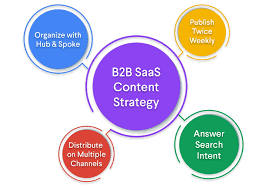
The SaaS industry is very competitive with hundreds of competitors offering products having similar features.
Content makes firms differentiate themselves through education before making the purchase decision.
Good content can:
- Establish credibility
- Enhance search engine rankings
- Attract inbound leads
- Increase traffic
- Lower customer acquisition cost
- Increase adoption of products
- Help the sales force
- Educate the customers
Unlike the sales message, the content focuses on problem solving for the customers.

The Function of a B2B SaaS Content Writer
A SaaS writer does a lot more than blog writing.
This role involves:
Researching
Getting to know:
- Trends in the industry
- Pains of the customers
- Content from competitors
- Product informationCustomer personaCustomer persona
- Customer persona
Good research means good content.

SEO optimization
A SaaS content writer does keyword research and embeds these keywords in content.
SEO consists of:
- Keyword placement
- Meta descriptions
- Internal linking
- External linking
- Optimized headings
- Image alt text
- User intent
Proper SEO helps articles rank higher on search engines.

Product Education
The software can get very complex.
An experienced writer will explain it through:
- Features
- Benefits
- Processes
- Integration
- Usage
using easily understandable language for both technical and non-technical people.
Lead Generation
Content should guide readers toward actions like:
- Taking a demo
- Availing free trial
- Downloading an eBook
- Setting up consultations
- Getting in touch with sales team
All the content written must help achieve the business objectives.

Key Skills for B2B SaaS Content Writers
SaaS content writers need marketing as well as technical expertise.
The following skills are essential:
Research Skills
Software sectors are fast-growing.
One needs to keep researching:
- New technologies
- Industry trendsNew technologiesNew technologiesNew technologies
- Competitor tacticsIndustry trends
- Customer issues
Good information creates credibility.

Technical Understanding
LinkedIn and social media content
- APIs
- Cloud computing
- Integrations
- Automation
- AI
- Cybersecurity
- Data analytics
This knowledge helps explain products correctly.

SEO Expertise
Without SEO, even excellent content may never reach its audience.
Important SEO skills include:
- Keyword research
- Search intent analysis
- On-page optimization
- Content clustering
- Topic authority
- Link building
These practices improve organic visibility.

Storytelling
Business readers appreciate engaging content.
Instead of listing features, skilled writers tell stories about:
- Customer success
- Business transformation
- Productivity improvements
- Real-world challenges
Stories make software relatable.

Adaptability
Different audiences require different writing styles.
Examples include:
- CEOs
- Marketing managers
- Developers
- IT professionals
- HR teams
- Finance departments
A good SaaS writer adapts tone and complexity accordingly.

Types of Content Written by B2B SaaS Writers
SaaS marketing includes many content formats.
Blog Posts
Blogs attract organic search traffic.
Popular topics include:
- Industry trends
- Product comparisons
- How-to guides
- Tutorials
- Best practices
- Software reviews
Regular blogging builds website authority.

Landing Pages
Landing pages convert visitors into leads.
They focus on:
- Clear headlines
- Product benefits
- Customer testimonials
- Strong calls-to-action
Well-written landing pages increase conversions.

Product Pages
Product pages explain:
- Features
- Pricing
- Benefits
- Integrations
- Frequently Asked Questions
They help buyers evaluate software solutions.

Case Studies
Case studies demonstrate real-world success.
Typical sections include:
- Client background
- Challenge
- Solution
- Results
- ROI
They build credibility with potential customers.

White Papers
White papers provide detailed research.
Businesses use them to:
- Build authority
- Generate leads
- Educate decision-makers
These documents often require extensive industry research.

eBooks
eBooks cover topics in depth.
Examples include:
- SaaS marketing
- AI automation
- CRM implementation
- Sales enablement
They are often offered in exchange for email addresses.

Email Campaigns
Email marketing nurtures leads through:
- Welcome sequences
- Product updates
- Feature announcements
- Educational newsletters
- Customer onboarding
Well-written emails improve customer engagement.

Website Copy
Every SaaS website needs:
- Home pages
- About pages
- Service pages
- Feature pages
- Pricing pages
- Contact pages
Clear messaging improves user experience.

Understanding the SaaS Customer Journey
Effective content supports customers at every buying stage.
Awareness Stage
Customers realize they have a problem.
Content examples:
- Educational blogs
- Industry reports
- Statistics
- Beginner guides
The goal is education rather than selling.

Consideration Stage
Customers compare solutions.
Useful content includes:
- Product comparisons
- Buying guides
- Webinars
- Case studies
- Expert articles
Trust becomes increasingly important.

Decision Stage
Customers evaluate vendors.
Content should include:
- Product demos
- Free trial pages
- Testimonials
- Pricing guides
- ROI calculators
This content helps prospects make confident purchasing decisions.

SEO Strategies for B2B SaaS Content
SEO drives long-term organic growth.
Keyword Research
Start by identifying:
- Primary keywords
- Secondary keywords
- Long-tail keywords
- Question-based keywords
Example:
Primary Keyword:
B2B SaaS Content Writer
Secondary Keywords:
- SaaS content marketing
- SaaS blog writing
- SaaS SEO content
- Software content writing
- SaaS copywriter
Long-tail keywords often have lower competition and higher conversion rates.

Search Intent
Every keyword reflects user intent.
Common intents include:
Informational
Users want answers.
Example:
“What is SaaS content marketing?”

Commercial
Users compare options.
Example:
“Best SaaS content writing services”
Transactional
Users are ready to buy.
Example:
“Hire B2B SaaS content writer”
Matching content with search intent improves rankings.

Topic Clusters
Instead of publishing random articles, create clusters around one topic.
Example Cluster:
Main Pillar:
Ultimate Guide to SaaS Content Marketing
Supporting Articles:
- SaaS SEO
- SaaS Blogging
- SaaS Copywriting
- SaaS Lead Generation
- SaaS Keyword Research
- SaaS Email Marketing
This strategy improves topical authority.

Writing Content That Converts
Traffic alone doesn’t grow businesses.
Content should encourage readers to take action.
Successful SaaS articles include:
- Clear introductions
- Helpful information
- Real examples
- Statistics
- Visual explanations
- Strong CTAs
- Internal links
- External references
Readers should finish the article knowing exactly what to do next.

Building Trust Through Educational Content
People rarely purchase software after reading only one article.
Trust develops over time.
Educational content helps by:
- Answering questions honestly
- Explaining difficult concepts simply
- Sharing industry insights
- Demonstrating expertise
- Offering practical solutions
Companies that consistently publish valuable content often become trusted authorities in their industries.

External Dofollow Resources
To strengthen your understanding of SEO, content marketing, and search engine best practices, these authoritative resources are valuable references:
- Google Search Central: https://developers.google.com/search
- HubSpot Marketing Blog: https://blog.hubspot.com
- Ahrefs Blog: https://ahrefs.com/blog
- Semrush Blog: https://www.semrush.com/blog
- Content Marketing Institute: https://contentmarketinginstitute.com
- Moz Blog: https://moz.com/blog

Advanced Content Marketing Strategies for B2B SaaS Companies
Now that your SaaS company is established with a good content base, it’s time to employ more advanced tactics which will help you gain search visibility, increase brand authority, and drive high-value leads.
Build Topic Authority
Search engines reward websites which show expertise in their respective topics. Instead of writing about any topic, write content which revolves around your niche.
For example, if your SaaS product is a CRM platform, your content strategy could include topics such as:
- CRM implementation guides
- Sales automation
- Lead management
- Customer relationship strategies
- CRM integrations
- Customer retention techniques
- CRM reporting and analytics
Publishing multiple high-quality articles around these related topics helps establish your website as an authoritative resource.

Create Evergreen Content
Evergreen content remains valuable for years with only occasional updates.
Examples include:
- What Is SaaS?
- How to Choose CRM Software
- SaaS Marketing Strategies
- Beginner’s Guide to Project Management Software
- Email Marketing Best Practices
- Customer Onboarding Guide
Evergreen articles continue attracting organic traffic long after publication.

Update Existing Content Regularly
While many SaaS firms concentrate solely on writing fresh articles, the same does not apply to their older articles.
Updating older articles with statistics, images, examples, keywords, and links will help increase rankings as well as maintain relevancy.
Updating content also tells the search engines that your website is updated and thus reliable.

Optimise for Featured Snippets
Featured snippets appear at the top of search results and can significantly increase visibility.
To improve your chances:
- Answer questions directly.
- Use numbered lists.
- Include bullet points.
- Add concise definitions.
- Organise content with clear headings.
This structure makes it easier for search engines to extract relevant information.

The Importance of User Intent
Successful SaaS content addresses the reader’s purpose behind a search.
Typical search intents include:
Informational Intent
Users seek knowledge.
Example:
“What is B2B SaaS content marketing?”
Your content should educate without aggressively promoting your product.
Commercial Investigation
Users compare solutions.
Example:
“Best SaaS content writing agencies”
Content should highlight features, comparisons, and case studies.
Transactional Intent
Users are ready to take action.
Example:
“Hire a B2B SaaS content writer”
Landing pages should include persuasive copy, testimonials, and clear calls to action.

How AI Is Transforming SaaS Content Writing
Artificial intelligence has become an important tool for content creation, but it works best when combined with human expertise.
AI can help with:
- Brainstorming content ideas
- Creating outlines
- Keyword research
- Grammar improvement
- Content optimisation
- Draft generation
However, human writers remain essential for:
- Industry expertise
- Original insights
- Brand voice
- Strategic messaging
- Fact-checking
- Storytelling
- Customer empathy
The most effective SaaS companies use AI to improve efficiency while relying on skilled writers to produce accurate, engaging, and trustworthy content.

Writing for Different Decision-Makers
B2B purchases often involve multiple stakeholders. Your content should address each audience’s priorities.
Business Owners
Business owners want to understand:
- Return on investment (ROI)
- Cost savings
- Business growth
- Operational efficiency
Marketing Managers
Marketing professionals care about:
- Lead generation
- Campaign performance
- Analytics
- Marketing automation
IT Managers
Technical buyers focus on:
- Security
- Integrations
- Reliability
- Compliance
- Scalability
Finance Teams
Finance departments evaluate:
- Pricing
- Long-term costs
- Budget planning
- Financial value
Creating targeted content for each audience improves engagement and supports the buying process.

Common Mistakes in B2B SaaS Content Writing
Even experienced writers can make mistakes that reduce content performance.
Writing Only About Product Features
Customers care less about features and more about outcomes.
Instead of saying:
“Our platform includes automated reporting.”
Explain the benefit:
“Our automated reporting saves hours of manual work and provides real-time insights for better decision-making.”

Ignoring SEO
Publishing excellent content without SEO limits visibility.
Always optimise:
- Title tags
- Meta descriptions
- Headings
- Keywords
- Internal links
- Image alt text
Using Excessive Technical Language
Complex terminology can overwhelm readers.
Use plain language whenever possible and explain technical concepts clearly.

Weak Calls to Action
Every article should guide readers toward a logical next step.
Examples include:
- Book a demo
- Start a free trial
- Contact our team
- Download a guide
- Subscribe to the newsletter
Publishing Without Research
Accurate content builds credibility.
Always verify:
- Statistics
- Industry trends
- Product information
- Customer examples
Reliable research strengthens trust with readers.

Measuring Content Performance
Publishing content is only the beginning. Measuring results helps refine your strategy.
Important metrics include:
Organic Traffic
Monitor how many visitors arrive through search engines.
Steady growth indicates improving search visibility.

Keyword Rankings
Track target keywords to see whether your content is moving higher in search results.

Conversion Rate
Measure how many visitors:
- Request demos
- Start free trials
- Download resources
- Contact sales
High conversions indicate content aligns with user intent.

Engagement Metrics
Review:
- Average time on page
- Scroll depth
- Bounce rate
- Pages per session
Engaged readers are more likely to become customers.

Backlinks
High-quality backlinks from reputable websites improve domain authority and search rankings.
Creating original research, case studies, and comprehensive guides can naturally attract backlinks.

Creating a B2B SaaS Content Strategy
A successful strategy follows a structured process.
Step 1: Define Your Audience
Identify:
- Industry
- Company size
- Job roles
- Pain points
- Business goals
Step 2: Conduct Keyword Research
Focus on:
- High-intent keywords
- Long-tail phrases
- Low-competition opportunities
- Customer questions
Step 3: Build a Content Calendar
Plan content consistently.
A monthly calendar may include:
- Four blog posts
- One case study
- One white paper
- Two newsletters
- Social media content
- Product updates
Consistency builds momentum over time.

Step 4: Promote Every Article
Publishing alone is not enough.
Promote content through:
- Email newsletters
- Industry communities
- Partner websites
- Guest blogging
Content promotion extends reach and increases engagement.

Step 5: Analyse and Improve
B2B SaaS Content Writer produces excellent content which is used by software businesses to acquire, inform, and convert business customers.
Updating of good articles and improvement of poor performing content.

Best Practices for Hiring a B2B SaaS Content Writer
When hiring a SaaS writer, look for someone who:
Is an accurate writer
Can explain complex ideas in simple language

Future Trends in B2B SaaS Content Marketing
Evolution of the content landscape is constant. Here are some of the major trends seen today:
- AI assisted content creation
- Interative calculators and tools
- Video tutorials and demonstrations
- Optimizing for voice searches
- Personalized content experience
- Storytelling using data
- First party research and studies
- Focus on E-E-A-T: Experience, Expertise, Authoritativeness, and Trustworthiness

Frequently Asked Questions (FAQs)
What does a B2B SaaS content writer do?
A B2B SaaS content writer is responsible for creating blogs, landing pages, case studies, website content, email marketing, and other types of marketing material for software firms that target businesses as their customers.

Why is SEO important for SaaS content?
SEO allows the potential customers to find your content via search engines. SEO-optimised articles can lead to more organic traffic, enhanced brand authority and lower customer acquisition costs.

What skills should a SaaS content writer have?
Effective SaaS content writers must be able to research well, apply SEO best practices, have technical knowledge, communicate effectively, and be able to simplify software jargon.

How often should SaaS companies publish content?
Frequency is more important than quantity. Two to four articles per month and updates to existing content can be considered a good strategy for most firms.

Can AI replace SaaS content writers?
Though AI can be helpful in brainstorming, structuring, and increasing efficiency, expert human writers are still needed for their strategic thinking, creativity, storytelling ability, precision, and consistency of brand voice.

How long should a SaaS blog post be?
This can vary depending upon what kind of article you are writing and what your purpose is, but for the comprehensive posts, the best word count falls somewhere between 1,500 and 3,500 words.

What types of content generate the most SaaS leads?
Some of the best forms of content to drive leads include educational blog posts, comparison pieces, case studies, white papers, webinars, e-books, and SEO landing pages.

Conclusion
A B2B SaaS content writer is much more than someone who writes blogs—this person is a critical player in business development. Thanks to their combination of technical skills, SEO know-how, knowledge of the target audience, and great storytelling ability, SaaS content writers generate material for all stages of the buyer’s journey.
The best SaaS firms view content creation not as a quick marketing strategy but as a long-term investment. Continuous creation of useful and optimized content helps build trust, improves searchability, and ensures organic growth. Whatever your objective, be it creating more brand awareness or customer retention, proper planning combined with content writing services from a professional B2B SaaS content writer can ensure your success.

External Dofollow Resources
These trusted resources provide valuable guidance on SEO, content marketing, and SaaS best practices:
- Google Search Central: https://developers.google.com/search
- HubSpot Blog: https://blog.hubspot.com
- Ahrefs Blog: https://ahrefs.com/blog
- Semrush Blog: https://www.semrush.com/blog
- Content Marketing Institute: https://contentmarketinginstitute.com
- Moz Blog: https://moz.com/blog
- Search Engine Journal: https://www.searchenginejournal.com