Table of Contents
In the meticulous and demanding world of materials science, the integrity of a conclusion is only as reliable as the preparation of the evidence upon which it is based. For over forty years, one organization has quietly but definitively set the standard for this foundational step: Allied High Tech Products, Inc. While the name might evoke images of silicon chips or complex circuitry for the uninitiated, within the specialized corridors of failure analysis laboratories, quality control departments, and advanced research facilities, Allied is recognized as the preeminent authority in a different, equally critical form of high technology: the precise art and science of metallographic sample preparation. This comprehensive exploration delves into the history, philosophy, and extensive product ecosystem of Allied High Tech, revealing why their equipment and consumables are not merely tools, but essential partners in the relentless pursuit of material truth.
The Genesis and Evolution of a Materials Preparation Pioneer

Understanding the formidable reputation of Allied High Tech Products Inc. necessitates a journey back to its origins and a look at its steady evolution. Founded in 1983, the company emerged during a period of significant growth in advanced materials and manufacturing. From its inception, Allied distinguished itself by focusing not on being a generalist supplier, but on becoming a deep specialist in a singular, complex workflow: taking a raw, often damaged piece of material and transforming it into a flawless specimen ready for microscopic interrogation. Headquartered in Rancho Dominguez (Cerritos), California, and bolstered by additional manufacturing capabilities in Oklahoma, the company has spent more than four decades refining not just its product line, but its profound understanding of the customer’s journey through the preparation process.
Unlike large, impersonal laboratory supply conglomerates, Allied has maintained a sharp focus on the metallographic process from start to finish. This concentrated approach has allowed them to build an unassailable reputation for robustness, precision, and continuous innovation. As a privately held entity, they have demonstrated a consistent trajectory of growth, often outpacing broader industry averages by reinvesting profits directly back into their people, their technology, and their facilities to better serve the scientific and industrial communities. This financial stability and independence are crucial for clients making significant capital investments, as it signals a long-term, reliable partner rather than a transient market player. With a dedicated team of in-house engineers and materials scientists, Allied transcends the role of a mere vendor; they function as a solution provider. Their state-of-the-art, in-house applications laboratory is a physical testament to this commitment, a place where new preparation procedures are meticulously developed and customer samples are processed to demonstrate optimal methodologies, ensuring that theoretical best practices translate into tangible, real-world results.
A Deep Dive into the Comprehensive Product Ecosystem
The true genius of Allied High Tech’s product line lies in its holistic design. It is meticulously engineered to cover every critical step of the metallographic sample preparation process, creating a seamless and integrated workflow. From the initial, violent act of sectioning a raw piece of material to the gentle, final polishing that reveals its hidden microstructure, Allied provides the precision hardware and scientifically formulated consumables necessary to guarantee success at each stage.
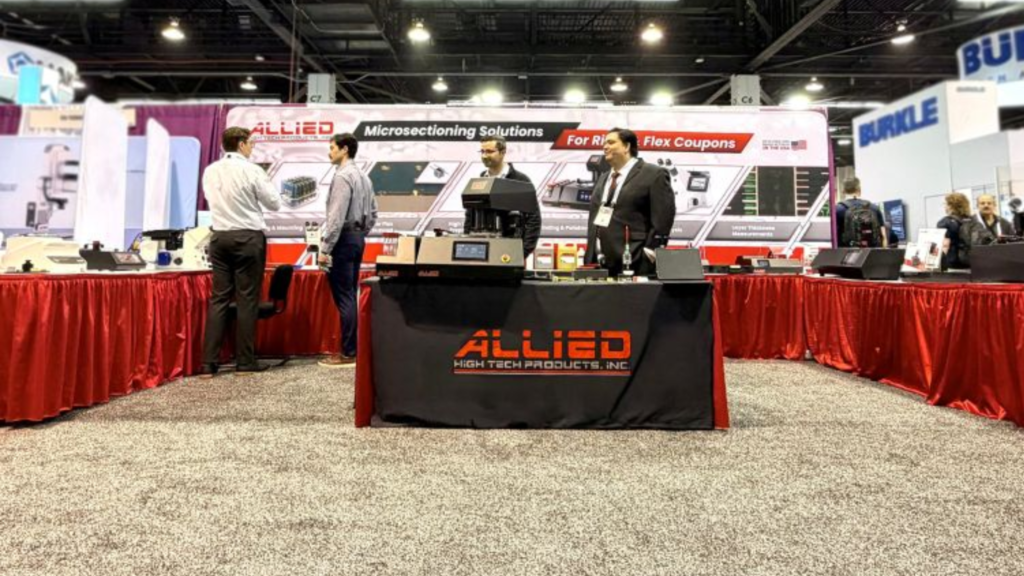
Precision Sectioning: The First and Most Critical Cut
The journey towards a perfect sample begins with the extraction of a representative piece. Allied’s sectioning saws are not merely cutting tools; they are precision instruments engineered to remove material with the absolute minimal introduction of deformation and heat damage. This is paramount because any artifacts introduced during cutting—such as smeared metal, micro-cracks, or heat-affected zones—can obscure or completely alter the true microstructure, leading to erroneous analysis. The flagship of this category is the TechCut 5™ Precision High-Speed Saw, a versatile and programmable workhorse designed for the high-throughput demands of modern laboratories. Its microprocessor-controlled system is the brain of the operation, meticulously managing the sample feed rate, cutting distance, and applied force. As the blade encounters varying material densities or thicknesses within a single sample, the saw intelligently and automatically adjusts the feed rate to ensure a clean, efficient cut while preventing damage to both the delicate sample and the expensive blade. Upon the completion of a programmed cut, the table automatically retracts, stops blade rotation, and halts coolant flow, streamlining the operator’s workflow and ensuring repeatability between samples.
For smaller, more delicate, or highly brittle samples—such as those found in microelectronic packages, advanced ceramics, or fiber optic connectors—the brute force of a high-speed saw is inappropriate. For these applications, Allied offers the TechCut 4™ Precision Low-Speed Saw. This instrument utilizes a gravity-fed system, employing precise, calibrated weights to control the force applied to the sample against a rotating blade. This gentle action minimizes the mechanical deformation and frictional heat that are inevitable with high-speed sectioning, preserving the pristine integrity of even the most sensitive materials. Completing the sectioning lineup is the PowerCut 10™ Abrasive Cut-Off Saw, a robust manual machine designed for the rapid sectioning of larger, more substantial samples. Accepting blades up to ten inches in diameter, it can power through bar stock up to three inches thick, making it the ideal tool for general metallurgical labs that regularly encounter large components.
The Art of Mounting: Encapsulating for Integrity
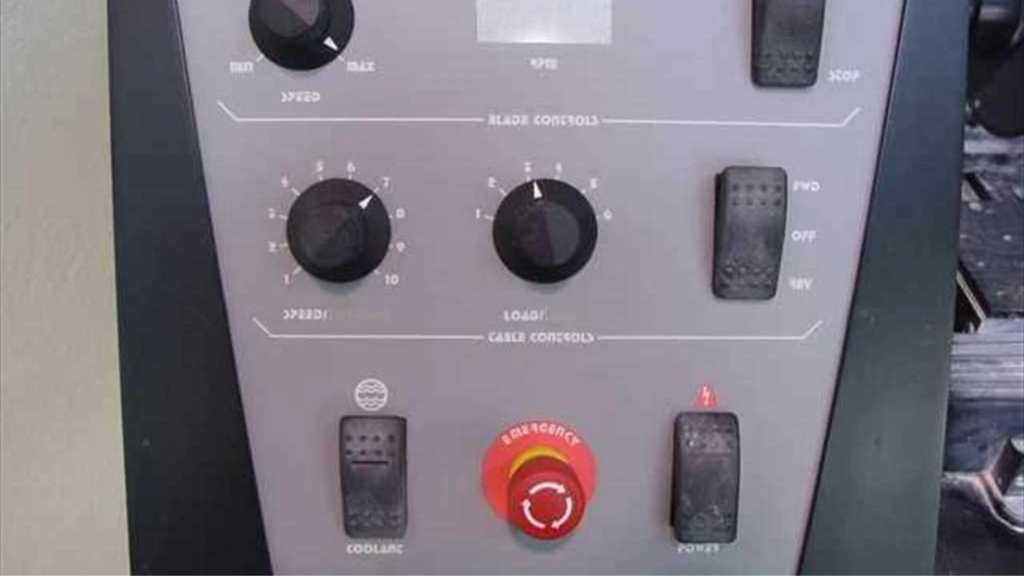
Once a representative sample has been successfully sectioned, it often requires mounting to create a uniform, easy-to-handle specimen. This process, whether through hot compression or cold casting, encapsulates the sample in a robust resin. This serves multiple critical purposes: it protects delicate edges from damage during subsequent grinding and polishing, it fills porosity within the material to prevent the entrapment of abrasives, and it creates a standardized geometry that fits perfectly into the automated holders of polishing equipment. Allied offers a full spectrum of mounting solutions, from high-quality phenolic and acrylic hot mounting powders to a comprehensive range of cold mounting epoxies and acrylics designed for various curing times, shrinkage rates, and hardness requirements, ensuring that the mounting media itself does not interfere with the sample or the preparation process.
Grinding and Polishing: Where Precision Meets Perfection
This is the heart of the metallographic process and the arena where Allied truly distinguishes itself from the competition. Their range of equipment is designed to achieve the highest possible levels of flatness, scratch-free surfaces, and repeatability. The MultiPrep™ Polishing System is arguably one of the most recognizable and respected instruments in the entire industry. It is ingeniously designed for the simultaneous polishing of multiple samples, providing the operator with unparalleled control over sample height and parallelism. This is achieved through a system of precision sample holders and a rigid, non-deformable platen. The result is the ability to produce perfectly flat, co-planar surfaces across a batch of samples, a non-negotiable requirement for reliable micro-hardness testing and quantitative image analysis. For laboratories where quality standards are paramount, the MultiPrep is the undisputed gold standard.
Pushing the boundaries of innovation further is the X-Prep® Milling/Grinding/Polishing System. This unique and powerful instrument combines the capabilities of a precision milling machine with those of a high-quality grinder and polisher. This hybrid functionality allows for ultra-fast material removal rates and high-precision flattening of samples, which is particularly useful when working with difficult-to-prepare materials or when needing to prepare large cross-sections for analysis. The X-Prep can quickly mill down to a specific plane of interest before the operator switches to finer grinding and polishing modes to achieve the final surface finish, all on a single, versatile platform. Complementing these specialized systems is the MetPrep™ series of grinders and polishers, which offer a more traditional yet highly reliable and user-friendly solution for routine sample preparation in any busy lab.
The Science of the Surface: The Critical Role of Consumables
It is a fundamental truth in materials preparation that sophisticated equipment is only half of the equation. The final quality of the sample surface is determined by the complex interaction between the abrasive particles and the material itself. Recognizing this, Allied manufactures and distributes a staggering array of scientifically formulated consumables, ensuring that every step from coarse grinding to final polish is optimized for success. The choice of abrasive is mission-critical, and for most hard materials, diamond is the abrasive of choice. Allied offers a full spectrum of diamond products, from polycrystalline diamond suspensions that provide superior, scratch-free surface finishes to traditional diamond compounds for specific, application-driven uses. The quality, size consistency, and concentration of diamond in these products directly impact the speed of material removal and the quality of the final finish.
Furthermore, the selection of the correct wafering blade is just as critical as the choice of saw. Allied’s catalog is extensive and categorized by application. Bonded blades, featuring metal or resin bonds with embedded diamond or CBN abrasives, offer long life and are ideal for general sectioning of metals and ceramics. Plated blades, with a single layer of nickel-plated diamonds, are designed for the aggressive, cool cutting of soft, ductile, or abrasive materials like printed circuit boards, composites, and bone. Solid core blades, which feature a continuous rim of abrasive material like aluminum oxide or silicon carbide, are the perfect choice for cutting ferrous metals without introducing metallic contamination or for sectioning non-metals. This meticulous attention to detail extends to their entire consumables line, including silicon carbide grinding discs in a full range of grits, and a comprehensive selection of polishing cloths—each with specific nap characteristics designed to work in harmony with specific abrasives and lubricants to achieve the desired material removal rate and surface finish.
Strategic Alliances: Completing the Analytical Workflow

Allied High Tech’s profound understanding of the materials scientist’s workflow extends beyond preparation. They recognize that the painstaking process of grinding and polishing is merely a means to a critical end: microscopic analysis. This understanding is the driving force behind their strategic and exclusive role as the only national distributor that carries the complete line of Zeiss materials microscopes and software. By integrating the world-class optical and digital imaging capabilities of Zeiss with their own best-in-class preparation equipment, Allied provides a seamless, turnkey solution that is unparalleled in the industry.
This ecosystem approach is transformative for the end-user. A sample prepared on a TechCut saw, mounted with Allied consumables, and polished to perfection on a MultiPrep system can be instantly and seamlessly transferred for analysis on a Zeiss microscope, the software of which is often pre-configured for specific materials science applications like grain size analysis, phase fraction measurement, and coating thickness determination. This integration eliminates the guesswork, compatibility issues, and workflow friction that can plague laboratories piecing together equipment from disparate vendors. Furthermore, they complement this powerful imaging capability with a full line of Mitutoyo hardness testers, from micro to macro scales, providing a complete suite of mechanical characterization tools under one roof, with the expert support of a single, knowledgeable supplier.
Serving Critical Industries with Uncompromising Standards
The rigorous and often life-critical standards of the industries that Allied serves are the ultimate testament to the quality and reliability of their products. Their solutions are trusted in environments where material failure is simply not an option. In the aerospace and defense sectors, their equipment is used to analyze turbine blades for incipient cracks, to examine airframe components for corrosion, and to verify the integrity of structural materials used in aircraft and military hardware, ensuring they meet the most stringent safety and performance standards under extreme operational conditions. In the automotive industry, Allied systems are essential for examining engine components, transmission gears, welds, and protective coatings for quality control and failure analysis, directly contributing to the improvement of vehicle reliability, fuel efficiency, and occupant safety.
Perhaps nowhere is the need for precision greater than in the microelectronics and semiconductor industries. Here, Allied equipment is crucial for the failure analysis of printed circuit boards, the inspection of solder joint integrity in ball grid arrays, and the preparation of semiconductor packages. The ability to cross-section a complex multi-layer device and reveal a perfectly flat, artifact-free surface is essential for identifying the root cause of failures that can affect millions of devices. Similarly, in the medical and dental fields, the integrity of implants, surgical tools, and restorative materials is paramount. Allied preparation systems ensure that these critical components can be examined for microstructural flaws, surface defects, and the quality of coatings, guaranteeing that they are both biocompatible and durable enough for their intended function within the human body.
A Step-by-Step Walkthrough: The Allied Workflow in Failure Analysis
To truly appreciate the integrated value that Allied brings to a laboratory, it is helpful to walk through a typical failure analysis scenario involving a complex microelectronic component, such as a failed Ball Grid Array (BGA) on a computer motherboard. The process begins with sectioning, where a technician uses the programmable TechCut 5 precision saw to carefully isolate the specific BGA component. The saw’s ability to automatically control the feed rate is critical here, as it prevents the mechanical stresses that could cause delamination or cracking of the delicate circuit board and the brittle solder balls. Once the area of interest is excised, it is placed in a mounting cup and encapsulated with an Allied cold mounting epoxy. This epoxy is formulated to have low viscosity, allowing it to flow into the tiny gaps beneath the component and support the fragile solder joints during the subsequent mechanical steps.
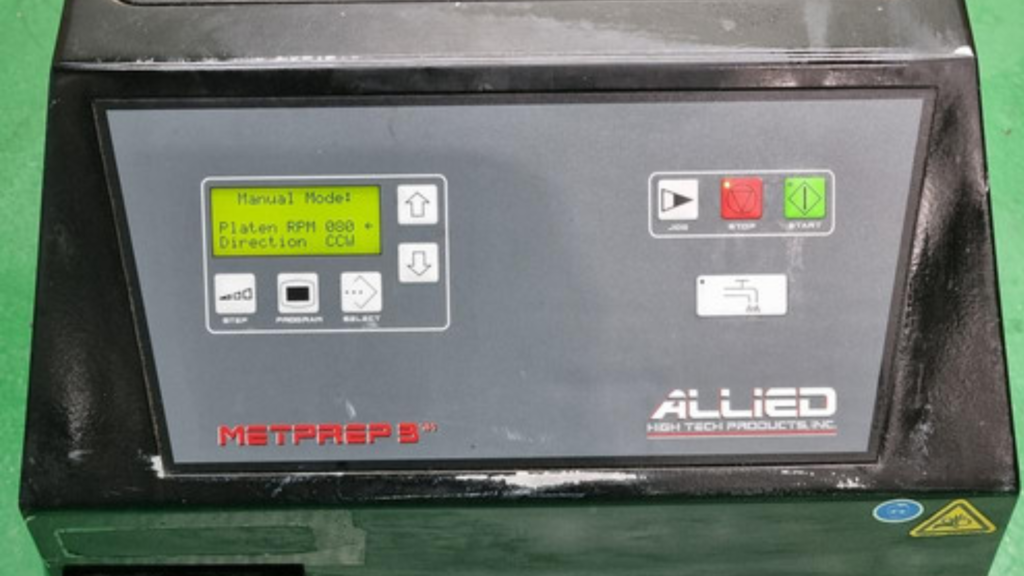
With the sample securely mounted, the process of revealing the internal structure begins. The encapsulated sample is taken to the X-Prep® system. Using a coarse diamond grinding disc in milling mode, the technician can precisely and rapidly remove material until they reach the exact centerline of the BGA’s solder balls. The X-Prep’s precision control ensures they can hit this target plane quickly without overshooting and destroying the features of interest. Once the correct plane is exposed, the sample is transferred to the MultiPrep™ system for fine grinding and final polishing. The technician progresses through a series of increasingly fine diamond suspensions, from coarse to sub-micron, each paired with a specific polishing cloth designed for the desired material removal rate and surface finish. The MultiPrep’s rigid sample holders ensure that the multiple solder balls across the BGA are polished to an absolutely perfect, co-planar surface, free from scratches, smearing, or edge rounding. Finally, this perfectly prepared sample is placed on the Zeiss materials microscope. The high-resolution optics and specialized software allow the failure analysis engineer to clearly resolve the intermetallic structure of the solder joint, identify micro-voids, cracks, or corrosion, and confidently determine the root cause of the failure, secure in the knowledge that the preparation process introduced no artifacts of its own.
Evaluating the Partnership: Pros, Cons, and Common Pitfalls
Choosing a strategic partner for a materials laboratory involves a careful evaluation of both strengths and potential limitations. The advantages of aligning with Allied High Tech are numerous and compelling. Foremost among them is the benefit of a vertically integrated solution. They provide a complete ecosystem, from the initial saw to the final microscope, ensuring workflow compatibility and providing the customer with the simplicity of single-source accountability. Their deep, forty-year specialization in metallography means their products are not generic adaptations but are purpose-built to solve the specific, real-world problems that active metallurgists face daily. The superior quality of their flagship equipment, such as the MultiPrep and X-Prep, is widely recognized, and these instruments are considered the gold standard in many of the world’s most demanding laboratories for their precision, durability, and ability to deliver repeatable results. Furthermore, the strength of their technical support, anchored by an in-house applications lab staffed with experienced engineers, means that customers are not just purchasing a product; they are gaining access to a deep well of process expertise and collaborative application development.
However, a balanced perspective requires acknowledging the considerations that come with this level of specialization and quality. As a manufacturer of premium, high-precision equipment, Allied’s products typically command a higher price point compared to entry-level or general-purpose lab equipment from less specialized vendors. This is an investment in precision and reliability that must be justified by the laboratory’s throughput and quality requirements. Additionally, their product line is highly focused on materials preparation for microscopic analysis, meaning a general biology lab or a facility focused solely on non-destructive testing would find little use for their core offerings. This niche focus is their strength, but it also defines the boundaries of their applicability.
Understanding common mistakes in metallography highlights how an Allied-centric approach actively prevents them. One frequent error is excessive deformation introduced during the sectioning phase. By utilizing a precision saw like the TechCut 4 or a programmed TechCut 5 with the application-specific blade, this damage is minimized, preserving the true microstructure from the very first cut. Another prevalent issue, particularly when analyzing coated materials or thin layers, is edge rounding during polishing, where the edge polishes faster than the bulk material. The MultiPrep system, with its rigid sample holders and precise control over planarity, is specifically engineered to combat this problem. Finally, the greatest variable in any manual process is human inconsistency. The automation and reproducible force control of Allied’s equipment standardize the process, ensuring that different operators produce samples of identical, high quality day after day, eliminating the variability that can plague quality control and research data.
Maximizing Your Investment: Expert Tips and Best Practices
To ensure the maximum return on a significant investment in Allied equipment, adopting a set of best practices is highly recommended. First and foremost, laboratories should fully embrace the comprehensive two-year warranty that typically accompanies Allied capital equipment. This period should be used not passively, but actively, to establish a rigorous preventive maintenance schedule. Keeping the equipment meticulously clean, calibrating moving parts as per the manufacturer’s recommendations, and promptly addressing any minor issues will ensure a long and productive operational life. Secondly, laboratories should view Allied’s in-house applications laboratory as an extension of their own R&D capabilities. When confronted with a new, difficult-to-prepare material, it is far more efficient to send samples to Allied and leverage their materials scientists’ expertise to develop a custom preparation procedure than to spend weeks or months on internal trial and error.
Furthermore, while it may be tempting from a procurement standpoint to source lower-cost abrasives and consumables from other vendors, standardizing on Allied consumables is the fastest and most reliable path to a validated, repeatable process. These products are formulated and manufactured to be fully optimized for use with Allied equipment, ensuring the chemical and mechanical harmony required for consistent results. Finally, when new capital equipment is acquired, it is a strategic error to rely solely on on-the-job training. Investing in thorough, formal training for key staff members unlocks the full potential of sophisticated instruments like the MultiPrep or X-Prep. A deep, hands-on understanding of the nuances of the machine’s force head, its programmable routines, and its various operational modes transforms a good operator into an expert who can push the equipment to its limits for the most challenging applications.
Frequently Asked Questions: Addressing Key Inquiries
To provide a complete resource, here are answers to some of the most common questions regarding Allied High Tech Products Inc.
1. What is the primary business of Allied High Tech Products Inc.?
Allied High Tech Products Inc. is a manufacturer and distributor specializing exclusively in equipment and consumables for metallographic sample preparation and materials analysis. This includes precision saws, mounting presses, grinding and polishing systems, and a full range of associated consumables like diamond suspensions and polishing cloths.
2. Does Allied High Tech only manufacture equipment, or do they also sell the supplies needed to use it?
They are a comprehensive provider of both capital equipment and the ongoing consumables required for their operation. Their business model is built on providing a total solution, from the initial machine purchase to the long-term supply of scientifically formulated diamond compounds, blades, and cloths.
3. What is the MultiPrep system, and why is it so highly regarded?
The MultiPrep is a precision polishing system designed for the simultaneous preparation of multiple samples. It is highly regarded because it provides unparalleled control over sample height and parallelism, enabling users to achieve perfectly flat, co-planar surfaces essential for accurate micro-hardness testing and quantitative image analysis.
4. Is Allied’s equipment suitable only for metals, or can it be used for other materials?
Despite its name being rooted in “metallography,” Allied’s equipment is used across the entire spectrum of materials science. It is routinely employed for preparing advanced ceramics, polymers, composites, printed circuit boards, geological samples, fiber optics, and biological bone and dental materials.
5. Where are Allied High Tech’s headquarters and manufacturing facilities located?
Their corporate headquarters and primary manufacturing facility is located in Rancho Dominguez (Cerritos), California. They also maintain additional manufacturing operations in Oklahoma, underscoring their commitment to domestic production.
6. What is the relationship between Allied High Tech and Zeiss microscopes?
Allied High Tech is the only national distributor that carries the complete, authorized line of Zeiss materials microscopes and software. This strategic partnership allows them to offer a completely integrated workflow solution, from sample preparation to high-resolution digital imaging and analysis.
7. How can a laboratory purchase products or get technical support from Allied?
Potential customers can request a comprehensive catalog, set up an online account for purchasing, or find direct contact information for sales and technical support by visiting their official website, alliedhightech.com.
8. What kind of warranty does Allied offer on its capital equipment?
Allied stands behind the quality and durability of its equipment by offering a robust two-year warranty on most of its capital equipment, a testament to their confidence in their engineering and manufacturing processes.
9. Does Allied offer any services to help with difficult sample preparation challenges?
Yes, this is a core part of their value proposition. They operate a state-of-the-art applications laboratory staffed by materials engineers who can provide product demonstrations, develop customized sample preparation procedures for specific materials, and offer technical workshops and training.
10. Who are Allied High Tech’s typical customers?
Their customer base spans a wide range of high-technology and industrial sectors, including aerospace and defense contractors, automotive manufacturers and their suppliers, microelectronics and semiconductor companies, medical device manufacturers, energy companies, and university and government research laboratories.
Conclusion: The Enduring Value of Precision in Material Understanding
In the demanding and high-stakes world of materials analysis, where a single undetected flaw can lead to catastrophic failure, shortcuts are simply not an option. Allied High Tech Products Inc. has built a forty-year legacy on the foundational principle that the clarity of your analysis is inextricably linked to the quality of your preparation. They provide far more than a collection of machines and abrasives; they provide a comprehensive, scientifically integrated system backed by deep technical expertise and a corporate commitment to what they call “the ultimate service experience.” From the automated, controlled precision of the TechCut 5 saw to the unparalleled flatness achieved by the MultiPrep polisher, and finally to the crystal-clear imaging of a Zeiss microscope, Allied ensures that every single step of your workflow is optimized for the pursuit of accuracy and repeatability.
For laboratories operating in aerospace, microelectronics, biomedical engineering, and advanced materials science—fields where the stakes are high and the details matter most—Allied High Tech Products is not merely a vendor on a purchase order. They are an essential, collaborative partner in the ongoing processes of discovery, quality assurance, and failure prevention. As the materials we engineer become increasingly complex, heterogeneous, and demanding, the need for precise, artifact-free preparation will only intensify. With their continued investment in domestic manufacturing, their commitment to customer-centric innovation, and their holistic view of the analytical workflow, Allied High Tech Products is exceptionally well-positioned to remain at the very forefront of this critical science, empowering the world’s scientists and engineers to see, understand, and trust the true story hidden within the materials that build our future.