Table of Contents
Introduction: How to Make Money with E-commerce?
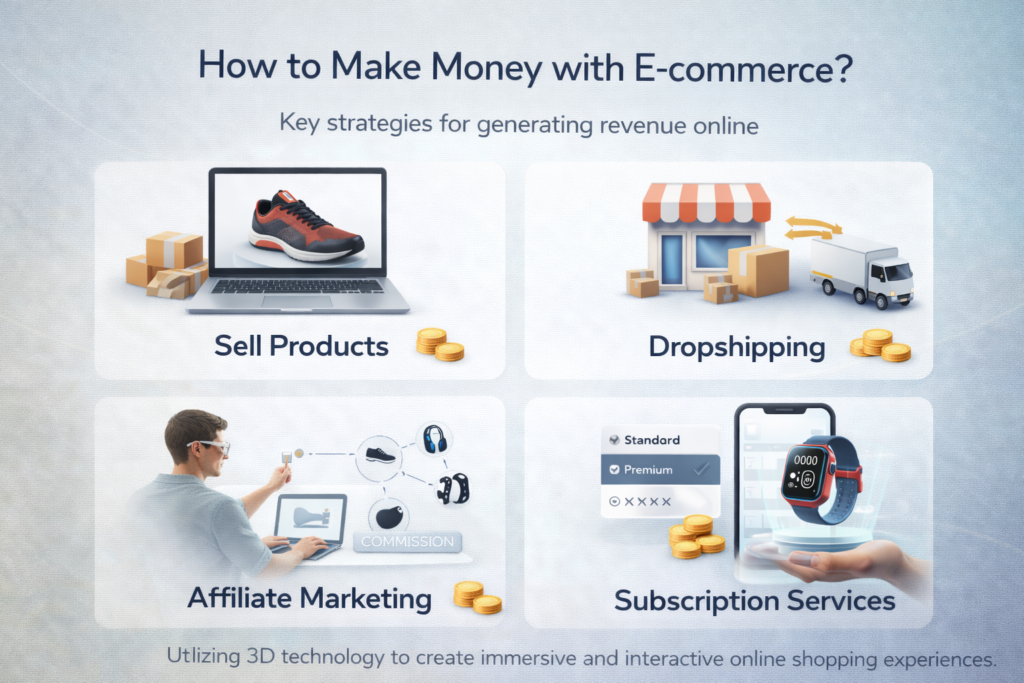
E-commerce has become one of the most discussed topics in the digital world. People search for ways to make money with e-commerce because online businesses and digital platforms are growing rapidly. However, much of the information available online focuses on shortcuts, unrealistic income claims, or direct selling approaches that do not explain how e-commerce income actually works.
This blog is written with a clear educational purpose.
The goal of this guide is to explain how people make money with e-commerce by sharing guides, tips, and detailed information rather than promises. This website is designed as an informational e-commerce blog, where readers can learn about online income models, digital commerce systems, and realistic earning approaches.
Throughout this article, readers will find structured explanations, practical insights, and learning-focused content related to e-commerce.
What Does “Making Money with E-Commerce” Mean in Reality?
Making money with e-commerce does not mean instant success or guaranteed income. In reality, it refers to earning through digital commerce systems where value is created and exchanged online.
E-commerce income is generated when:
- A product, service, or information solves a real problem
- Users find value in what is offered
- Digital platforms enable transactions or monetization
- Trust is built over time
This website focuses on explaining these concepts clearly, so readers understand that income is a result of knowledge, skills, and consistency, not shortcuts.
Understanding the E-Commerce Ecosystem
E-commerce works as a complete ecosystem rather than a single activity. This ecosystem includes multiple components that work together to create online income opportunities.
Some key parts of the e-commerce ecosystem include:
- Websites and blogs
- Online marketplaces
- Payment gateways
- Logistics and delivery systems
- Digital marketing channels
- Content and information platforms
People make money with e-commerce by participating in different roles within this ecosystem. Some roles are direct, such as selling products, while others are indirect, such as creating educational content or providing services.
This website covers all these perspectives through informational guides.
Why Learning Is the First Step in E-Commerce Income
One of the biggest mistakes beginners make is trying to earn money before understanding how e-commerce works. Without learning the basics, people often fall for unrealistic promises or choose the wrong approach.
That is why this website focuses heavily on:
- Explaining concepts step by step
- Sharing practical tips for beginners
- Providing awareness about risks and challenges
Learning first helps readers make informed decisions and build realistic expectations.
Major Ways to Make Money with E-Commerce
There is no single way to make money with e-commerce. Instead, there are multiple income models, each with its own requirements and challenges. This website explains these models in detail through guides and informational content.
Product-Based E-Commerce: Selling Physical Products Online
Product-based e-commerce is one of the most commonly known income models. It involves selling physical products through online platforms or websites.
How Product-Based E-Commerce Works
In this model, sellers:
- Identify products with demand
- List them on websites or marketplaces
- Set prices and manage inventory
- Process payments online
- Deliver products to customers
Educational Insight for Readers
Product-based e-commerce is a business system, not a quick-income method. Success depends on market research, pricing strategy, customer experience, and consistent management.
On this website, readers can find informational content explaining how this model works, what beginners should know, and what challenges to expect.
Digital Products and Online Services as an E-Commerce Income Model
Digital products are an important part of e-commerce. These include:
- E-books and guides
- Online tools and templates
- Educational resources
- Subscription-based content
Because these products are delivered digitally, they reduce logistics complexity but require high-quality information and expertise.
Why Digital Products Are Part of E-Commerce
Digital products are sold, paid for, and delivered online. This makes them a core component of the e-commerce ecosystem.
This website explains:
- How digital products fit into e-commerce
- Why knowledge matters more than volume
- How educational value builds trust
Blogging and Content-Based E-Commerce Income
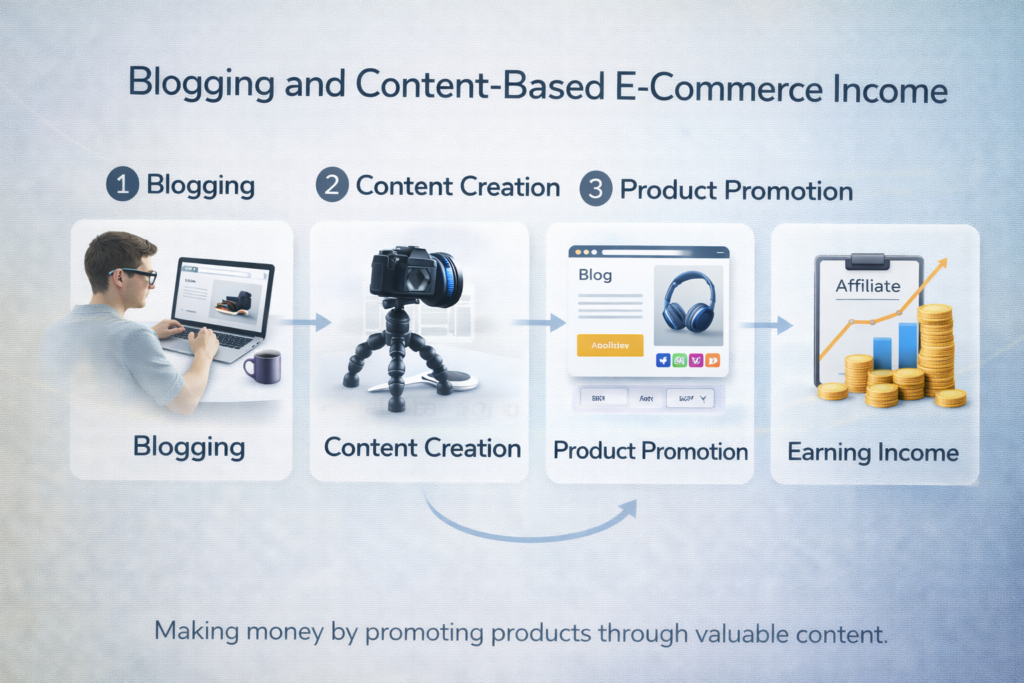
One of the most sustainable and Google-friendly ways to make money with e-commerce is through content-based platforms, especially blogs.
How Blogging Works as an E-Commerce Model
Blogs generate income by:
- Publishing guides, tips, and tutorials
- Answering common user questions
- Explaining e-commerce systems and models
- Attracting organic search traffic
Monetization may happen through advertising, affiliate education, or brand collaborations, but the primary focus remains information.
Why This Website Uses This Model
This website itself follows the content-based e-commerce approach. By publishing high-quality informational blogs, it aims to educate readers while building long-term authority.
Affiliate E-Commerce Explained Through Information and Tips
Affiliate e-commerce allows content creators to earn commissions when users take action after reading educational content.
Informational Approach to Affiliate E-Commerce
On this website, affiliate e-commerce is explained through:
- Guides and tutorials
- Honest explanations of how it works
- Clear discussion of pros and cons
- Focus on user benefit
Affiliate income works best when combined with trust, transparency, and valuable information, which is why education is emphasized throughout this blog.
Skill-Based Income Opportunities in the E-Commerce Industry
Not everyone who earns through e-commerce owns a store or sells products. Many people earn by offering skills that support e-commerce businesses.
Some common skill-based roles include:
- Content writing and editing
- Search engine optimization (SEO)
- Research and data analysis
- Graphic and web design
- Customer support and management
This website explains these opportunities as part of the broader e-commerce ecosystem, helping readers understand that income options are diverse.
The Importance of Skills Over Tools
Many beginners believe that tools alone can guarantee income. In reality, tools are only useful when combined with skills.
Skills such as:
- Research and learning
- Communication and writing
- Understanding user intent
- Problem-solving
play a much bigger role in long-term e-commerce income. This site regularly publishes content to help readers develop these skills through information.
Practical Tips Shared Throughout This Website
This website consistently shares practical e-commerce tips to help readers approach online income responsibly. These tips include:
- Learning systems before investing money
- Avoiding guaranteed income claims
- Focusing on value creation
- Building patience and consistency
These tips are repeated naturally across blogs to reinforce awareness and understanding.
Common Mistakes Beginners Make in E-Commerce
Educational awareness is important because many beginners fail due to:
- Unrealistic expectations
- Following trends without understanding
- Ignoring content quality
- Relying only on paid tools
This website explains these mistakes clearly so readers can avoid them and make informed choices.
Time, Patience, and Realistic Expectations in E-Commerce
One of the most important topics discussed on this website is time expectation. Many people enter e-commerce with the assumption that income will be immediate. In reality, making money with e-commerce is a gradual process that depends on learning, consistency, and improvement.
Content-based e-commerce, such as blogging, often takes several months before results become visible. Skill-based income grows as experience increases, while product-based e-commerce requires testing, optimization, and customer trust. This website intentionally avoids fixed timelines and instead explains why patience is a key factor in e-commerce success.
Why Informational Content Is the Foundation of E-Commerce Income
Across all e-commerce models, one element remains constant: information. Users search online because they want answers, solutions, and clarity. Websites that provide accurate and helpful information naturally attract traffic, trust, and long-term growth.
This is why this website focuses heavily on:
- Detailed guides
- Educational blog posts
- Practical tips
- Clear explanations of e-commerce systems
Informational content not only helps users learn but also aligns with how search engines evaluate quality and authority.
How Blogs and Guides Create Long-Term E-Commerce Value
Blogs play a central role in modern e-commerce. Unlike short promotional pages, well-written guides continue to attract readers over time. A single informative article can generate traffic for years if it answers common questions clearly.
On this website, blogs are written to:
- Explain how e-commerce works
- Break down income models
- Share realistic tips
- Improve reader understanding
This approach allows content to become a long-term digital asset, rather than short-term promotional material.
The Role of SEO in Informational E-Commerce Websites
Search engine optimization (SEO) is an important topic covered throughout this website, especially in relation to informational e-commerce blogs. SEO helps content reach users who are actively searching for information.
However, this site explains SEO from an educational perspective, focusing on:
- Understanding search intent
- Writing helpful content
- Structuring information clearly
- Building topical authority
Rather than chasing algorithms, the emphasis remains on serving users with quality information.
Understanding Risks and Challenges in E-Commerce
Another key focus of this website is awareness of challenges. Making money with e-commerce is not without difficulties, and it is important for learners to understand potential risks.
Some common challenges include:
- High competition
- Slow initial growth
- Learning technical concepts
- Managing time and consistency
By explaining these challenges openly, this website helps readers prepare mentally and strategically before committing to any e-commerce path.
Ethical and Responsible Approaches to E-Commerce Income
Ethics play an important role in sustainable e-commerce. This website promotes responsible practices by emphasizing:
- Honest information
- Transparency in content
- Avoiding misleading income claims
- Focusing on user benefit
Ethical e-commerce practices help build long-term trust with both users and search engines. This approach also supports compliance with advertising and monetization policies.
How This Blog Reflects the Purpose of This Website
This blog is designed to represent the overall goal of this website. From the introduction to the conclusion, the content naturally shows that this platform is built for education, not selling.
Readers can clearly see that:
- The site provides e-commerce guides and tips
- The focus is on learning and understanding
- Information is shared in a structured and professional manner
- Income is discussed realistically
This consistency helps establish the website as a trusted informational resource.
Who Can Benefit from This E-Commerce Guide?
This guide is useful for:
- Beginners exploring e-commerce
- Bloggers and content creators
- Students and learners
- Researchers studying digital commerce
- Anyone seeking clear e-commerce information
Because the content is educational, it remains relevant regardless of experience level.
How Readers Can Use the Information on This Website
Readers are encouraged to:
- Explore different guides published on this site
- Compare e-commerce models based on their skills
- Learn concepts before making decisions
- Use information to build realistic plans
This website is not meant to replace personal effort but to support learning through information.
The Long-Term Vision of This E-Commerce Blog
The long-term vision of this website is to become a comprehensive e-commerce knowledge hub. By continuously publishing high-quality informational content, the site aims to cover every major aspect of e-commerce in a clear and accessible way.
Over time, readers will find:
- Beginner-level explanations
- Advanced conceptual guides
- Updated tips and insights
- Clear breakdowns of trends
This long-term content strategy supports sustainable growth and authority.
Frequently Asked Questions (FAQs) About E-Commerce
What is e-commerce?
E-commerce refers to the buying, selling, or exchange of products, services, or information through the internet. It involves digital platforms, online payments, and electronic systems that enable transactions without physical interaction.
How does e-commerce work?
E-commerce works through websites or applications where users browse products or information, make online payments, and receive digital or physical deliveries. Behind the scenes, payment gateways, databases, and security systems manage the entire process.
Can beginners make money with e-commerce?
Yes, beginners can make money with e-commerce, but it requires learning, patience, and realistic expectations. Understanding e-commerce models and systems is more important than trying to earn quickly.
Is e-commerce only about selling products?
No. E-commerce includes selling products, offering services, creating digital content, running informational blogs, affiliate marketing, and providing support services within the digital commerce ecosystem.
How long does it take to earn money from e-commerce?
There is no fixed timeline. Content-based and skill-based e-commerce often take several months to show results, while product-based businesses require testing, optimization, and customer trust.
Is blogging a valid e-commerce income method?
Yes. Blogging is a recognized e-commerce income method when it focuses on providing valuable information, guides, and tips. Blogs can earn through advertising, affiliate references, and long-term organic traffic.
What skills are important for e-commerce?
Important skills include research, content creation, communication, basic technical knowledge, understanding user intent, and consistency. Skills play a larger role than tools in long-term success.
Is e-commerce safe to use?
E-commerce can be safe when platforms use secure payment gateways, encryption, and transparent policies. User awareness and understanding of online safety also play an important role.
What are the most common e-commerce models?
Common e-commerce models include Business-to-Consumer (B2C), Business-to-Business (B2B), Consumer-to-Consumer (C2C), Direct-to-Consumer (D2C), and content-based or affiliate e-commerce models.
Why is e-commerce education important?
E-commerce education helps users avoid scams, understand digital systems, make informed decisions, and build realistic expectations. Informational content improves both user trust and long-term success.
Can e-commerce income be generated without owning a store?
Yes. Many people earn through e-commerce by creating content, offering services, affiliate marketing, digital products, or supporting e-commerce businesses with skills.
Does e-commerce require a large investment?
Not always. Content-based and skill-based e-commerce often require more time and learning than financial investment. Product-based models may require higher initial costs.
Is this website focused on selling e-commerce products?
No. This website is an informational e-commerce blog that provides guides, tips, and educational content to help readers understand e-commerce concepts and income models.
Why do search engines value informational e-commerce content?
Search engines prioritize websites that provide clear, helpful, and accurate information. Informational e-commerce content satisfies user intent and builds long-term authority.
What is the future of e-commerce?
The future of e-commerce is expected to focus more on education, transparency, personalization, and technology-driven solutions, with greater emphasis on user trust and knowledge.
Final Conclusion:
Making money with e-commerce is not about shortcuts or overnight success. It is about understanding how digital commerce systems work, learning relevant skills, and applying that knowledge consistently over time. Whether someone chooses product-based e-commerce, content-driven blogging, affiliate models, or skill-based opportunities, success depends on clarity, patience, and value creation.
This website is built to support that learning process by providing guides, tips, and detailed information related to e-commerce. Readers can explore structured content that explains income models, common challenges, and practical approaches in a clear and realistic way. Platforms like rankifycontent.com are part of this informational ecosystem, offering knowledge-focused resources that help users better understand e-commerce, content strategy, and digital growth.
By focusing on education rather than promotion, this blog aims to become a long-term reference point for anyone looking to understand how e-commerce income works and how informed decisions can lead to sustainable results in the digital economy.